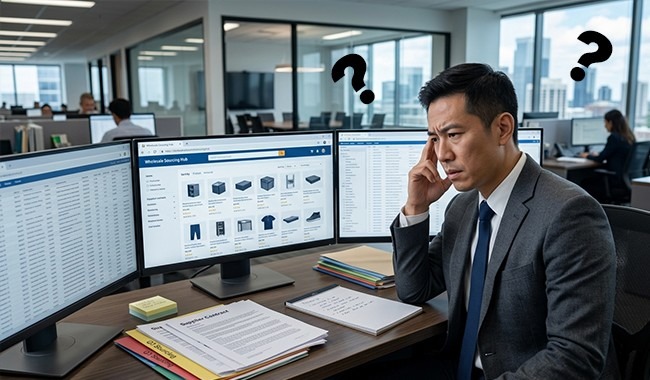
Not Sure About Your Unit Cost or Manufacturing Overhead?
In today’s increasingly compressed margin environment, many B2B buyers find themselves returning to a deceptively simple question: How do you buy wholesale in a way that is both scalable and defensible? For retailers, wholesalers, and e-commerce sellers operating across fragmented markets, wholesale purchasing is no longer just about accessing lower unit costs. It has become a strategic decision that directly affects inventory turnover, cash flow discipline, and long-term supplier leverage. When product cycles shorten and customer expectations rise, can traditional sourcing habits still support sustainable growth?
For B2B stakeholders—including local retailers, wholesalers, distributors, procurement managers, e-commerce sellers, small to medium business owners, importers, and trading companies—understanding how to buy wholesale products effectively is now a core operational capability rather than a tactical task. Poor sourcing decisions rarely fail immediately; instead, they surface later through excess stock, unstable lead times, or supplier dependency risks. In competitive local markets, the difference between growth and stagnation often lies in how well procurement teams balance price, reliability, and flexibility. But what does “doing wholesale right” actually look like in practice?
Building a wholesale sourcing strategy goes far beyond identifying suppliers or negotiating discounts. It involves aligning brand positioning, SKU structure, compliance requirements, and supplier relationship depth with real market demand. According to the Global Wholesale Market Report 2023, the global wholesale sector was valued at approximately USD 48 billion and is projected to approach USD 62 billion by 2026. This expansion signals opportunity, but it also intensifies competition. With more buyers chasing similar brands and factories, how do you avoid becoming interchangeable in the eyes of suppliers?
This guide approaches the question How do you buy wholesale from a practical B2B decision-making perspective. Rather than listing platforms or generic steps, it examines sourcing logic, trade-offs, and risk boundaries across different business stages. Whether you are an early-stage SME testing new product lines or an experienced importer optimizing supplier concentration, the goal is the same: to source wholesale products efficiently, responsibly, and with a clear path to margin sustainability. The following sections are designed to help you make those decisions with greater clarity and confidence.

What is wholesale buying?
Are you wondering where your business actually sources its products from, and why that choice matters at scale? Retail and wholesale operate as two structurally different procurement models within the broader B2B distribution ecosystem. When you buy from a wholesaler, you are sourcing through an intermediary positioned between manufacturers and retail channels. This model is widely used by retailers, distributors, and e-commerce sellers because wholesale purchasing typically involves bulk orders, standardized SKUs, and predefined pricing tiers. As a result, buyers benefit from discounted unit costs, more predictable lead time, and access to a broader product assortment. But in practice, how do you buy wholesale in a way that supports healthy inventory turnover rather than tying up cash flow?
After purchasing products from a wholesaler, businesses generate a margin by selling at a higher retail price. This price gap reflects not only markup, but also the operational burden retailers absorb—inventory holding, warehousing, last-mile logistics, returns management, and customer service. From a B2B standpoint, wholesalers help retailers externalize part of the sourcing complexity, especially when managing multiple product categories or seasonal demand fluctuations. Customers accept higher retail prices because the retailer consolidates these hidden costs and delivers availability and service reliability. Yet for procurement managers, the real question remains: does the margin structure justify the working capital commitment required by wholesale purchasing?
Buying directly from manufacturers introduces a different set of trade-offs. Direct sourcing can reduce cost per unit by eliminating intermediaries, but it often comes with higher MOQs, longer production lead times, and stricter compliance requirements. Smaller retailers or early-stage e-commerce sellers may struggle to absorb these constraints, while larger importers or private label operators may see direct manufacturing as a path to differentiation and margin control. Because of this, deciding how to buy wholesale products versus sourcing directly from factories depends on multiple variables—business model maturity, target market expectations, SKU complexity, and financial capacity. There is no universally correct approach; the optimal sourcing path is shaped by how well the procurement strategy aligns with operational reality.
Pros and Cons of Wholesale vs. Retail Purchases
Wholesale purchasing for your business offers many benefits compared to buying products at retail for resale, including:
Competitive Advantage: Once you establish a wholesale relationship with a brand, you can often get new merchandise before consumers and receive exclusive discounts. For example, bazaars allow buyers to take advantage of a brand’s seasonal best price with discounts of up to 5%, so sellers can lower their prices even further for wholesale customers.
Lower shipping costs: When buying in bulk, it’s often possible to get even better shipping rates. For example, using the WIDQ Shipping Program allows brands to offer their wholesale customers pre-negotiated lower shipping rates with major carriers such as UPS, FedEx, and DHL, as well as ocean freight services for low-cost, high-volume shipments. As you scale your purchases, you can also eventually start ordering entire pallets instead of multiple smaller shipments, which can further reduce costs.
Easier to scale and grow: When you purchase wholesale, you can remain flexible as demand for your products increases (or decreases). This makes it easy to continue growing at a pace that works for your business, even if the market fluctuates.
Improved Inventory Management: Buying in bulk can help you avoid out-of-stocks of popular items, achieve more accurate inventory quantities, and build stronger relationships with your suppliers, so you can better maintain the inventory that matters most.
Lower Purchase Prices: Simply put, wholesale purchases have lower unit prices. This means you can keep resale prices reasonable for your retail customers and make a higher profit on each sale. Wholesalers sometimes lower the price of certain items even further when clearing out excess product, especially in preparation for a new selling season.
More one-of-a-kind products: While wholesalers offer buyers a full range of products, online wholesale marketplaces like WIDQ provide access to thousands of brands around the world, all with full catalogs. Retail stores, on the other hand, offer only a selection of products at any given time.
Buying from a wholesaler has its pros and cons. One of the significant advantages of wholesale buying over retail buying is the lower unit cost. This is because buying in bulk allows companies to benefit from economies of scale. However, one of the disadvantages of wholesale buying is the need to buy in large quantities, which can lead to excess inventory or impeded cash flow. On the other hand, retail buying provides the flexibility to buy smaller quantities but at a higher cost. The difference between the retail price and the wholesale price is known as profit. This is the profit that the retailer makes from the sale. Retail prices usually vary from business to business, and several different pricing strategies can be used to determine the retail price that works best for you. Once this is done, you can determine the gross profit.
Wholesale Example
Wholesale is wholesale, but not all wholesale is the same. You can think of it as a catch-all that covers several different wholesale models.
Let’s look at some examples to illustrate.
- Traditional Wholesale
Nike utilizes advanced technology and strategic partnerships to act as a wholesaler, supplying retailers such as Foot Locker. Foot Locker orders established accounts from Nike through Nike’s internal B2B platform. Other retailers who wish to place orders like Foot Locker need to go through an extensive vetting process to access the platform. In addition to facilitating ordering, Nike is working closely with its authorized retailers to enhance the shopping experience by creating “store-within-a-store” spaces to showcase its products. This partnership model allows Nike to optimize its supply chain, maintain product availability, and effectively support its direct-to-consumer and wholesale businesses. - Online B2B platform
Online B2B platforms aggregate multiple wholesale suppliers and provide an easier way to discover and order new brands. esplanade retailer The White Orchid uses a B2B commerce platform to streamline its wholesale business.
The B2B Commerce Platform enables digital purchasing of collections and seamless ordering between the POS and the platform. It provides real-time data and improves overall workflow, ensuring a smooth and efficient wholesale process. For the B2B Commerce Platform, this means saving up to 90 minutes per order when buying wholesale.
Types of wholesalers to choose from
In general, there are six different types of wholesalers, including the following:
Brokers and Agents: They are not wholesalers per se, but rather people who act as intermediaries to connect buyers and sellers and receive a commission.
Direct wholesalers: this is another type of intermediary that helps manufacturers facilitate orders and then ships the goods directly to customers in the retail space.
Exporters and importers: these wholesalers are involved in the international trade of goods and have expertise related to logistics, transportation, and compliance with various regulations.
Manufacturers: These wholesalers mass produce and sell their own goods and then sell them to retailers at wholesale prices and/or directly to consumers at retail prices.
Merchant wholesalers: These are wholesalers who move inventory by buying goods at bulk prices and selling them in smaller quantities to retailers for a small profit.
Specialty Wholesalers: These are niche wholesalers that specialize in a specific type of product and have a high level of expertise in that product. many of the brands on WIDQ are specialty wholesalers.
WIDQ B2B marketplace offers another wholesale solution by helping independent retailers support other small businesses. The online marketplace offers wholesale merchandise from more than 100,000 independent brands from around the world, including apparel, shoes, jewelry, food and beverages, home furnishings, pet products, beauty and wellness products, paper and novelties.
How do I buy wholesale products?
Before you begin wholesale purchasing, consider what you need for your retail business. What is your starting budget for inventory? Do you plan to source merchandise locally or globally? Is sustainability your top priority? Before you begin your search, make a list of your preferences.
- Sign up for an online wholesale marketplace.
For small retail businesses, an online marketplace may be the fastest and easiest way to find the perfect wholesaler. You can search by shopping category, price, location, and other filters, and sift through user reviews. Some marketplaces require an annual or one-time membership fee, while others are completely free. - Attend retail trade shows in person or online.
At retail trade shows, wholesale distributors and manufacturers showcase their wares to retail attendees. By attending sector-specific trade shows, you can discover brands and start making a list of contacts to reach out to directly. With trade shows for everything from eyewear to jewelry to home décor, they’re a great place to start networking, and WIDQ even offers virtual retail trade shows (WIDQ Marketplaces) that you can attend from the comfort of your own home. Save yourself the hassle of traveling to these bi-annual events, connect with thousands of brands, and save money. - Keep an eye on trade publications in your industry.
No matter what kind of retail industry you’re in, there’s probably a trade publication for it. Do you sell fashion and apparel? Check out textile trade magazines like California Apparel News. Do you sell home décor? Home Accents Today offers the latest trends and insights. The benefit of reading these magazines is that brands can advertise in their pages, and you can tap into some lesser-known dealers.
What are the best practices for wholesale purchasing?
- Consider minimum order quantities.
A minimum order quantity (MOQ) is the minimum number of items you can purchase from a brand at one time. In addition to the number of products, you may also see minimum order quantities listed as a dollar amount or number of cases (i.e., a multiple of the sales of a particular product). For example, if you see a wholesale listing for wool blankets and the MOQ is 10, that means you must order at least that many blankets to purchase from that brand. If you’re on a budget, it’s important to pay close attention to the MOQ. - Avoid inventory buildup.
While you may not be able to resist buying extra items when you find them at a reasonable price, it’s also important to consider the cost of holding inventory. Inventory management software allows you to view inventory levels in real time. You can set reorder points for each product to ensure that perfect stock levels are maintained. It also tracks units of measure so you can buy by the pallet and sell by the case. - Request product samples.
Before placing a bulk wholesale order, you need to make sure that the quality meets your standards (and those of your customers). If samples aren’t available, look for brands with lower minimum order quantities so you can order small quantities before accepting bulk orders altogether. - Keep an eye on industry trends.
Do you know what Pantone’s color of the year for 2024 is? If you sell apparel, décor, and accessories, it’s beneficial to be aware of these trends. As mentioned above, trade publications are a great way to learn about current and forecasted trends. - Understand lead times.
A brand’s lead time is the amount of time it takes to prepare and deliver wholesale orders in advance. Depending on whether you are ordering locally or globally, delivery times can vary greatly. For peak shopping times, such as holidays, lead times may be longer, so it’s best to buy in advance. The last thing you want is for your New Year’s Eve decorations to arrive in your store on January 2nd. On WIDQ, brands list delivery times on their store pages, and you can always send a quick message to make sure your order arrives on time. - Buy from knowledgeable brands.
The brands you work with should have expertise in their product categories. For example, if you sell jewelry, you’ll want to choose a brand that knows the difference between materials like gold-plated and silver-plated. Any supplier that can’t answer simple questions about their products is not a good choice. - Don’t forget about customer service.
Even if the brand you choose offers quality products at a great price, poor customer service can undermine that advantage. Prioritize brands that are reliable, communicative and attentive. If there’s a problem with an order, it pays to have excellent customer support that can resolve the issue quickly.
Why Wholesale Sourcing is Crucial for B2B Business?
Wholesale purchasing sits at the core of supply chain management for B2B users, but its role varies significantly across business models. Retailers depend on stable inventory replenishment to meet consumer demand, while wholesalers and distributors rely on bulk purchasing to preserve margin structure across multiple downstream channels. At the same time, e-commerce sellers and small to medium-sized business owners often view wholesale sourcing as a way to accelerate market entry without building manufacturing capability. In this context, the question is not simply what to buy, but how to buy wholesale products in a way that aligns with growth objectives, risk tolerance, and operational capacity.
Cost efficiency remains the most visible advantage of wholesale purchasing, yet it is rarely the only one that matters. Bulk orders typically unlock tiered pricing, making unit economics more predictable for procurement managers tasked with budget control and margin forecasting. Beyond price, wholesale arrangements often provide clearer lead time commitments and standardized SKUs, which simplify inventory planning and demand forecasting. But does a lower purchase price still create value if it increases inventory holding pressure or slows cash flow rotation?
For importers and trading companies, wholesale purchasing also functions as a relationship-driven strategy rather than a transactional one. Long-term cooperation with qualified suppliers can improve supply continuity, priority allocation during peak seasons, and access to better commercial terms. E-commerce sellers increasingly combine wholesale sourcing with flexible fulfillment models, including regional warehousing or selective dropshipping, to balance stock availability with operational agility. Because of this, understanding how to buy wholesale is less about chasing discounts and more about designing a sourcing process that supports scalability without overextending capital or operational bandwidth.

Define your wholesale sourcing needs
Before attempting to answer the question “How do you buy wholesale?”, experienced B2B buyers usually start by clarifying a set of internal decision variables. What product categories actually support your business strategy? Who are the end customers you serve, and how price-sensitive are they? How much budget can be allocated without putting pressure on cash flow? These questions apply not only to retailers, but equally to wholesalers, distributors, and other B2B participants operating at different points of the supply chain. Without this internal alignment, even competitively priced wholesale deals can become operational liabilities.
In practice, sourcing priorities differ significantly by business model. Retailers often need to diversify product assortments to match local demand patterns, such as seasonal fashion apparel or home furnishings with faster SKU rotation. E-commerce sellers tend to prioritize high-margin, lightweight products that reduce fulfillment and shipping complexity. Small and medium-sized enterprises (SMEs) may deliberately purchase at lower volumes to validate market response before scaling, even if that means accepting slightly higher unit costs. Importers, by contrast, usually favor larger order quantities to amortize international logistics, customs clearance, and compliance costs. Given these differences, can a single wholesale strategy realistically serve all business types?
Once procurement needs are clearly defined, supplier targeting becomes more disciplined and outcome-driven. Clear requirements around product scope, order volume, and budget thresholds help buyers avoid blind purchasing decisions that often lead to excess inventory or inefficient capital allocation. In this sense, understanding how do you buy wholesale products is less about finding suppliers quickly and more about structuring purchasing decisions to support demand forecasting, inventory turnover, and long-term financial stability. The clarity achieved at this stage often determines whether wholesale sourcing becomes a growth enabler—or a hidden drag on performance.
Finding reliable wholesale suppliers
Once your needs are clear, the next step is to find the right supplier. This is the core part of the answer to the question “How do you buy wholesale products? Here are a few common ways to do this for all types of B2B users:
- Attend industry exhibitions and trade shows
For wholesalers, distributors and trading companies, industry trade shows are a great place to find quality suppliers. For example, China’s Canton Fair or Germany’s Frankfurt Consumer Goods Fair attract global suppliers to showcase their products every year. You can communicate directly with the vendors to find out wholesale prices and terms of cooperation. - Online wholesale platforms
E-commerce platform sellers and small and medium-sized business owners may prefer online solutions. Platforms like Alibaba, Global Sources, WIDQ or ThomasNet offer a wide range of wholesale options, from apparel to electronics. All you need to do is type in keywords related to “how do you buy wholesale” and you’ll be able to filter out the products and suppliers that meet your needs. - Local Wholesale Markets
Local wholesale markets are a treasure trove for local retailers. For example, the Los Angeles Fashion District in the U.S. or the Yiwu market in China offer the convenience of buy-now, pick-up-now, which is especially good for businesses that need to replenish their stock quickly. - Direct contact with manufacturers
Importers and sourcing managers may choose to work directly with manufacturers, especially when customized products or OEM services are required. This way, although the cost of communication is higher in the early stages, but in the long run, it can significantly reduce the unit price.
Whichever way you choose, it is recommended to compare several suppliers and examine their reputation, product quality, and delivery capability. After all, wholesale purchasing is not only about buying products, but also about establishing a reliable business partnership. - Individual approach
You can contact wholesalers or distributors directly. This method involves contacting potential wholesalers individually to establish a partnership.
How to choose a wholesaler
Once you’ve made a list of wholesalers you’re interested in, read reviews of other retailers you’ve worked with. This will give you a good idea of whether they are worth contacting. After narrowing down the list to your top choices, you need to make sure they are a good fit for your business. Here is a list of questions you can consider first when choosing a wholesaler:
- Research and review
Start by searching for the wholesalers on your list on Google and read online reviews of other online retailers they have worked with. This will provide them with valuable insight into their reputation and reliability. - Ask key questions
When narrowing down your list, be sure to ask the following questions to ensure you choose the wholesaler that best suits your needs:
What items do you sell? Make sure the wholesaler offers products that fit your store’s positioning and branding.
What is your pricing? Make sure their pricing allows you to maintain your desired profit margins.
Is the wholesaler reliable? Look for wholesalers with a track record of timely delivery and quality merchandise.
Is their customer service excellent? Choose a wholesaler with a responsive and helpful customer service team.
How much do they know about wholesale products? Make sure the wholesaler knows the products they sell and can provide adequate information and support.
Can they help with substitute shipping? If you sell products online, ask about drop-shipping options to streamline your delivery process.
How much is the online shipping cost?
Will you be buying from domestic or foreign sources? Consider the advantages and disadvantages of purchasing from domestic wholesale suppliers and international wholesalers and aim for a balanced mix. - Samples
If you’re considering drop shipping, it’s critical to request samples of each product to ensure the quality meets your standards. For example, let’s say you own a boutique and have come across a wholesale clothing supplier that is promising for your business. Before establishing a relationship, it is crucial to request samples of the clothing you are interested in selling at the boutique. These samples will allow you to check the quality, fabric, stitching, and overall craftsmanship of the garments firsthand. By inspecting the samples in person, you can ensure that the garments meet the expectations of your discerning customers. - Evaluate domestic and international options
Evaluate the pros and cons of sourcing from domestic or international wholesalers, taking into account factors such as supply chain stability, customer preferences and pricing. By doing thorough research and asking the right questions, you can confidently choose the wholesaler that meets your business needs and sets you up for success in the retail market. - What merchandise do you sell?
If you sell a wide variety of merchandise, or if you plan to keep your store very product specific, then you must choose wholesale partners that offer the products you need. You can work with as many wholesalers as possible to get the inventory you need. However, make sure that the type of merchandise that these wholesalers offer matches the type of store that you run so that you can always maintain your brand image. - What is your price point?
You sell the goods you buy from wholesalers to make a profit. When choosing a supplier, make sure you get pricing that allows you to achieve your desired profit margin. - Is the wholesaler reliable?
Don’t work with someone unreliable. Wholesalers who are late, don’t deliver, or whose goods are often damaged are bad for business. - Do they have quality customer service?
Make sure that any company you work with has a reliable customer service team that you can easily reach when you need them. If you have to go through a lot of trouble to get answers to your questions, or if their customer service is never there when you need it, you may need a new wholesale partner. - How much do they know about the product?
The wholesale partner you choose should have in-depth knowledge of the products they sell. This benefits you as a retailer in two ways. First, you can share this product knowledge with your customers. Secondly, it ensures that your wholesale partner knows all about the quality of the products they sell and is passionate about them. Wholesalers can’t answer your questions about their products, either because they know their merchandise isn’t the best, or they lack the knowledge and may just not care. Either way, a good business partner will be able to answer your questions. - Can they help you with air freight?
If you sell your products online, you may want to ask your wholesaler if they can help you ship your products. Drop shipping is a fulfillment method where the wholesaler stores your inventory and is responsible for shipping it. When someone places an order from your e-commerce store, you pass their order information to your wholesaler, who then sends the goods directly to your customer. If you want to save on warehousing and shipping costs, direct sales is a good option, but it’s a much more hassle-free way of doing business. If you decide to ship direct, be sure to ask the wholesaler to send you samples of each product you sell to ensure that the quality meets your standards. - Will you buy wholesale goods domestically or internationally?
Domestic supply chains can be less disruptive. However, not all wholesale goods are available from domestic manufacturers or suppliers, and prices may be higher. Meanwhile, while you can get a wider (and more affordable) selection from international suppliers, you never know when you might encounter manufacturing or shipping delays. Don’t become overly reliant on either, and it’s best to make sure you purchase from a mix of international and domestic wholesalers.
How to Buy Wholesale in Bulk
From a B2B procurement perspective, the process of buying wholesale in bulk follows a relatively standard structure, but each step carries decision risk if handled superficially. The first stage is supplier identification. Buyers typically evaluate local wholesale hubs, vertical-specific online wholesalers, and established B2B marketplaces. Speed is not the issue here; relevance is. When considering how do you buy wholesale, the real filter should be supplier fit—product category focus, MOQ thresholds, fulfillment capability, and market experience—rather than sheer supplier volume.
Once a shortlist is formed, direct communication becomes critical. On managed B2B platforms, onboarding may be streamlined, but outside those ecosystems, buyers usually initiate contact via email or formal inquiry. At this stage, suppliers assess not only order potential but also business legitimacy. Many wholesalers require verification documents such as a business license, resale certificate, or tax registration before sharing pricing or granting access to wholesale catalogs. This step is less about bureaucracy and more about channel control. If a supplier protects its distribution network tightly, does that signal reliability—or inflexibility for your business model?
Contracting and order placement represent another layer of complexity. Wholesale agreements often define payment terms, delivery responsibilities, return policies, and territory or pricing constraints. Some brands enforce resale price consistency, particularly in consumer electronics or branded goods, which directly affects margin strategy. Minimum order quantities (MOQ) must be evaluated against inventory turnover and cash flow capacity. If initial volume commitments feel misaligned, requesting samples or trial orders is a common practice. In this phase, understanding how do you buy wholesale products means balancing commercial ambition with operational realism.
Finally, wholesale purchasing is rarely a one-off transaction. Replenishment cycles, price adjustments, and supplier performance reviews determine whether the relationship scales or stalls. Experienced B2B buyers monitor landed cost changes, delivery accuracy, and responsiveness over time, placing follow-up orders only when performance supports long-term cooperation. In this sense, the wholesale buying process is not linear but iterative, shaped by ongoing negotiation and market feedback rather than a fixed checklist.
Negotiate and sign a contract
Once you have found a supplier, negotiation is a key step. How do you buy wholesale products at the best price? This depends on your negotiation skills. Here are some practical suggestions:
Know the market price: Research the wholesale price of similar products in advance to avoid being fooled by high offers.
Volume discounts: Wholesalers and distributors can take advantage of discounts for large orders.
Payment terms: Flexible payment terms (e.g. installments or credit payments) are especially friendly to small and medium-sized business owners.
Sample testing: E-commerce sellers and retailers should ask for samples first to ensure that the quality is up to standard.
After negotiation, don’t forget to sign a formal contract to clarify delivery time, return policy, and payment terms. This step is especially important for importers and trading companies, and can effectively reduce risks in international trade.
Optimize logistics and inventory management
After purchasing, how to efficiently receive and distribute products is also a part of “How do you buy wholesale products” that cannot be ignored. For B2B users, logistics and inventory management have a direct impact on operational efficiency.
Retailers: need local warehouses for quick replenishment.
E-commerce sellers: can be combined with dropshipping mode, the supplier directly ships to the customer, to reduce inventory pressure.
Importers: need to pay attention to customs clearance and transportation costs, and the choice of sea or air freight depends on budget and timeliness.
Small and medium-sized business owners and distributors, on the other hand, should invest in an inventory management system to ensure smooth product flow and avoid backlogs or out-of-stocks.
Leveraging technology to improve sourcing efficiency
In the digital age, B-end users can use technology to answer the question “How do you buy wholesale? For example:
AI tools: analyze market trends and recommend hot wholesale products.
B2B platforms such as WIDQ Sourcing, which provides one-stop wholesale, OEM, and dropshipping services.
Data analytics: help purchasing managers forecast demand and optimize order quantities.
These tools not only save time, but also help retailers, wholesalers and e-commerce sellers stand out from the competition.
Common Misconceptions about Wholesale Sourcing and How to Deal with Them
Even after mastering the process, B2B users can still step in the pits. Here are a few common misconceptions and solutions:
Looking at price without quality: cheap products may lead to customer complaints. Retailers and e-commerce sellers are advised to prioritize testing samples.
Ignoring supplier background: Trading companies and importers should investigate supplier qualifications to avoid cooperation risks.
Excessive purchasing: Small and medium-sized business owners should start with small quantities and gradually expand the scale.
Avoid these misunderstandings to make “How do you buy wholesale products” more efficient and safer.
How do I price wholesale merchandise for resale?
Whenever you buy wholesale, you need to consider what price you want to sell the item for to calculate how much profit you will make. You can use this formula as a guide:
Gross Profit = Revenue – Cost of Goods Sold (COGS)
- Revenue equals the retail price you charge your customers.
- Cost of Goods Sold is a high-level indicator that covers all variable costs associated with producing and selling goods. Fixed costs are not included in the gross profit calculation.
If you purchase products from a wholesaler rather than producing them yourself, you can estimate your COGS as the price you paid for the product. You can also estimate your Gross Profit as the amount you earn from the sale. Retailers often increase (or mark up) the price of items purchased wholesale to make a profit. For example, a retailer might buy a t-shirt at a wholesale price of $2 and then sell the t-shirt in their store for $10. In this case, the mark-up is $8. Therefore, the gross profit on this sale is $8.
You should bear this in mind when buying stock for your store. If the wholesaler’s price is too high, it will affect the overall profitability of your business. If you find yourself with too much stock, you may need to find somewhere to store it.
Gross profit represents the money you make from a sale. Retailers often raise the price of wholesale purchases to make a profit. For example, if you buy a T-shirt at $2 wholesale and sell it at your store for $10, your markup is $8, and the gross profit on that sale is $8. When setting retail prices, it’s crucial to consider the wholesaler’s pricing. If their prices are too high, it could affect the overall profitability of your business. Additionally, considering that customers can easily find alternatives online or in other stores, your retail prices must be in line with your market to remain competitive and maintain customer loyalty.
Wholesalers often set minimum order requirements (MOQs) before doing business. These MOQs ensure that wholesalers can sell products in bulk, thus optimizing their production and distribution processes. Retailers need to consider MOQs when purchasing from wholesalers because it affects cash flow and inventory management. Payment terms in wholesale purchasing refer to the agreement between the buyer and the supplier on the timing of payment.
Payment terms can be early payment, payment upon delivery, or payment within a specific timeframe after the invoice date. Understanding and negotiating payment terms is critical to maintaining cash flow and building positive supplier relationships. To optimize your ordering process, focus on ordering top sellers from wholesalers and use a retail POS system to identify top sellers and highest margin items. This strategy helps ensure you meet minimum order requirements while maximizing revenue and inventory management efficiencies.
Other Factors to Consider When Buying Wholesale
There are several other factors to consider when buying wholesale to ensure a smooth and successful purchasing process:
Find your reorder point: Determine how much of each item you need to purchase by calculating your reorder point. This helps prevent underestimating or overestimating inventory needs. Tools such as the free reorder point calculator can assist with this process. Additionally, utilizing inventory management software such as Epos Now can help track inventory levels and generate reorder lists based on predetermined thresholds.
Negotiate Prices: Don’t hesitate to negotiate the price of goods with wholesalers. Let suppliers know how your business is performing and the potential for future business to get a better deal. Fair and transparent negotiations can foster long-term relationships with wholesalers. Retailers should have market knowledge in order to negotiate effectively, taking into account factors such as average market prices, demand trends and product quality. Negotiating payment terms, delivery schedules and minimum order quantities can also be beneficial.
Organize storage space: Make sure you have adequate storage space and an organizational system to accommodate wholesale orders. Designated storage areas with proper shelving and labeling help with efficient inventory management and retrieval. If your inventory exceeds your current storage capacity, consider upgrading to a warehouse with industrial equipment.
Inventory Management: Efficient inventory management is critical when dealing with wholesale volumes. Balancing inventory levels to meet demand while avoiding overstocking is critical to optimizing cash flow and reducing waste. Utilize inventory management technology and POS software to track stock levels, monitor sales trends and accurately forecast future demand. A retail POS system can be a game changer because it carefully monitors your inventory in real time.
By taking these additional factors into account, retailers can enhance their wholesale purchasing process and effectively manage their inventory to meet customer demand and maximize profitability.
Real-world examples: How B2B users successfully source wholesale products
Let’s take a look at a few real-world examples:
Case 1: E-commerce Seller
A U.S. e-commerce seller found an apparel supplier through WIDQ.com, sourced 1,000 t-shirts at a wholesale price of $5 each, turned around and retailed them for $20, netting a profit of $15,000. How did they do it? The answer is accurate market research and supplier screening.
Case 2: Importer
A European importer cooperated with an Asian manufacturer to purchase electronic parts in bulk. By negotiating a 10% price reduction and optimizing ocean freight logistics, the annual cost savings exceeded 500,000 euros.
Case 3: Retailer
A local retailer utilized the local wholesale market to quickly restock best-selling home furnishings, maintain inventory flexibility, and increase customer satisfaction by 30%.
These examples show that no matter the size of your business, mastering “How do you buy wholesale” can bring real rewards.
Where to buy wholesale
Searching for wholesale goods online can be a gamble. Not all aggregator sites thoroughly vet their wholesalers, and not all legitimate wholesalers have highly ranked or well-designed websites. You don’t always know if you can trust certain people in certain large markets. To find legitimate wholesalers, your local chamber of commerce is usually a good place to start. If you are connected to other business owners, crowdsourcing from your network is another great way to get information about which wholesalers you should investigate and which ones you should avoid.
Trade shows and expos provide a unique platform where retailers can meet face-to-face with wholesalers and manufacturers. Retailers can discover new products, negotiate deals and build long-term business relationships. These events also help to keep abreast of the latest market trends and gain insights from industry experts. For trusted online wholesalers, try B2B wholesale marketplaces that have strict standards for brands. B2B marketplaces make it easier to find wholesale goods because you can browse catalogs online.
What are the different types of wholesalers?
Wholesalers are not one size fits all. Many types of wholesalers work with retailers (and sometimes consumers). The type of wholesaler you work with depends on the specific items you buy in bulk, the retail market you want to fit into, the type of relationship you can build, and the wholesale ordering techniques you want to use.
You can work with the following types of wholesalers:
Traditional Wholesale: Suitable for retailers and distributors who need to manage their inventory.
Dropshipping: preferred by e-commerce sellers and small and medium-sized business owners who don’t need to stock up on inventory.
OEM Customization: Optional for trading companies and purchasing managers, catering to specific market needs.
Knowing your niche will help you answer the question “How do you buy wholesale products”.
Manufacturers: Some, but not all, manufacturers also act as wholesalers. Buying directly from the manufacturer may give you lower wholesale prices because there is no middleman. However, buying direct is not always an option, and when it is, it is not always the most convenient.
Retail wholesalers: Retail wholesalers sell products in bulk to retailers at a slightly higher price than manufacturers. Buying through a retail wholesaler means you can purchase wholesale goods from multiple manufacturers.
Merchant wholesalers: Unlike retail wholesalers, merchant wholesalers sell products to both retailers and retail customers. With this in mind, they typically have lower minimum order quantities and are your direct competitors as well as suppliers.
B2B Wholesale Marketplaces: Wholesalers and brands congregate on B2B wholesale marketplaces like WIDQ, where retailers can browse and order products more efficiently than traditional email and purchase order formats.
Make smart purchases to ensure your store’s success!
In retail, buying the right products for your store is like hitting the jackpot. That’s why mastering the art of buying items wholesale for resale is crucial to increasing profits and expanding your inventory. It’s not just about buying any item at wholesale; you also have to crunch the numbers to make sure you’re buying and selling at prices that make sense for your business. Your POS system can be your reliable partner in this number crunching adventure.
When choosing a wholesaler, quality is key. Look for vendors that offer high-quality products that customers love. Reliability is another must-have trait – you want a wholesaler that delivers on time and guarantees the quality of their products. Don’t forget about growth. Look for wholesalers who can support you as your business expands and provide you with the inventory you need to meet demand. By asking the right questions, doing the math and working with the right wholesaler, you’ll set yourself up for success and pave the way for your business to thrive.
FAQ
Q:How do you buy wholesale without a business license?
A: While some suppliers require a business license, many online platforms (such as Alibaba) are open to small buyers. You can also start by purchasing small quantities and gradually build a relationship.
Q: What is the minimum order size for wholesale purchasing?
A: It depends on the supplier. Traditional wholesale may require more than 100 pieces, while dropshipping has no minimum limit.
Q:How do you buy wholesale products internationally?
A: Choose a reliable international trading platform, pay attention to tariffs and logistics costs, and clarify delivery terms with suppliers.
Q:How do you ensure the quality of wholesale products?
A: Ask for samples, check customer reviews, or commission a third-party quality control organization.
Q: What is the difference between wholesale and dropshipping?
A: Wholesale requires you to stock up your own goods, while dropshipping is shipped directly from the supplier to the customer.
WIDQ Sourcing: Introduction to One-Stop B2B Service
For retailers, wholesalers, distributors, e-commerce sellers and other B2B users, WIDQ Sourcing provides a one-stop solution covering wholesaling, OEM, dropshipping and AI technical support to help your business take off.
Wholesale Service: WIDQ Sourcing connects global suppliers and offers a wide range of wholesale options from apparel to electronics. Whether you’re a small or medium-sized business owner looking to test the market in small quantities, or an importer looking for bulk quantities, we’ve got you covered. WIDQ provides you with transparent prices and reliable logistics support.
OEM customization: For trading companies and purchasing managers, WIDQ supports original equipment manufacturing (OEM), from product design to production, helping you to build your brand.
Dropshipping: E-commerce sellers don’t need to stock up their own products, through WIDQ’s dropshipping service, they can directly deliver products from suppliers to customers, saving cost and time.
AI technology: WIDQ uses artificial intelligence to analyze market trends and recommend hot-selling products, allowing retailers and distributors to always stay at the forefront of the market.
Why choose WIDQ: We not only provide diversified sourcing options, but also optimize supply chain management through intelligent tools to ensure on-time delivery and superior quality. Whether you are a local retailer or an international trading company, WIDQ can customize a solution that makes “How do you buy wholesale products” easy and efficient.
Want to learn more about the secrets of wholesale sourcing or find the right supplier for you? Visit www.WIDQ.com to explore our services and start your journey to B2B success! Visit https://www.widq.com/ for more information
Conclusion
Whether you are a retailer, wholesaler, or e-commerce platform seller, mastering “How do you buy wholesale products” is the key to boosting your business competitiveness. From defining your needs, to finding suppliers, to optimizing logistics, each step requires strategy and execution. With the guide in this article, you’ve got the basics to kick-start your wholesale purchasing. Now, take action! With a platform like WIDQ Sourcing, your B2B business will move to new heights.