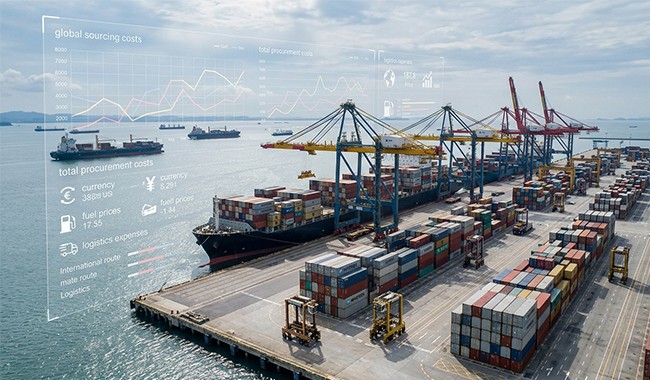
Not Sure About Your Unit Cost or Manufacturing Overhead?
In most cross-border sourcing operations, B2B trade platforms, global B2B marketplaces, B2B trade websites, international B2B marketplace, wholesale website like Alibaba, top B2B marketplaces in the world, global B2B marketplace sites, and B2B international marketplace are initially adopted as efficiency tools to reduce supplier discovery costs and accelerate procurement cycles. For early-stage importers, e-commerce sellers, and trading companies, these systems appear to provide immediate access to global supply networks, standardized listings, and seemingly comparable pricing structures. However, this perception often ignores the structural dependency being created beneath the surface of procurement workflows.
As sourcing volume increases, decision-makers frequently discover that these platforms begin to influence not only supplier selection but also cost stability, quality consistency, and operational flexibility. What starts as a discovery layer gradually becomes a constraint on OEM coordination, product development scalability, and long-term sourcing strategies. In this transition, the platform is no longer neutral infrastructure—it becomes a governance layer that shapes margins, supplier behavior, and ultimately business survivability.

The Hidden Shift From Growth Tool to Growth Bottleneck in B2B Trade Platforms
The transition from growth enabler to structural constraint rarely happens as a single event. In practice, b2b trade platforms and global B2B marketplaces evolve from optional sourcing channels into embedded procurement dependencies. This shift is typically invisible until operational scale exposes friction between platform logic and business requirements. The core issue is not platform failure in isolation, but misalignment between standardized marketplace architecture and increasingly complex sourcing strategies.
At early stages, a wholesale website like Alibaba optimizes for speed of supplier discovery and price comparison. This aligns well with low-volume experimentation and fragmented product testing. However, as procurement systems mature, decision-makers begin to require deeper integration with OEM workflows, product customization cycles, and compliance frameworks. At this point, the platform’s standardized listing structure becomes a limiting factor rather than a productivity gain.
A critical structural gap emerges in three operational dimensions:
| Dimension | Early Stage Benefit | Scaling Stage Constraint |
|---|---|---|
| Supplier Discovery | Fast access to global suppliers | High noise-to-signal ratio reduces quality filtering accuracy |
| Pricing Logic | Transparent comparison across vendors | Price distortion due to fragmented MOQ and hidden costs |
| Product Development | Basic OEM contact initiation | Lack of integration with product development companies and iterative prototyping |
This gap is particularly visible in categories requiring iterative engineering or compliance-heavy production. In sectors such as electronics, consumer hardware, or regulated health & beauty manufacturing, sourcing decisions cannot rely solely on listing-level comparison. The absence of structured OEM lifecycle integration forces procurement teams to manually bridge gaps between design, sampling, and production control.
In parallel, reliance on global b2b marketplace sites introduces a second-order constraint: supplier dependency concentration. As procurement consolidates around a limited set of platforms, negotiation leverage shifts from buyers to marketplace ecosystems. This affects not only pricing but also supplier responsiveness, customization willingness, and long-term continuity of supply relationships.
At this stage, sourcing strategies begin to diverge. Some organizations attempt incremental optimization within existing platforms, while others transition toward hybrid models combining direct OEM relationships, private sourcing networks, and specialized procurement systems. The decision is rarely binary. Instead, it reflects an assessment of whether international b2b marketplace infrastructure still supports business model evolution or has become a ceiling on operational scalability.
Ultimately, the shift is defined not by platform quality but by business complexity. Once procurement requires structured cost modeling (including tools like a break even sales calculator), integrated product solutions, and continuous supplier development loops, traditional marketplace logic becomes insufficient. The constraint is architectural, not transactional.
The Core Failure Points of Wholesale Website Like Alibaba in Real Business Operations
The operational limitations of a wholesale website like Alibaba are not typically visible at the point of supplier discovery, but emerge during execution cycles where procurement moves from selection to repeatability. In real-world b2b trade platforms usage, the first structural failure point is verification asymmetry. Suppliers listed on global b2b marketplaces often present standardized capability signals, but these signals are not consistently tied to production reality. As a result, procurement teams face a delayed mismatch between expected OEM capability and actual manufacturing output, particularly in multi-batch or multi-variant orders.
A second failure point appears in cost composition opacity. While b2b trade websites are designed around unit price comparison, they do not fully expose the embedded variability in tooling, packaging adjustments, compliance testing, and logistics fragmentation. This creates a distorted decision baseline where initial margin models appear stable but deteriorate after repeated procurement cycles. In practice, sourcing teams often discover that early-stage “best price” suppliers cannot sustain consistent output once order complexity increases.
A third issue is coordination inefficiency across fragmented supplier ecosystems. Even when using international B2B marketplace structures, procurement execution remains decentralized, requiring manual alignment across sampling, production scheduling, and quality assurance. This becomes especially problematic in categories requiring iterative refinement, such as consumer electronics or regulated industrial components under compliance frameworks like CE or FCC certification. The absence of integrated workflow orchestration forces companies to reconstruct supply chain logic externally, increasing both transaction cost and execution risk.
A simplified breakdown of failure impact can be observed below:
| Failure Area | Operational Impact | Business Consequence |
|---|---|---|
| Supplier Verification Gap | Inconsistent production quality | Increased RMA and reputational risk |
| Hidden Cost Structure | Unpredictable landed cost (Landed Cost Volatility) | Margin erosion over scaling cycles |
| Coordination Fragmentation | Multi-supplier misalignment | Delayed time-to-market |
In sourcing categories involving OEM customization or product solutions development, these issues are amplified. When suppliers cannot be systematically evaluated beyond platform metadata, procurement becomes reactive rather than engineered. This directly impacts scalability for businesses relying on top b2b marketplaces in the world, where volume growth does not automatically translate into operational maturity.
When B2B Trade Websites Become a Structural Risk Instead of a Growth Channel
The transition from operational inefficiency to structural risk occurs when dependency on b2b trade platforms begins to influence strategic decision architecture rather than just supplier selection. At this stage, the issue is no longer about individual supplier performance but about system-level constraints imposed by global b2b marketplace sites. Procurement logic becomes constrained by platform visibility rules, ranking mechanisms, and standardized listing formats that do not reflect true supply chain capability.
One of the most critical structural risks is loss of procurement autonomy. As sourcing scales, companies increasingly rely on b2b international marketplace ecosystems to define what is “available,” effectively narrowing innovation scope. This creates a feedback loop where product development is shaped by marketplace supply rather than market demand. Over time, this reverses the traditional flow of sourcing strategies, where product requirements should define supplier selection, not the other way around.
A second structural risk emerges in capital efficiency distortion. When procurement is heavily routed through standardized marketplaces, businesses often miscalculate unit economics because hidden variability in logistics, MOQ scaling, and rework cycles is not fully reflected in early-stage modeling tools. In more mature organizations, this is where financial instruments like a break even sales calculator become essential—not as a theoretical tool, but as a corrective mechanism for platform-induced pricing distortion.
At a deeper level, structural risk manifests as supplier lock-in paradox. While platforms appear to offer flexibility, in practice they concentrate sourcing behavior into predictable supplier pools. This reduces exposure to alternative OEM ecosystems, including specialized product development companies that operate outside standardized marketplace frameworks. The long-term effect is reduced innovation velocity and increased dependency on platform-curated supplier ecosystems.
In industries such as automotive components, smart hardware, and regulated manufacturing (Auto supply chains), this constraint becomes more pronounced due to compliance cycles and engineering iteration requirements. At this point, organizations often reassess whether continued reliance on global b2b marketplaces still supports growth objectives or whether it has become a limiting governance layer embedded in procurement infrastructure.
When this threshold is reached, the question is no longer about optimizing platform usage, but about whether the platform itself should remain part of the sourcing architecture.
Real Business Scenarios Where Alibaba-Type Platforms Break Down
In real procurement environments, breakdowns in a wholesale website like Alibaba are rarely triggered by single-point failures. They emerge when operational complexity exceeds the platform’s ability to represent supply chain reality. One common scenario is rapid SKU expansion in e-commerce operations. Sellers relying on b2b trade platforms for product sourcing often discover that early-stage supplier stability does not scale linearly. Once order frequency increases, variability in lead time, packaging consistency, and batch quality becomes structurally visible, not incidental.
A second breakdown scenario appears in cross-border distribution scaling. Importers using global b2b marketplaces typically operate under the assumption that supplier continuity is stable across repeat orders. However, in practice, supplier behavior shifts once order volume grows beyond initial sampling thresholds. This creates what can be defined as “elastic reliability”—performance that appears stable at low volume but degrades under sustained demand pressure. In industries such as consumer electronics accessories or home appliances, this leads to cascading delays in downstream retail commitments.
A third scenario occurs in OEM-driven private label development. When sourcing moves from generic products to customized manufacturing, companies often attempt to coordinate design, sampling, and production through b2b trade websites that were not architected for iterative engineering workflows. The result is fragmentation between product specification intent and manufacturing execution. For example, minor changes in mold design or material specification may require multiple supplier reconfirmations, increasing both cycle time and rework probability.
A structured view of breakdown conditions:
| Scenario Type | Trigger Condition | Operational Failure Mode |
|---|---|---|
| SKU Scaling | Rapid catalog expansion | Quality drift across batches |
| Cross-border Growth | Multi-region fulfillment | Delivery inconsistency |
| OEM Customization | Product iteration cycles | Specification misalignment |
In sectors involving industrial components, smart devices, or regulated manufacturing supply chains, these breakdowns are amplified by compliance dependencies and certification cycles. Even when using international b2b marketplace infrastructure, the lack of integrated production governance creates gaps between sourcing intent and execution reality. These gaps are not visible during initial supplier selection, but become structurally unavoidable at scale.
How to Evaluate Whether You Have Outgrown Global B2B Marketplaces
Determining whether a business has outgrown global b2b marketplaces is not a binary judgment but a diagnostic process based on operational stress signals. The first evaluation dimension is procurement predictability. When sourcing outcomes from b2b trade platforms begin to vary significantly across identical reorders, the system is no longer functioning as a stable procurement layer. This variability indicates that supplier reliability is being mediated by platform visibility rather than verified production capability.
A second diagnostic dimension is cost structure stability. If landed cost fluctuations exceed forecast tolerances across procurement cycles, the underlying sourcing model is likely misaligned with operational scale. In such cases, tools like a break even sales calculator become essential not as financial reporting instruments, but as early warning systems for margin erosion caused by fragmented supplier execution across global B2B marketplace sites.
A third evaluation factor is supplier dependency concentration. When a majority of procurement decisions are constrained within a limited set of b2b international marketplace ecosystems, strategic flexibility declines. This is particularly visible when alternative OEM channels or direct manufacturer relationships are not actively maintained. Over time, this leads to reduced negotiation leverage and higher exposure to platform-driven supply constraints.
A practical evaluation framework can be summarized as follows:
| Dimension | Healthy State | Outgrown Signal |
|---|---|---|
| Procurement Consistency | Stable repeat orders | High variance across identical SKUs |
| Cost Predictability | Controlled landed cost | Frequent margin compression |
| Supplier Diversity | Multi-channel sourcing | Platform-dependent sourcing pool |
In advanced procurement environments involving product solutions development, OEM collaboration, and structured sourcing strategies, these signals tend to appear earlier due to higher operational complexity. Once these indicators persist across multiple procurement cycles, it suggests that reliance on top b2b marketplaces in the world is no longer purely an efficiency decision but a structural constraint on growth scalability.
At this stage, evaluation is not about replacing platforms immediately, but about identifying whether current sourcing architecture still supports business trajectory or is silently limiting expansion velocity.
Strategic Alternatives Beyond Traditional International B2B Marketplace Models
When procurement complexity exceeds the structural capacity of international b2b marketplace systems, the strategic response is not simply platform replacement, but architectural diversification of sourcing channels. The first alternative is direct OEM engagement, where procurement teams bypass b2b trade platforms and establish structured relationships with manufacturers capable of supporting iterative production cycles. This approach is particularly relevant for businesses dealing with product customization, regulated specifications, or long-term brand development, where continuity and engineering alignment matter more than supplier abundance.
A second alternative involves building hybrid sourcing ecosystems that combine direct factory relationships with selective use of global b2b marketplaces for discovery and benchmarking. In this model, marketplaces are repositioned as intelligence layers rather than execution layers. Procurement teams extract pricing signals, supplier references, and category mapping data from b2b trade websites, but execution is shifted to vetted OEM partners or long-term manufacturing contracts. This separation reduces dependency risk while preserving market visibility.
A third structural alternative is integration with specialized product solutions providers and supply chain orchestration partners. Unlike traditional b2b international marketplace systems, these intermediaries focus on end-to-end coordination across design, tooling, compliance, and logistics. This is particularly effective in categories requiring continuous iteration, such as consumer hardware or industrial components, where sourcing is no longer transactional but lifecycle-driven.
A comparative view of sourcing evolution:
| Model | Primary Function | Risk Profile | Scalability |
|---|---|---|---|
| Traditional marketplaces | Supplier discovery | High dependency risk | Limited at scale |
| Hybrid sourcing systems | Balanced execution | Moderate risk distribution | High if governed properly |
| OEM + product solution networks | Full lifecycle control | Lower structural risk | Highest long-term scalability |
In this transition, tools such as a break even sales calculator become embedded within sourcing architecture rather than isolated financial instruments. They are used to validate whether sourcing decisions from top b2b marketplaces in the world align with downstream profitability under different production and logistics scenarios. This shift reflects a broader evolution from procurement efficiency to supply chain engineering.

Decision Framework: Stay, Expand, or Replace Your Sourcing Platform
The decision to stay within, expand across, or replace dependency on global b2b marketplaces should be based on structural indicators rather than preference or supplier familiarity. The first decision layer is operational stability. If procurement outcomes from b2b trade platforms remain consistent across multiple reorder cycles, the system is still functioning within acceptable tolerance boundaries. In this case, optimization rather than replacement is the rational path.
The second layer evaluates strategic elasticity. When businesses begin expanding into multi-category sourcing, private label development, or geographically distributed fulfillment, reliance on a single wholesale website like Alibaba often becomes insufficient. At this stage, expansion across multiple b2b trade websites or integration of direct OEM channels may provide better risk distribution without full system abandonment.
The third and most critical layer is structural constraint detection. This occurs when sourcing limitations directly influence product roadmap decisions, margin ceilings, or market entry speed. If sourcing architecture begins to dictate what products can be launched rather than supporting product strategy, dependency on international b2b marketplace systems has shifted from operational tool to strategic bottleneck. At this stage, even decisions around best selling products worldwide are no longer driven by demand signals or market opportunities, but instead constrained by what is available through platform-based sourcing ecosystems.
A structured decision framework can be expressed as follows:
| Decision State | Key Indicator | Recommended Action |
|---|---|---|
| Stay | Stable cost + stable suppliers | Optimize within current platforms |
| Expand | Growth + moderate sourcing friction | Diversify across multiple marketplaces + OEM channels |
| Replace | Margin erosion + supply inconsistency | Transition to hybrid OEM + supply chain systems |
In more advanced procurement environments involving OEM integration, product development companies, and structured sourcing strategies, the replacement threshold is reached earlier due to higher execution sensitivity. Conversely, low-complexity categories such as standardized commodities may remain viable within global b2b marketplace sites for longer cycles.
Ultimately, the decision is not about abandoning b2b trade platforms, but about recalibrating their role within a broader sourcing architecture. They may remain valuable as discovery and benchmarking systems, while execution shifts toward more controlled and vertically integrated supply chain models.
Practical Next Steps for Building a Scalable Global Sourcing Strategy
The first practical step in moving beyond dependency on global b2b marketplaces is to re-map sourcing architecture based on execution reality rather than platform convenience. This requires decomposing procurement into functional layers: discovery, validation, production control, and lifecycle management. In many organizations relying heavily on b2b trade platforms, these layers are incorrectly merged, which creates hidden inefficiencies that only appear during scale expansion. Separating these functions allows decision-makers to identify where b2b trade websites are still effective and where structural replacement is required.
A second step is to establish a supplier verification system that operates independently of international b2b marketplace data structures. This system should not rely solely on platform ratings or transactional history, but instead integrate multi-source validation inputs such as factory audits, production traceability, and OEM capability scoring. In practice, this creates a parallel sourcing intelligence layer that reduces over-reliance on any single wholesale website like Alibaba and improves resilience across fluctuating supply conditions.
A third step involves formalizing sourcing decisions through cost and profitability simulation models. Instead of evaluating suppliers only on unit price, procurement teams should incorporate landed cost modeling, demand variability, and margin sensitivity analysis. Tools such as a break even sales calculator become operational instruments in this phase, helping align sourcing decisions with downstream revenue reality rather than upstream pricing assumptions from global b2b marketplace sites.
A structured execution roadmap can be expressed as follows:
| Phase | Objective | Key Output |
|---|---|---|
| Layer Decomposition | Separate sourcing functions | Clear procurement architecture map |
| Supplier Verification System | Reduce dependency risk | Independent supplier scoring model |
| Cost Simulation Integration | Align sourcing with profitability | Break-even validated sourcing decisions |
| OEM Integration Strategy | Strengthen production control | Long-term manufacturing partnerships |
In advanced implementations, sourcing is no longer treated as a procurement activity but as a product development extension. This is where product solutions, OEM collaboration, and structured engagement with product development companies become central to competitiveness. Instead of reacting to listings on top b2b marketplaces in the world, organizations begin to proactively define supply requirements and engineer supplier ecosystems around product strategy.
At this stage, the role of b2b international marketplace systems becomes narrowly defined: they serve as data extraction and benchmarking environments rather than execution frameworks. Mature sourcing strategies use these platforms selectively for market intelligence, while execution shifts toward controlled OEM networks, integrated supply chains, and structured sourcing strategies aligned with long-term scalability.
Ultimately, building a scalable global sourcing system requires a shift from platform dependency to system design thinking. The objective is not to eliminate b2b trade platforms, but to reposition them within a broader architecture where procurement decisions are driven by profitability, control, and long-term operational resilience rather than platform convenience.
FAQ
1. How do I know if my sourcing problem is platform-related or supplier-related?
The most common analytical error in procurement teams is misattributing execution failures to suppliers when the real constraint is system design. If failures occur across multiple suppliers with similar patterns—such as inconsistent lead times, unpredictable quality variance, or repeated communication breakdowns—the issue is likely structural, not individual. This often indicates over-reliance on b2b trade platforms where supplier selection is driven by visibility rather than verified capability. A practical test is to segment suppliers into cohorts and compare performance variance; high variance across all cohorts suggests platform-level distortion rather than supplier-specific failure.
2. When should a company stop relying on a wholesale website like Alibaba for sourcing?
A wholesale website like Alibaba remains effective in early discovery stages, but becomes limiting when procurement requires repeatability, customization, or lifecycle control. The key threshold is when sourcing decisions begin affecting product roadmap feasibility. If OEM iterations, compliance cycles, or margin stability cannot be consistently maintained, the platform is no longer neutral infrastructure. At that point, organizations typically shift toward hybrid sourcing models combining direct OEM relationships and selective use of global b2b marketplaces for benchmarking rather than execution.
3. Why do sourcing costs increase even when unit prices on global b2b marketplaces remain stable?
This is a common misinterpretation caused by focusing only on visible unit pricing within global b2b marketplace sites. In reality, total landed cost expands due to hidden variables such as QC rework, shipping variability, packaging inconsistencies, and supplier coordination inefficiencies. These costs are not reflected in listing prices but accumulate across procurement cycles. The correct evaluation approach is to model full-cycle cost behavior using tools like a break even sales calculator combined with scenario-based logistics and defect-rate assumptions.
4. What is the biggest risk of scaling sourcing exclusively through b2b trade websites?
The primary risk is structural dependency concentration. When sourcing is centralized within b2b trade websites, procurement behavior becomes shaped by platform architecture—ranking systems, supplier visibility, and standardized listing formats. This limits exposure to non-platform OEM ecosystems and reduces negotiation leverage over time. The second-order effect is innovation constraint: product development begins to align with available supply rather than strategic demand. This misalignment is particularly critical in industries requiring continuous product solutions evolution and OEM iteration.
5. How should procurement teams balance global b2b marketplaces with direct OEM sourcing?
A balanced model treats global b2b marketplaces as discovery and benchmarking layers rather than execution systems. Direct OEM relationships should handle production continuity, customization, and lifecycle management. The transition should be phased: first, map current suppliers by performance stability; second, identify OEM candidates for high-risk categories; third, migrate critical SKUs away from marketplace dependency. This hybrid approach preserves sourcing flexibility while reducing structural risk in long-term sourcing strategies.
6. What indicators show that sourcing architecture is becoming a business constraint?
The most reliable indicators are not cost-based but operational. These include delayed product launches due to supplier uncertainty, repeated redesign cycles caused by manufacturing inconsistency, and inability to scale SKUs without proportional increase in coordination cost. When b2b international marketplace systems begin influencing what can be produced rather than how efficiently it can be sourced, the sourcing layer has shifted from support function to constraint mechanism. This is typically the inflection point where structural redesign becomes necessary.
7. How do OEM partnerships change sourcing strategy compared to marketplace-based sourcing?
OEM partnerships fundamentally shift procurement from selection-based logic to capability-based collaboration. Instead of choosing among listings on b2b trade platforms, companies define specifications first and then build supplier alignment around those requirements. This enables deeper integration with product development companies, better control over iteration cycles, and more predictable cost structures. However, it also increases dependency on fewer partners, making supplier governance and contract structure critical to avoid new forms of concentration risk.
Conclusion
The structural limitation of b2b trade platforms, global b2b marketplaces, b2b trade websites, international b2b marketplace systems, wholesale websites like Alibaba, top b2b marketplaces in the world, and global b2b marketplace sites is not a failure of access, but a misalignment between platform design and business scaling logic. These systems are optimized for discovery efficiency, not for lifecycle control, OEM integration, or multi-cycle procurement governance.
For a deeper system-level breakdown of how sourcing architecture evolves beyond b2b trade platforms and global b2b marketplaces, explore our Global B2B sourcing and supply chain system guide for a deeper system-level breakdown of sourcing architecture beyond b2b trade platforms and global b2b marketplaces.
A mature sourcing strategy does not eliminate platforms but redefines their role within a broader system that integrates OEM networks, cost modeling, and structured sourcing architecture. The key decision is whether procurement remains discovery-driven or evolves into a controlled execution system aligned with profitability and scalability. Organizations that recognize this shift early can redesign their sourcing strategies, stabilize margins, and build long-term resilience across global supply chains without being constrained by platform architecture.