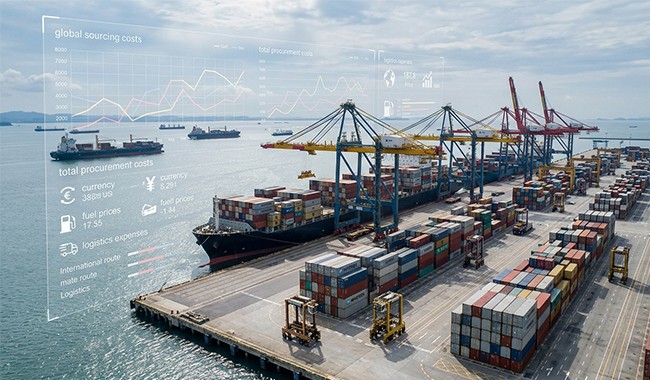
Not Sure About Your Unit Cost or Manufacturing Overhead?
The debate around Wholesale vs Dropshipping Business Model Tradeoffs in Procurement Strategy has become a recurring fault line in modern B2B procurement. What appears to be a simple operational choice—holding inventory versus delegating fulfillment—often becomes a structural decision that shapes cash flow stability, supplier dependency, and long-term scalability. In practice, many businesses enter this decision through a tactical lens, without aligning it to a broader supplier sourcing strategy or understanding how it affects downstream strategic sourcing vendors relationships and overall supply chain resilience.
In most cases, failures are not caused by the models themselves but by misaligned expectations within the product sourcing strategy and fragmented execution across procurement functions. When organizations lack a coherent framework of procurement strategy providers or fail to integrate strategic sourcing and supply chain management, they tend to underestimate cost variability, lead-time volatility, and hidden fulfillment risks. This creates a persistent gap between projected margins and realized profitability, especially in cross-border or multi-supplier environments where sourcing decisions are heavily influenced by fragmented data and reactive purchasing behavior.

Why Do Procurement Decisions Between Wholesale and Dropshipping Often Fail in Real B2B Operations
Procurement failures in the context of wholesale vs dropshipping business model selection are rarely the result of price miscalculation alone. They are typically structural failures in decision architecture, where sourcing models are evaluated in isolation rather than within an integrated sourcing strategy in supply chain management framework. Organizations often assume that dropshipping reduces risk while wholesale guarantees margin efficiency, but both assumptions collapse when exposed to real operational constraints such as supplier reliability, inventory turnover velocity, and demand forecasting accuracy.
A common failure pattern emerges when businesses rely on fragmented product sourcing strategy signals without validating supplier capability or fulfillment consistency. For example, a retailer may onboard multiple suppliers through a B2B online marketplace without assessing fulfillment SLA consistency, leading to unpredictable delivery cycles and increased RMA rates. In contrast, wholesale models often fail when procurement teams overcommit capital to bulk purchasing without stress-testing demand using a product research tool or demand elasticity model. Both paths reveal a shared issue: procurement decisions are often executed without a structured supplier sourcing strategy that accounts for system-level dependencies.
The second layer of failure lies in vendor selection and governance. Many organizations treat strategic sourcing vendors as transactional suppliers rather than long-term supply chain nodes. This leads to weak integration between procurement and logistics planning, especially in global sourcing environments where lead times, compliance requirements, and freight volatility are not centrally managed. Without a unified strategic sourcing and supply chain management approach, even well-negotiated contracts fail to deliver predictable outcomes.
From a financial perspective, misalignment becomes visible when teams evaluate models without a consistent cost framework such as TCO (Total Cost of Ownership). Dropshipping may appear capital-efficient but introduces hidden costs in per-unit pricing and return handling, while wholesale compresses unit cost but amplifies inventory risk and capital lock-up. The absence of standardized tools like a roi calculator or scenario-based forecasting model leads to distorted decision-making, especially among SMBs and fast-scaling e-commerce operators.
| Procurement Dimension | Wholesale Model Risk | Dropshipping Model Risk |
|---|---|---|
| Cash Flow Structure | High upfront capital exposure | Fragmented per-order margin erosion |
| Supply Chain Control | Inventory rigidity | Supplier dependency volatility |
| Scalability Path | Warehouse constraints | Vendor fulfillment inconsistency |
Ultimately, the core issue is not model selection itself but the absence of integrated governance across procurement functions. When procurement strategy providers are not aligned with operational execution, businesses default to reactive sourcing decisions rather than system-driven optimization. This is where most failures occur—not at the point of purchase, but at the design level of the sourcing architecture.
What Structural Differences Define Wholesale vs Dropshipping in Procurement Strategy
The structural distinction between wholesale and the dropshipping business model is not limited to inventory ownership—it fundamentally changes how procurement systems are designed, measured, and governed. In wholesale structures, procurement is anchored in batch-based capital allocation, where decision velocity is slower but control over unit economics is higher. This creates a procurement environment that is heavily dependent on forecasting accuracy and supplier consolidation, especially when working with long-term strategic sourcing vendors in stable categories such as consumer electronics or industrial goods.
Dropshipping, by contrast, restructures procurement into a demand-triggered execution layer rather than a pre-committed inventory system. This means supplier sourcing strategy shifts from capacity planning to responsiveness evaluation. Procurement teams no longer optimize for bulk cost efficiency but for fulfillment reliability, API integration stability, and cross-border logistics latency. In this model, the role of procurement strategy providers becomes more operationally embedded, often overlapping with fulfillment partners and digital infrastructure providers rather than traditional sourcing intermediaries.
| Structural Dimension | Wholesale Model | Dropshipping Model |
|---|---|---|
| Inventory Control | Centralized, warehouse-based | Decentralized, supplier-held |
| Procurement Cycle | Batch purchasing | Order-by-order execution |
| Cost Logic | Economies of scale | Per-unit flexibility pricing |
| Risk Exposure | Inventory obsolescence | Supplier fulfillment variability |
From a sourcing strategy in supply chain management perspective, wholesale systems prioritize cost compression through volume aggregation, while dropshipping prioritizes elasticity and SKU experimentation speed. This divergence directly affects how product sourcing strategy is executed: wholesale requires long-cycle validation before procurement, whereas dropshipping allows iterative testing using tools like a product research tool or marketplace trend analysis.
Why Supplier Sourcing Strategy Breaks Down When Choosing the Wrong Business Model
Breakdowns in supplier sourcing strategy typically occur when organizations misalign operational expectations with the structural logic of either wholesale or dropshipping. The most critical failure point is not supplier selection itself, but the misclassification of supplier roles within the broader strategic sourcing and supply chain management framework. When a wholesale-oriented procurement structure is applied to a dropshipping environment, or vice versa, the result is systemic inefficiency rather than marginal underperformance.
One common failure pattern appears when businesses attempt to scale a dropshipping model using wholesale-grade procurement assumptions. For example, they over-invest in supplier consolidation and contract negotiation while neglecting fulfillment variability across fragmented B2B online marketplace suppliers. This creates a false sense of stability while masking operational fragility in order routing, return handling, and cross-border shipping delays. In such cases, sourcing decisions are optimized for price, not execution reliability.
Conversely, applying a dropshipping logic to a wholesale environment leads to underinvestment in inventory buffers and supplier redundancy. Procurement teams may rely too heavily on real-time global sourcing solutions, assuming that supply availability can always be dynamically adjusted. However, in high-demand volatility scenarios—such as seasonal retail spikes or industrial procurement cycles—this results in stockouts, delayed fulfillment, and lost contract credibility with downstream distributors.
A critical structural failure also emerges in vendor governance. Many organizations fail to differentiate between transactional suppliers and strategic partners, leading to misalignment in strategic sourcing vendors selection. Without clearly defined escalation paths, SLA enforcement mechanisms, and demand forecasting integration, even well-designed procurement frameworks collapse under operational stress.
In practice, this breakdown is often visible through financial distortion rather than operational failure. Teams may rely on simplified assumptions instead of structured evaluation models such as a roi calculator, leading to overestimated margins in dropshipping or underestimated holding costs in wholesale. This is not a pricing error—it is a system design failure in procurement logic.
Ultimately, when procurement strategy providers are not aligned with the underlying business model, the organization loses the ability to adapt sourcing behavior to demand structure. The result is a fragmented procurement ecosystem where sourcing decisions are reactive, vendor relationships are unstable, and the intended advantages of both models are structurally diluted.
Real Procurement Risks Hidden Behind Wholesale and Dropshipping Models
Beyond the visible trade-offs in the wholesale vs dropshipping business model, the most critical risks are often embedded in execution layers that procurement teams fail to quantify during initial design. In wholesale structures, the primary hidden risk is not inventory cost itself, but demand inflexibility under shifting market cycles. When procurement commits capital based on static forecasts, even minor deviations in sell-through rate can cascade into liquidity stress, especially in categories with long replenishment cycles or seasonal volatility. This risk is amplified when supplier sourcing strategy is optimized for price efficiency rather than demand responsiveness.
In the dropshipping business model, the hidden risk shifts from capital lock-up to operational unpredictability. Procurement teams often assume supplier availability is elastic, but in reality, fulfillment capacity is constrained by upstream bottlenecks, platform prioritization rules, and cross-border logistics instability. This creates a structural dependency on third-party B2B online marketplace ecosystems where supplier quality variance is high and enforceability of SLA terms is weak. As a result, customer experience degradation becomes a downstream manifestation of upstream sourcing fragility.
A deeper financial distortion appears when organizations fail to model risk-adjusted unit economics. Without integrating a structured roi calculator, both models tend to misrepresent profitability: wholesale underestimates holding cost amplification, while dropshipping underestimates per-order margin compression and refund leakage. These risks are rarely visible in early-stage procurement decisions but become dominant at scale.
| Risk Layer | Wholesale Model Exposure | Dropshipping Model Exposure |
|---|---|---|
| Financial Risk | Inventory obsolescence, capital freeze | Margin erosion, refund volatility |
| Operational Risk | Demand misforecasting | Supplier inconsistency |
| Strategic Risk | Low flexibility under market shifts | Dependency on external fulfillment systems |
In practice, these risks compound when organizations lack a unified product sourcing strategy that aligns procurement, logistics, and demand planning under a single decision framework. The absence of coordination between strategic sourcing vendors and fulfillment partners creates fragmented accountability, where no single node in the supply chain owns end-to-end performance outcomes.
How Strategic Sourcing and Supply Chain Management Changes the Decision Framework
When organizations shift from transactional procurement to a structured strategic sourcing and supply chain management model, the decision logic behind wholesale vs dropshipping business model selection changes fundamentally. The focus moves away from isolated cost comparison toward system-level optimization, where sourcing decisions are evaluated based on network stability, supplier interoperability, and long-term scalability.
A mature sourcing strategy in supply chain management introduces a layered evaluation mechanism. Instead of asking which model is cheaper, procurement teams begin assessing which configuration minimizes total system risk under demand uncertainty. This includes evaluating supplier redundancy, lead time variance, compliance exposure, and integration capability across strategic sourcing vendors. In this context, procurement is no longer a purchasing function but a control system for operational resilience.
One practical shift is the integration of hybrid sourcing architectures. Many advanced procurement organizations now combine wholesale anchor suppliers with dropshipping-enabled SKUs to balance capital efficiency and market responsiveness. This hybrid structure is often coordinated through procurement strategy providers that specialize in multi-node supply chain orchestration rather than single-channel procurement execution.
To operationalize this shift, organizations typically implement a structured decision workflow:
- Segment SKUs by demand predictability and margin sensitivity
- Assign sourcing models based on volatility thresholds
- Validate supplier capability using performance scoring systems
- Continuously recalibrate sourcing allocation using real-time demand signals
This framework is increasingly supported by digital infrastructure such as global sourcing solutions platforms and integrated procurement dashboards. These systems allow decision-makers to simulate sourcing outcomes before execution, rather than reacting after inventory or fulfillment failures occur.
From a strategic perspective, the role of supplier sourcing strategy evolves from vendor selection to system design. Procurement teams begin treating suppliers as configurable nodes within a dynamic network rather than static service providers. This shift is especially critical in industries with rapid SKU turnover, where traditional sourcing cycles cannot keep pace with market dynamics.
In advanced implementations, tools like a product research tool are used not only for demand validation but also for sourcing feasibility mapping—linking product opportunity directly to supplier capability and logistics feasibility. This closes the gap between commercial intent and operational execution, which is often the root cause of failure in traditional procurement models.
Ultimately, structured strategic sourcing and supply chain management does not eliminate the trade-offs between wholesale and dropshipping. Instead, it makes those trade-offs explicit, measurable, and continuously adjustable. This transforms procurement from a binary model selection problem into an adaptive optimization system that evolves with market conditions, supplier ecosystems, and internal growth constraints.

How to Evaluate Which Model Fits Your Business Using Data-Driven Tools
The decision between procurement models in the wholesale vs dropshipping business model cannot be reliably made through qualitative judgment alone, especially when businesses operate across multiple SKUs, regions, and supplier ecosystems. A data-driven evaluation framework is required to convert sourcing decisions into measurable scenarios under controlled assumptions. In practice, this means shifting from opinion-based selection to structured simulation using cost, demand, and supplier performance variables tied to a defined product sourcing strategy.
A foundational step is building a comparative cost model that normalizes both wholesale and dropshipping under identical revenue assumptions. This is where tools like a ROI calculator become operationally critical. Instead of evaluating gross margin in isolation, procurement teams must calculate net contribution after logistics, return handling, platform fees, and currency volatility.
Industry benchmarks show that total fulfillment and post-purchase costs typically account for 15%–35% of order value in dropshipping models, primarily driven by per-order logistics and return processing, while wholesale structures often allocate 8%–25% of revenue to inventory holding, warehousing, and capital carry costs depending on turnover speed and storage duration.
For wholesale, the dominant variables are inventory turnover and holding cost duration; for the dropshipping business model, the dominant variables are per-order fulfillment cost and refund probability.
A simplified evaluation structure can be represented as:
| Evaluation Layer | Wholesale Model Inputs | Dropshipping Model Inputs |
|---|---|---|
| Revenue Stability | High-volume predictability | Demand-driven variability |
| Cost Structure | Fixed upfront + storage | Variable per-order cost |
| Risk Adjustment | Inventory depreciation | Supplier fulfillment failure |
| Scaling Constraint | Capital availability | Supplier capacity reliability |
Industry Benchmark Snapshot (Decision Reference Layer)
| Metric | Wholesale Benchmark | Dropshipping Benchmark |
|---|---|---|
| Average Gross Margin | 20% – 45% | 10% – 30% |
| Inventory Risk Exposure | High (capital locked 30–90 days) | Low (0 inventory holding) |
| Fulfillment Delay Impact | Medium | High (3–15 days variance) |
| Return Rate Range | 5% – 12% | 8% – 25% |
| Cash Flow Cycle | 30–120 days | 0–7 days |
To operationalize this model, procurement teams increasingly rely on integrated product research tool systems connected to B2B online marketplace data. These systems allow SKU-level testing of demand elasticity before committing to either sourcing model. In advanced setups, procurement workflows are embedded into global sourcing solutions platforms that simulate supplier lead times, fulfillment reliability, and cost volatility under different demand scenarios.
At a governance level, the role of procurement strategy providers becomes increasingly analytical rather than transactional. Instead of simply identifying suppliers, they define decision boundaries: when wholesale provides structural advantage, when dropshipping preserves optionality, and when hybrid sourcing is required to balance both. This transforms strategic sourcing and supply chain management into a scenario-based optimization system rather than a static procurement plan.
When Wholesale Is the Right Model vs When Dropshipping Fails
The wholesale vs dropshipping business model decision becomes clearer when evaluated through failure conditions rather than theoretical advantages. Wholesale is structurally optimal when demand stability is high, product lifecycle is predictable, and supplier consolidation can generate measurable cost advantages. In these environments, a well-executed supplier sourcing strategy allows procurement teams to lock in pricing efficiency, improve supplier negotiation leverage, and reduce per-unit logistics complexity.
Wholesale performs particularly well in categories where replenishment cycles are consistent and demand variance is low-to-moderate. Examples include standardized consumer goods, industrial components, or regulated product categories where compliance and batch certification create natural entry barriers. In such cases, strategic sourcing vendors play a critical role in ensuring quality consistency and long-term supply continuity, making wholesale a structurally efficient model.
However, dropshipping fails systematically under conditions of high operational dependency and low supplier accountability. When demand spikes unpredictably or customer expectations require tight delivery windows, the dropshipping business model becomes exposed to fulfillment latency, stock inconsistency, and return friction. These risks are amplified when procurement teams rely on fragmented suppliers sourced from a generic B2B online marketplace without enforceable SLA structures or integrated logistics visibility.
A key failure condition appears when dropshipping is used beyond its functional boundary—specifically in high-margin, brand-sensitive, or compliance-heavy categories. In these cases, lack of control over packaging, shipping experience, and after-sales handling directly undermines customer lifetime value. Without a structured sourcing strategy in supply chain management, businesses tend to underestimate how quickly service variability translates into brand erosion and acquisition cost inflation.
From a decision perspective, the distinction can be summarized as:
- Wholesale is optimal when: demand is stable, capital is available, and supplier consolidation improves efficiency
- Dropshipping fails when: fulfillment reliability is mission-critical and supplier variability exceeds acceptable tolerance
- Hybrid requirement emerges when: demand volatility exists but brand control and margin protection are still required
In practice, the most resilient organizations do not treat this as a binary choice. Instead, they embed both models into a controlled strategic sourcing and supply chain management system, where supplier sourcing strategy is continuously recalibrated based on SKU performance, supplier reliability scores, and margin sensitivity thresholds. This is where procurement transitions from model selection to adaptive system design, often coordinated by specialized procurement strategy providers that manage sourcing portfolios rather than isolated supplier lists.
How B2B Online Marketplaces Are Reshaping Procurement Strategy Decisions
The emergence of the B2B online marketplace ecosystem is fundamentally changing how procurement decisions are structured, particularly in the context of wholesale vs dropshipping business model selection. Unlike traditional sourcing channels, these platforms are no longer passive supplier directories—they function as dynamic pricing, capability, and risk discovery systems. This shifts procurement from relationship-driven sourcing to data-driven evaluation, where supplier selection is increasingly mediated by platform-level intelligence rather than direct negotiation alone.
From a supplier sourcing strategy perspective, marketplaces introduce a new layer of transparency that compresses traditional procurement cycles. Buyers can now compare strategic sourcing vendors across regions, evaluate MOQ flexibility, and analyze fulfillment performance in near real time. This reduces dependency on long-cycle supplier vetting but simultaneously increases exposure to inconsistent supplier quality when governance structures are weak. As a result, procurement teams must now design sourcing filters that go beyond price comparison and incorporate fulfillment reliability, dispute history, and logistics performance.
A key structural shift is the integration of procurement decision tools directly into marketplace environments. Many platforms now embed product research tool capabilities and demand signals, allowing procurement teams to validate market viability before committing to a product sourcing strategy. In more advanced systems, global sourcing solutions provide scenario-based simulations that model landed cost variations, shipping delays, and supplier failure probabilities. This transforms marketplaces from sourcing channels into decision intelligence layers within strategic sourcing and supply chain management frameworks.
| Marketplace Capability | Procurement Impact |
|---|---|
| Supplier visibility aggregation | Faster vendor discovery, reduced sourcing cycle time |
| Embedded analytics tools | Improved SKU-level decision accuracy |
| Cross-border logistics integration | Reduced friction in global procurement execution |
| Supplier rating systems | Higher accountability in vendor selection |
However, this evolution also introduces a structural dependency risk: procurement decisions become increasingly platform-governed rather than internally governed. Without strong internal procurement strategy providers or centralized sourcing policies, organizations risk over-optimizing for platform convenience while underestimating long-term supplier concentration risk. This is particularly relevant in hybrid sourcing environments where both wholesale and dropshipping business model elements coexist.
Common Mistakes in Product Sourcing Strategy That Lead to Profit Failure
Most profit failures in modern procurement systems do not originate from pricing errors but from systematic flaws in product sourcing strategy design and execution. One of the most recurring issues is premature scaling—organizations commit to volume expansion before validating supplier stability, demand consistency, and margin durability. This creates structural fragility that becomes visible only after operational stress increases, particularly in cross-border procurement environments.
A second critical mistake is the over-reliance on fragmented sourcing signals without integrating them into a coherent sourcing strategy in supply chain management framework. Procurement teams often select suppliers from multiple B2B online marketplace sources without standardizing evaluation criteria. This leads to inconsistent supplier performance scoring and weak comparability between vendors. Over time, this erodes the ability to maintain a stable supplier sourcing strategy, especially when switching between wholesale and dropshipping configurations.
Another frequent failure is mispricing risk exposure. Teams often evaluate sourcing decisions based on unit cost alone while ignoring system-level volatility such as returns, shipping delays, and compliance failures. Without structured tools like a roi calculator, organizations systematically overestimate margins in the dropshipping business model and underestimate hidden costs in wholesale inventory cycles. This creates distorted decision-making loops that scale inefficiency rather than profitability.
A simplified failure pattern can be summarized as follows:
- Demand validated late instead of before sourcing commitment
- Supplier selection driven by price rather than operational reliability
- No standardized scoring system for strategic sourcing vendors
- Lack of integration between procurement execution and financial modeling
- Absence of centralized oversight from procurement strategy providers
A further structural issue emerges when businesses treat sourcing as a static procurement activity rather than a dynamic optimization process. Without continuous recalibration of sourcing decisions, even well-designed systems degrade over time. This is especially critical in fast-moving categories where SKU performance changes rapidly and strategic sourcing and supply chain management must adapt in near real time.
In practice, the most damaging outcome is not individual sourcing errors but cumulative decision drift. When procurement lacks a unified governance model, small inefficiencies compound across suppliers, channels, and fulfillment layers. This is where both wholesale and dropshipping models fail—not in isolation, but through unmanaged interaction effects within a poorly structured supplier sourcing strategy framework.
Decision Framework: How to Choose Between Wholesale and Dropshipping Strategically
A structured decision framework for wholesale vs dropshipping business model selection must move beyond preference-based reasoning and instead operate on constraint-based evaluation. In mature procurement environments, the decision is not “which model is better,” but “which model minimizes structural mismatch under defined business conditions.” This requires embedding both models into a measurable sourcing strategy in supply chain management framework where demand stability, capital intensity, and supplier reliability are treated as primary decision variables rather than secondary considerations.
The first layer of the framework evaluates demand predictability and SKU lifecycle volatility. If demand is stable and forecastable with acceptable variance, wholesale becomes structurally viable due to its economies-of-scale advantage. However, when demand signals are exploratory or highly elastic, the dropshipping business model provides a lower-risk experimentation layer. This is where product sourcing strategy must be aligned with lifecycle stage—early validation favors flexibility, while maturity favors consolidation.
The second layer evaluates supply-side control and vendor maturity. A robust supplier sourcing strategy requires assessing whether strategic sourcing vendors can support consistent fulfillment, standardized lead times, and scalable production capacity. In wholesale environments, supplier consolidation strengthens negotiation leverage; in dropshipping environments, supplier fragmentation must be managed through performance scoring systems embedded in procurement strategy providers platforms.
A simplified decision logic can be structured as follows:
- If capital availability is high AND demand is stable → prioritize wholesale
- If demand is uncertain AND SKU testing is required → prioritize dropshipping
- If both conditions coexist → adopt hybrid allocation by SKU segment
- If supplier reliability is low → avoid dropshipping-heavy dependency
- If logistics infrastructure is strong → wholesale scaling becomes more efficient
The third layer introduces financial modeling discipline. Instead of comparing unit costs, procurement teams must normalize decisions using scenario-based outputs from a roi calculator, incorporating inventory holding cost, fulfillment variability, return rates, and currency exposure. In advanced implementations, this evaluation is integrated into strategic sourcing and supply chain management systems that continuously recalibrate sourcing allocation based on real-time performance data.
Final Recommendation: Building a Hybrid Procurement Strategy for Long-Term Stability
A purely binary interpretation of sourcing models creates unnecessary rigidity in modern procurement systems. The most resilient architecture is not wholesale vs dropshipping business model selection, but the construction of a hybrid sourcing ecosystem that dynamically allocates SKUs across both models based on performance, risk exposure, and lifecycle stage. This approach allows organizations to maintain capital efficiency while preserving market responsiveness.
In this hybrid structure, wholesale functions as the stability layer. It anchors core SKUs with predictable demand, where strategic sourcing vendors provide cost efficiency and supply continuity. Dropshipping, by contrast, operates as the exploration layer—supporting rapid testing of new products, geographic expansion, and demand validation without capital lock-up. The interaction between both layers must be governed by a unified supplier sourcing strategy, ensuring that supplier allocation decisions remain consistent with overall business objectives.
To operationalize this model, organizations typically implement a three-tier sourcing architecture:
- Core Tier (Wholesale): High-volume, stable demand products with optimized inventory cycles
- Expansion Tier (Dropshipping): New SKUs tested through flexible fulfillment networks
- Buffer Tier (Hybrid): Products transitioning between validation and scale phases
This structure requires strong integration between procurement execution and analytical systems. Tools such as a product research tool are used to determine SKU viability, while B2B online marketplace platforms provide supplier discovery and benchmarking. Meanwhile, global sourcing solutions enable cross-border optimization of cost, lead time, and compliance exposure.
From a governance perspective, the role of procurement strategy providers becomes central in maintaining equilibrium across sourcing layers. Their function is not only supplier selection but continuous optimization of allocation logic across inventory, demand, and fulfillment systems. This ensures that sourcing strategy in supply chain management remains adaptive rather than static, particularly in volatile global trade environments.
Ultimately, the long-term stability of procurement systems does not come from choosing the correct model, but from designing a system capable of switching between models without structural disruption. A well-designed hybrid framework transforms sourcing from a binary decision into a controlled portfolio system—where risk, capital, and scalability are continuously balanced under a unified strategic sourcing and supply chain management architecture.
FAQ
1. How should a business decide whether wholesale or dropshipping is more financially sustainable in the long run?
Financial sustainability should not be evaluated through margin alone, but through system-level cost stability under different demand conditions. Wholesale tends to outperform when demand is predictable, because fixed procurement and inventory planning reduce per-unit cost volatility. However, it introduces capital lock-up and depreciation risk, especially in slow-moving categories. The dropshipping business model, while capital-light, often carries hidden margin compression due to per-order logistics, platform fees, and refund exposure.
A practical approach is to model both structures using scenario-based inputs rather than static assumptions. A roi calculator should include at least three variables: demand volatility, fulfillment cost variability, and return rate sensitivity. Businesses that fail to incorporate these often misjudge dropshipping as “lower risk,” when in reality it shifts risk from inventory to execution instability. The correct decision depends on whether your supplier sourcing strategy prioritizes capital efficiency or operational control.
2. When does dropshipping become structurally dangerous for procurement operations?
Dropshipping becomes structurally fragile when it is used beyond its intended function of demand validation and SKU experimentation. The most common failure condition occurs when businesses scale without establishing enforceable performance standards for strategic sourcing vendors, particularly in fragmented B2B online marketplace environments. This results in inconsistent fulfillment quality, delayed shipments, and high refund rates.
Another critical risk emerges when organizations rely on dropshipping for high-brand-value or time-sensitive products. In these cases, lack of control over logistics and packaging directly impacts customer retention. Without integration into a broader sourcing strategy in supply chain management, dropshipping becomes a liability multiplier rather than a flexible sourcing option. The key warning signal is when operational variability exceeds the organization’s tolerance threshold for service consistency.
3. Can wholesale and dropshipping be managed under a single procurement system?
Yes, but only if the procurement system is designed as a portfolio-based structure rather than a binary selection model. In mature organizations, wholesale and dropshipping are not alternatives but allocation layers within a unified strategic sourcing and supply chain management framework.
👉 Explore: Global B2B Sourcing, Manufacturing & Supply Chain Platform Guide
Wholesale typically anchors stable, high-volume SKUs, while dropshipping supports market testing and category expansion.
The challenge lies in governance. Without centralized control through procurement strategy providers, businesses tend to fragment supplier logic across different teams, leading to inconsistent pricing structures and supplier overlap. A unified supplier sourcing strategy ensures both models operate under shared performance metrics such as margin contribution, fulfillment reliability, and demand elasticity. This prevents operational silos and improves long-term scalability.
4. What role do digital tools play in modern sourcing model decisions?
Digital tools are no longer auxiliary—they are central to decision accuracy in modern procurement systems. Platforms such as B2B online marketplace ecosystems, combined with global sourcing solutions, allow procurement teams to simulate supplier performance, compare logistics costs, and evaluate risk exposure before committing to either wholesale or dropshipping.
A product research tool is particularly critical in early-stage decision-making, as it helps validate demand signals before capital allocation. When combined with structured financial modeling using a roi calculator, these tools reduce reliance on intuition and improve decision repeatability. However, over-reliance on platform rankings without internal validation can distort product sourcing strategy, especially when supplier incentives influence visibility rather than performance quality.
5. Why do many businesses misjudge the risk profile of wholesale vs dropshipping?
The most common misjudgment stems from treating cost structure as the primary decision factor. In reality, risk is distributed differently across both models. Wholesale concentrates risk in inventory and capital exposure, while dropshipping distributes risk across suppliers, logistics partners, and platform dependency.
Many businesses fail because they do not align sourcing decisions with their operational maturity. Without a defined supplier sourcing strategy, wholesale is often adopted too early (leading to cash flow stress), while dropshipping is scaled too aggressively (leading to fulfillment instability). A balanced approach requires embedding decisions within a strategic sourcing and supply chain management system that continuously evaluates risk exposure rather than treating model selection as a one-time decision.
6. How should procurement teams transition from dropshipping to wholesale?
The transition should be driven by demand stability, not revenue growth. A common mistake is shifting too early, before SKU-level demand patterns are fully validated. The correct trigger is consistent order volume with low variance and predictable replenishment cycles.
Before transitioning, procurement teams should re-evaluate supplier capability, logistics capacity, and capital efficiency thresholds. This often involves consolidating strategic sourcing vendors and renegotiating bulk pricing structures. In many cases, hybrid structures remain optimal, where high-performing SKUs move to wholesale while experimental SKUs remain in dropshipping. This ensures continuity in sourcing strategy in supply chain management without disrupting operational flexibility.
7. What is the biggest strategic mistake in building a sourcing model today?
The most critical mistake is treating sourcing models as static decisions rather than adaptive systems. Businesses often lock into either wholesale or dropshipping without building mechanisms to reassess performance over time. This leads to structural misalignment as market conditions evolve.
Modern procurement requires dynamic allocation logic, where supplier sourcing strategy is continuously optimized based on SKU performance, supplier reliability, and cost variability. Without this adaptability, even well-designed sourcing systems degrade into inefficiency. The role of procurement strategy providers is increasingly shifting toward enabling this continuous optimization layer rather than simply selecting vendors.
Conclusion
The wholesale vs dropshipping business model decision is not a binary operational choice but a structural design problem within modern procurement systems. Its real impact emerges through capital allocation efficiency, supplier dependency patterns, and long-term supply chain resilience. Businesses that treat it as a static selection often misalign their product sourcing strategy, leading to hidden inefficiencies that only surface at scale.
Sustainable procurement performance depends on embedding both models into a dynamic strategic sourcing and supply chain management framework. When governed through a coherent supplier sourcing strategy, supported by data-driven tools and adaptive allocation logic, organizations can shift between wholesale and dropshipping without operational disruption. The real advantage lies not in choosing a model, but in building a system capable of evolving with market conditions while maintaining cost control and execution reliability.