Not Sure About Your Unit Cost or Manufacturing Overhead?
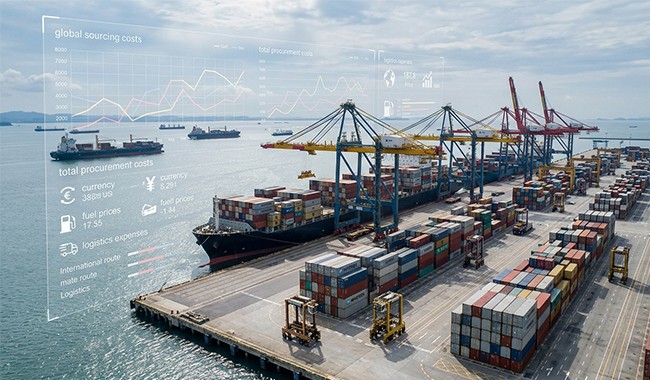
Global B2B sourcing decisions increasingly depend on how well a company integrates manufacturing and supply chain execution across regions, suppliers, and compliance environments. Many buyers enter a B2B marketplace or work with an OEM supplier, assuming that price and product availability define competitiveness. In practice, cost visibility is fragmented, lead times are unstable, and supplier performance varies across orders. Without a structured approach to global sourcing, companies underestimate the total cost of ownership – including logistics, compliance, and post-sale risk – which leads to margin erosion and operational instability.
The role of a modern B2B platform is not only to connect buyers with suppliers but to reduce uncertainty across the full sourcing lifecycle. This includes supplier validation, production feasibility, logistics coordination, and risk control. However, most procurement teams still treat sourcing, manufacturing, and supply chain as separate decisions rather than a single system. This disconnect creates structural inefficiencies that cannot be corrected at later stages, especially when scaling across multiple markets or product lines.

Why Most B2B Sourcing Fails Without a Structured Supply Chain System
Most B2B sourcing failures do not originate at the supplier selection stage – they emerge from the absence of a defined supply chain structure that aligns sourcing, manufacturing, and delivery constraints. A common miscalculation is assuming that a low-cost supplier automatically leads to competitive pricing. In reality, without synchronized supply chain sourcing and logistics planning, hidden costs accumulate through delays, rework, and inconsistent quality. This is especially visible when working with multiple OEM manufacturers or switching between suppliers without standardized specifications or process control.
Another recurring issue is the separation of sourcing strategies from execution capabilities. Many procurement teams identify suppliers through B2B ecommerce platforms or an online wholesale marketplace, but fail to validate whether those suppliers can meet production scalability, compliance requirements, or customization needs. For example, an OEM manufacturer may offer attractive pricing for private label production, but lack the capacity to maintain consistent quality at higher volumes. These gaps are rarely visible during initial negotiations and often result in costly adjustments after production has started.
A structured supply chain system forces alignment across key decision points:
- Supplier capability verification – beyond pricing, including process control and defect rates
- Manufacturing feasibility – matching product design with production capacity and tooling constraints
- Logistics planning – evaluating lead time variability, shipping modes, and regional risks
- Compliance and RMA exposure – ensuring products meet regulatory standards and can handle returns efficiently
Without this structure, companies rely on reactive procurement solutions rather than proactive sourcing solutions. This increases dependency on individual suppliers and reduces flexibility when disruptions occur.
Finally, the lack of integration between sourcing and downstream supply chain solutions creates irreversible cost traps. Once production is initiated with an unsuitable OEM supplier or under unclear specifications, switching suppliers or redesigning products becomes significantly more expensive. These decisions lock in not only manufacturing costs but also logistics commitments, inventory risks, and customer expectations. A structured approach does not eliminate risk, but it defines its boundaries early – allowing decision-makers to evaluate trade-offs before costs become fixed.
B2B Marketplace, Wholesale or OEM: How to Choose the Right Sourcing Model
The selection between a B2B online marketplace, wholesale sourcing, and OEM manufacturing is fundamentally a capital allocation and risk timing decision. Each model determines when costs are locked, how margins are created, and where operational risk accumulates. The mistake is treating them as interchangeable sourcing channels. In practice, they represent different positions in the value chain, and switching between them later introduces structural friction across supply chain execution.
A clear comparison highlights where each model creates or limits leverage:
| Model | Cost Structure | Control Level | Speed | Risk Exposure |
| B2B marketplace | Variable, fragmented | Low | Fast | Supplier inconsistency, hidden logistics cost |
| Wholesale | Stable, market-driven | Medium-low | Medium | Margin compression, limited differentiation |
| OEM manufacturer | Fixed + scalable | High | Slow | Upfront investment, execution dependency |
This comparison only holds under one condition – that internal capabilities match the model’s requirements. For example, marketplace sourcing appears low-risk due to low MOQ and flexibility, but without internal supplier validation and logistics coordination, it becomes high-risk at scale. Conversely, OEM offers long-term margin advantages, but only if the buyer can manage specifications, quality control, and production timelines with discipline.
A practical decision path should therefore be based on operational readiness rather than business ambition:
- If procurement solutions are not standardized – avoid OEM, as errors in specifications will propagate into manufacturing defects
- If demand signals are unstable – avoid wholesale lock-in, as inventory risk will increase
- If supply chain sourcing is fragmented – avoid scaling marketplace sourcing without supplier consolidation
Another overlooked factor is switching cost between models. Moving from a B2B online market supplier to an OEM supplier is not a simple upgrade. It requires redefinition of product specifications, tooling investment, and often supplier requalification. Companies that fail to document product and process requirements early face rework costs, delayed production, and inconsistent output. This is why sourcing strategies must anticipate future transitions, not just immediate needs.
The correct sourcing model is not the one with the lowest unit cost, but the one that aligns with how your organization absorbs risk across sourcing, manufacturing, and supply chain operations.
What Is a Global B2B Marketplace and How It Works
A global B2B marketplace functions as a front-end aggregation layer within the broader B2B Platform ecosystem. Its primary role is to compress supplier discovery time in global sourcing by standardizing how buyers search, compare, and initiate transactions. However, it does not standardize execution. Manufacturing capability, logistics reliability, and compliance accountability remain external to the platform unless explicitly integrated, which is rarely consistent across suppliers.
The operational flow appears linear but contains hidden discontinuities:
- Discovery phase – Buyers identify suppliers through filters such as price, MOQ, and category
- Engagement phase – Initial negotiation focuses on unit cost and basic specifications
- Validation phase – Sampling provides limited insight into scaled manufacturing conditions
- Execution phase – Production and logistics are handled outside the platform’s control
The key issue is that each phase is loosely coupled. A supplier that performs well in discovery and sampling may fail during production due to capacity constraints, subcontracting, or lack of process control. This gap is structural, not incidental. Most B2B ecommerce platforms prioritize transaction volume, not supply chain reliability.
From a sourcing perspective, suppliers on a B2B marketplace fall into different operational categories:
- Direct OEM manufacturer – controls production, higher consistency potential
- OEM supplier with subcontracting – partial control, variable lead time
- Trading intermediary – no manufacturing control, higher coordination risk
Distinguishing between these categories is critical but not always transparent. Without independent verification or integrated B2B solutions, buyers often misclassify suppliers, leading to incorrect assumptions about manufacturing capability and delivery reliability.
Another constraint is the absence of integrated logistics and compliance control. While some platforms offer support services, most transactions require buyers to manage freight, customs, and regulatory requirements separately. This creates fragmentation between procurement and fulfillment. As order volume increases, coordination overhead grows non-linearly, especially when dealing with multiple suppliers across regions.
For this reason, effective use of a B2B marketplace requires external system integration, not just platform usage. This includes:
- Standardized RFQ and specification templates
- Third-party quality inspections before shipment
- Predefined logistics routes and cost models
- Supplier performance tracking across orders
In this structure, the marketplace serves as a sourcing interface, while actual control resides in the buyer’s supply chain system. Companies that treat the platform as a complete solution typically encounter scaling limits when variability in supplier performance and logistics execution begins to compound.
How to Evaluate Product Profitability and Market Potential Before Sourcing
Most sourcing failures do not originate from supplier selection, but from incorrect product assumptions. Buyers often commit to manufacturing or wholesale orders without validating whether the product can sustain margins, absorb platform fees, or survive competition. This is where structured product-level analysis becomes critical.
A modern B2B platform should not only connect suppliers but also provide a decision layer that translates fragmented market data into actionable insights. Instead of relying on isolated price checks or subjective trend judgment, decision-makers can evaluate profitability, demand stability, and competitive pressure using a standardized data model.
Example: Product Profitability & Market Evaluation
Example Product: Bluetooth 5.4 AI Translation Earbuds – open-ear wireless earbuds with real-time translation, LED display, low latency, and 6–8H playtime, ideal for global sourcing evaluation.
Product Profitability & Market Snapshot
| Category | Metric | Value |
| Profitability | WIDQ Index | 64 / 100 |
| Profit per Unit | US$10.65 | |
| Profit Margin | 53% | |
| Break-even Price | US$10.05 | |
| Market Dynamics | Demand Score | 100 |
| Competition Score | 34 | |
| Trend Score | 50 | |
| Market Maturity | 74 | |
| Market Size | Monthly Sales | 1,585 |
| Seller Saturation | 2,012 | |
| Pricing Benchmark | QTY | 500 |
| WIDQ Wholesale Price | US$7.57 | |
| Amazon Price | US$19.99 | |
| eBay Price | US$14.9 | |
| Walmart Price | US$23.97 | |
| Acquisition Cost | Ad Cost (CPC) | US$1.15 |
| Ad Intensity | High | |
| Logistics | Shipping (Sea Freight) | US$0.17 / Unit |
| Business Model | Selling Model | Marketplace Retail Model |
| Marketplace Fees | 8% | |
| Data Quality | Data Confidence Score | 1 |
Note: This standardized data module is embedded across product listings to support early-stage sourcing decisions, allowing buyers to assess profitability, demand, and competitive intensity before reviewing detailed specifications.
Key Takeaways for Sourcing Decisions
1. Strong margin buffer, but not risk-free
A 53% profit margin with a break-even price at US$10.05 suggests a healthy buffer. However, this assumes stable CPC and platform fees. If acquisition costs increase or pricing pressure emerges, margins can compress quickly – especially in marketplace-driven models.
2. Demand is high, but competition is already dense
A Demand Score of 100 combined with Seller Saturation above 2,000 indicates a mature and crowded market. This is not an early-entry opportunity. New entrants will likely compete through pricing, branding, or paid acquisition rather than organic demand gaps.
3. Pricing spread reflects platform-level sourcing advantage, not just margin potential
The gap between WIDQ wholesale pricing (US$7.57) and retail benchmarks (US$14.90–23.97) is not only a margin indicator but also a result of structured sourcing and price benchmarking within the platform. Unlike conventional supplier discovery, WIDQ integrates pricing data across channels, enabling more consistent cost control and informed decision-making. That said, final performance is still influenced by marketplace dynamics, including ranking algorithms, review systems, and advertising costs.
4. Advertising cost may limit scalability
A CPC of US$1.15 with high ad intensity implies that growth will likely require sustained ad spend. This reduces margin predictability and increases working capital requirements.
5. Operational feasibility is strong
Low sea freight cost (US$0.17/unit) supports scalability in global sourcing scenarios. This product is logistics-efficient, which is critical for cross-border supply chain expansion.
What This Data Actually Solves
This type of structured analysis directly addresses three critical sourcing risks:
1. Margin illusion risk
A high retail price does not guarantee profitability. By integrating marketplace fees, logistics costs, and realistic wholesale pricing, the model exposes the true margin structure before committing to production.
2. Demand vs. competition imbalance
High demand alone is insufficient. Metrics like Seller Saturation and Top Market Share reveal whether demand is already dominated by established sellers, which significantly increases entry cost.
3. Execution feasibility
Break-even price and CPC levels indicate whether the product can sustain paid acquisition or relies purely on organic traffic – a key distinction for e-commerce and marketplace-driven supply chains.
Why This Matters in Global Sourcing
In traditional sourcing workflows, product validation, supplier negotiation, and cost estimation happen in disconnected stages. This creates a structural delay – decisions are made before full cost visibility exists.
By integrating product analytics into the sourcing stage, buyers can:
- Eliminate low-margin products before supplier engagement
- Prioritize SKUs with scalable demand and stable pricing
- Align sourcing strategy with actual market behavior, not assumptions
This shifts sourcing from a reactive procurement process to a data-driven supply chain strategy.
Global Sourcing Strategies: How to Find Reliable Suppliers
In global sourcing, the constraint is not access to suppliers but the ability to filter for execution reliability under real production conditions. Most sourcing strategies fail because they optimize for discovery efficiency rather than verification depth. A supplier identified via a B2B marketplace or B2B Platform is only a starting point – reliability must be established through controlled validation across manufacturing, quality, and supply chain performance. Without this, procurement decisions are based on incomplete signals such as pricing and sample quality, which do not scale.
A structured sourcing strategy should follow a staged elimination logic rather than broad comparison. The objective is to reduce uncertainty progressively:
Supplier Validation Path (SOP)
1. Initial Screening
- Product scope match, MOQ alignment, indicative pricing
- Basic certification review (ISO, CE, etc.)
2. Capability Verification
- Production process breakdown (in-house vs outsourced)
- Equipment, tooling, and QC checkpoints
- Historical defect rates and batch consistency
3. Commercial Stress Testing
- Price stability under volume changes
- Payment terms and exposure (deposit ratio, credit terms)
- Responsiveness under negotiation pressure
4. Pilot Execution
- Small batch production under real conditions
- Lead time adherence and deviation tracking
- Packaging, labeling, and logistics compatibility
This process reveals a key insight – sample quality is not predictive of manufacturing consistency. Many OEM suppliers optimize samples for approval but fail to maintain the same standards at scale due to process variability or subcontracting. Without pilot validation, this gap only becomes visible after inventory is committed.
Another decision layer involves how suppliers are positioned within your supply chain sourcing structure. The choice is not simply “single vs multiple suppliers,” but how dependency and coordination costs are distributed:
| Strategy | Advantage | Hidden Risk |
| Single OEM supplier | Consistency, pricing leverage | High dependency, disruption exposure |
| Dual sourcing | Risk diversification | Increased coordination complexity |
| Multi-supplier (fragmented) | Flexibility | Quality inconsistency, logistics inefficiency |
Companies often default to diversification without the internal procurement solutions required to manage it. This leads to fragmented specifications, inconsistent quality control, and higher logistics cost. Supplier strategy must therefore align with operational capacity, not just risk perception.
Finally, reliable sourcing depends on system control, not supplier quality alone. Even high-performing suppliers fail when specifications are unclear, demand fluctuates unpredictably, or logistics planning is reactive. Effective sourcing solutions integrate supplier selection with ongoing performance monitoring, using metrics such as on-time delivery rate, defect ratio, and cost variance. The goal is not to eliminate supplier risk, but to make it measurable and manageable within defined boundaries.

From Product Idea to Manufacturing: Understanding the Product Development Process
The transition from product idea to manufacturing is where uncertainty is converted into fixed cost and operational constraints. Decisions made during this phase determine not only how a product is produced, but how it behaves within the broader supply chain – including logistics cost, compliance exposure, and scalability. The critical mistake is treating product development as a linear design process rather than a multi-variable optimization problem involving engineering, procurement, and supply chain alignment.
A structured development path must enforce decision checkpoints where assumptions are tested before costs are locked:
Product Development Control Flow
| Stage | Key Decision | Failure Risk if Skipped |
| Concept validation | Target cost vs market price | Unviable margins |
| Design for manufacturing (DFM) | Process compatibility | High defect rate, rework |
| Prototype testing | Functional reliability | Product failure in market |
| Pilot production | Scalability validation | Production delays, inconsistency |
| Mass production | Cost and quality stability | Inventory and RMA risk |
Each stage reduces a specific type of uncertainty. Skipping or compressing stages shifts that uncertainty downstream, where correction becomes significantly more expensive. For example, inadequate DFM alignment with an OEM manufacturer often results in tooling modifications or material substitutions during production, increasing both cost and lead time.
A key but often overlooked factor is the interaction between product design and logistics constraints. Design decisions directly influence packaging dimensions, weight, and handling requirements, which in turn affect shipping cost and fulfillment efficiency. A product optimized for manufacturing may still underperform commercially if it increases logistics cost or complicates distribution. This is particularly relevant for businesses operating across multiple B2B ecommerce platforms, where fulfillment expectations vary by region.
Customization and private label strategies introduce additional complexity. While they provide differentiation, they also increase dependency on specific suppliers, tooling, and materials. This creates a lock-in effect – switching an OEM supplier after customization requires revalidation of design, compliance, and production processes. The cost of this transition is often underestimated, especially when initial specifications are not fully documented.
From an execution perspective, successful product development requires cross-functional integration:
- Engineering defines feasibility and tolerances
- Procurement aligns supplier capability and cost structure
- Supply chain solutions ensure logistics and compliance compatibility
Failure to align these functions results in local optimization – where each team achieves its own objective, but the overall system underperforms. The outcome is predictable: cost overruns, delayed launches, and inconsistent product quality. Effective development processes therefore prioritize coordination over speed, ensuring that each decision is validated against its impact on manufacturing and supply chain performance.
OEM, ODM and Customization: Building Your Own Product Line
At this stage, the constraint is no longer access to products, but control over differentiation. OEM, ODM, and customization represent three distinct ways to allocate decision power across the product lifecycle—each shaping not only margins, but also how defensible your product line becomes over time. The shift here is subtle but critical: you are no longer optimizing procurement, you are designing a repeatable product system within your supply chain.
A practical way to evaluate these models is to map them against “decision ownership” across key product layers:
| Layer | ODM | OEM | Customization / Private Label |
| Industrial Design | Supplier-led | Buyer-guided | Buyer-owned |
| Core Functionality | Fixed | Semi-flexible | Fully defined |
| Branding | Surface-level | Moderate | Fully controlled |
| Tooling / Molds | Shared | Partially dedicated | Exclusive |
| Long-term Moat | Low | Medium | High |
The implication is straightforward: ODM compresses time-to-market but caps strategic upside, while OEM opens partial flexibility but still anchors you to an existing production logic. Full customization, often executed with an experienced OEM manufacturer, is where product identity becomes an asset—but only if the upstream manufacturing capabilities can support consistency at scale.
Execution failure usually happens not in selecting the model, but in misaligning it with internal capabilities. For example, many teams pursue customization without a clear specification system, resulting in endless sampling cycles and unstable quality. A more robust execution path treats product development as a structured system rather than a negotiation process:
Operational path to build a scalable product line:
1. Define non-negotiables
Identify 2–3 core attributes (performance, material, cost ceiling) that cannot be compromised
2. Translate into technical specs
Move from market language to engineering language (dimensions, tolerances, BOM structure)
3. Match with the right OEM supplier
Evaluate based on process capability (e.g., injection molding precision, PCB assembly yield), not just price
4. Prototype with failure in mind
Intentionally stress-test weak points (durability, packaging, logistics handling)
5. Lock supply chain variables
Fix key components and secondary suppliers to stabilize supply chain sourcing
6. Embed brand and packaging systems early
Avoid treating private label as an afterthought—it directly affects perceived value and conversion
Another overlooked lever is how you structure supplier relationships. Instead of treating each OEM supplier as interchangeable, high-performing teams segment them into roles: innovation partners (for new product development), cost optimizers (for mature SKUs), and backup producers (for risk mitigation). This layered structure transforms fragmented sourcing into a coherent B2B solutions framework—where each supplier contributes to a different stage of the product lifecycle.
For businesses operating across multiple SKUs, this approach also integrates naturally with upstream discovery channels such as a B2B marketplace or internal sourcing database. These platforms are not endpoints, but input layers feeding into deeper sourcing strategies that ultimately define your product line’s scalability and defensibility.
Building a Scalable Supply Chain from Sourcing to Global Distribution
Scaling introduces a different kind of complexity: not more transactions, but more interdependencies. A scalable supply chain is less about efficiency at a single node and more about synchronizing decisions across sourcing, production, inventory, and distribution. The challenge is that each optimization at one layer (e.g., lower unit cost in manufacturing) can create inefficiencies elsewhere (e.g., longer lead times increasing inventory risk).
To manage this, leading operators shift from linear workflows to coordinated systems. Instead of treating global sourcing, logistics, and fulfillment as separate functions, they design feedback loops between them. For example, demand signals from downstream channels directly inform upstream production planning—reducing both overstock and stockouts.
A useful way to visualize scalability is through “control points” rather than processes:
| Control Point | Key Metric | Strategic Lever |
| Supplier Layer | Lead time variability | Multi-supplier allocation |
| Production Layer | Yield rate / defect rate | Process standardization |
| Inventory Layer | Turnover ratio | Dynamic replenishment |
| Logistics Layer | Cost per shipment | Mode optimization (air/sea/rail) |
| Distribution Layer | Delivery time | Localized warehousing |
The goal is not perfection at each node, but predictability across the system. Predictability allows you to scale volume without proportionally increasing risk.
In execution, scalability typically emerges from a series of structural upgrades rather than a single transformation:
Scaling path from sourcing to global distribution:
1. Decouple sourcing from single geography
Expand beyond one country or cluster to reduce geopolitical and capacity risks
2. Standardize SKUs and components
Reduce variation in parts to simplify procurement solutions and increase purchasing leverage
3. Introduce distributed inventory
Combine origin warehouses with destination-based fulfillment (e.g., regional hubs)
4. Segment logistics strategies
Align shipping modes with order types—bulk replenishment vs. direct-to-consumer fulfillment
5. Integrate data across systems
Connect order data, inventory levels, and supplier capacity into a unified decision layer
At scale, logistics becomes a strategic differentiator rather than a cost center. Businesses leveraging hybrid fulfillment models—combining bulk shipping with localized last-mile delivery—can significantly outperform competitors still relying on a single pipeline. This is where advanced supply chain solutions intersect with B2B ecommerce platforms, enabling real-time visibility and faster decision-making.
Finally, the most resilient systems are those that assume disruption as a constant. Instead of optimizing for stability, they optimize for adaptability—building redundancy into supplier networks, flexibility into production planning, and optionality into logistics routes. In this context, global sourcing is not just about finding cheaper suppliers, but about constructing a network that can absorb shocks while continuing to operate efficiently.
For companies evolving beyond transactional procurement, the end state is clear: a fully integrated system where sourcing strategies, manufacturing execution, and global distribution operate as a single coordinated engine—rather than disconnected steps.
How to Calculate Total Cost, COGS, Break-Even Point and ROI
Once sourcing and production decisions are in motion, financial clarity becomes the constraint that determines whether scale is viable or risky. The key mistake at this stage is treating unit price as “cost,” while ignoring the layered structure behind total manufacturing cost calculator. In reality, cost is not a static number—it is a system output influenced by sourcing structure, logistics strategy, and operational efficiency across the entire supply chain.
A more accurate approach starts by decomposing cost into controllable components:
| Cost Layer | Key Elements | Hidden Variables |
| Product Cost | Raw materials, labor, factory margin | Yield rate, defect ratio |
| Logistics Cost | Freight, duties, insurance | Route volatility, fuel surcharges |
| Operational Cost | Warehousing, handling, fulfillment | Inventory turnover |
| Customer Acquisition | Marketing, platform fees | Conversion rate, CAC fluctuation |
| Overhead | Team, tools, compliance | Scaling inefficiencies |
This layered view reframes COGS from a simple accounting metric into a strategic control system. For example, a lower factory quote from an OEM manufacturer may increase defect rates, which then inflate downstream logistics and return costs—ultimately raising true COGS.
From a calculation perspective, the relationship between these metrics is sequential rather than isolated:
- Total Manufacturing Cost = Product Cost + Tooling (amortized) + Quality Control + Packaging
- COGS (per unit) = Total Manufacturing Cost + Logistics + Duties + Fulfillment
- Break Even Point = Fixed Costs ÷ (Selling Price – Variable Cost per Unit)
- ROI = (Net Profit ÷ Total Investment) × 100%
What matters is not the formulas themselves, but the assumptions behind them. For instance, break-even analysis often fails because it assumes stable demand and fixed pricing, while in practice both fluctuate based on channel performance and competitive pressure.
To make this actionable, consider a simplified scenario:
| Variable | Scenario A | Scenario B |
| Unit Cost | 8 | 9.5 |
| Logistics | 2.5 | 1.8 |
| Selling Price | 19.99 | 19.99 |
| Defect Rate | 0.05 | 0.01 |
| Effective COGS | 11.03 | 11.39 |
| Margin | Higher (on paper) | More stable (in reality) |
Despite a lower upfront cost, Scenario A introduces volatility through quality issues—impacting returns, reviews, and long-term profitability. This illustrates why advanced sourcing strategies evaluate suppliers not just on price, but on consistency across the full supply chain sourcing lifecycle.
At scale, financial modeling becomes inseparable from operational decisions. Whether you are sourcing through a online wholesale marketplace, working directly with an OEM supplier, or building private label products, the ability to continuously recalibrate these metrics is what separates reactive operators from those running predictable, scalable systems.
Using a Manufacturing Cost and ROI Calculator for Better Decision Making
As cost structures become multi-layered and dynamic, manual calculation quickly reaches its limits. This is where a structured ROI calculator or cost modeling tool becomes less of a convenience and more of a decision infrastructure. The goal is not just to calculate numbers, but to simulate outcomes under different sourcing, pricing, and logistics scenarios.
A well-designed calculator translates fragmented inputs into decision-ready outputs. Instead of asking “What is my margin?”, it enables questions like:
- What happens to my break even point if freight increases by 20%?
- How does MOQ from a different OEM supplier impact cash flow and ROI?
- At what volume does switching from air to sea freight become optimal?
These are not accounting questions—they are strategic levers within procurement solutions and broader B2B solutions frameworks.
To be effective, a calculator must integrate variables across the full operational chain:
Core inputs for a manufacturing cost and ROI calculator:
- Product-level data (unit cost, MOQ, defect rate)
- Logistics assumptions (shipping mode, cost tiers, delivery time)
- Sales variables (price, conversion rate, channel fees)
- Operational costs (warehousing, fulfillment)
- Investment scope (tooling, initial inventory, marketing spend)
Key outputs:
- Real-time COGS per scenario
- Dynamic break even point under different sales assumptions
- ROI sensitivity across pricing and volume ranges
- Cash flow requirements based on MOQ and lead time
The real advantage emerges when this tool is embedded into daily decision-making. For example, when evaluating suppliers from different B2B ecommerce platforms or an online wholesale marketplace, instead of comparing quotes directly, you model their downstream impact on margin and inventory risk. This shifts supplier evaluation from transactional to analytical.
Another underutilized function is scenario simulation. By adjusting a single variable—such as switching to a higher-cost but lower-defect OEM manufacturer—you can immediately see how improvements in quality reduce hidden costs across logistics, returns, and customer satisfaction. This connects upstream manufacturing decisions with downstream financial outcomes in a way that static spreadsheets cannot.
In more advanced setups, these calculators evolve into integrated dashboards connected to live data from your B2B Platform, ERP, or order management system. At that point, they stop being “tools” and become part of your operational nervous system—continuously aligning sourcing decisions, inventory planning, and global distribution with real financial performance.
For businesses scaling through global sourcing, this capability is not optional. It is the mechanism that turns complexity into clarity, enabling faster decisions with lower risk while maintaining control over margins and growth trajectory.
Integrated B2B Solutions for Procurement, OEM and Supply Chain Management
As operations scale, fragmentation becomes the primary inefficiency—not lack of suppliers or tools, but the absence of coordination between them. Integrated B2B solutions address this by connecting procurement, OEM production, and downstream execution into a unified system where decisions are no longer isolated. The shift here is structural: instead of optimizing individual transactions, businesses begin optimizing flows across the entire supply chain.
At a system level, integration is less about software and more about control architecture. Each layer—supplier sourcing, production management, quality control, and logistics—must operate on shared data and aligned incentives. Without this, even the best global sourcing strategy will degrade into operational noise.
A simplified comparison illustrates the gap:
| Model | Structure | Decision Speed | Risk Profile | Scalability |
| Fragmented (Traditional) | Separate vendors & tools | Slow | High (blind spots) | Limited |
| Semi-Integrated | Partial system linkage | Moderate | Medium | Conditional |
| Fully Integrated B2B Platform | Unified data + execution layer | High | Controlled | High |
The advantage of an integrated B2B Platform is not just efficiency—it’s visibility. When procurement data feeds directly into OEM production planning, and that in turn aligns with logistics and inventory systems, businesses can act on real-time constraints rather than historical assumptions.
Execution-wise, integration typically follows a layered rollout rather than a full rebuild:
Practical integration path:
1. Unify supplier data
Consolidate supplier profiles, pricing, lead times, and quality metrics into a single system
2. Standardize procurement workflows
Replace ad-hoc sourcing with structured procurement solutions (RFQ, contract templates, performance tracking)
3. Connect OEM production tracking
Monitor order status, production milestones, and quality checkpoints in real time
4. Integrate logistics and inventory visibility
Sync shipment tracking with warehouse and order management systems
5. Introduce decision dashboards
Centralize KPIs (COGS, lead time, defect rates, inventory turnover) for faster response
This structure transforms the role of suppliers—from isolated vendors into coordinated nodes within a larger network. It also enables more advanced sourcing strategies, such as dynamically reallocating orders between an OEM supplier and backup factories based on real-time capacity or cost changes.
Another critical dimension is interoperability with upstream and downstream channels. Many businesses still treat B2B online marketplace platforms or B2B ecommerce platforms as standalone sourcing tools. In an integrated model, these become input channels feeding into internal systems, where supplier data is validated, enriched, and continuously benchmarked against actual performance.
Ultimately, integration is what allows procurement, manufacturing, and distribution to function as a single decision engine. Without it, scaling only amplifies inefficiencies; with it, complexity becomes manageable—and even strategically advantageous.

Supply Chain Solutions for E-commerce, Wholesale and Enterprise Businesses
Different business models do not require different supply chains—they require different configurations of the same underlying system. The mistake is assuming that e-commerce, wholesale, and enterprise operations need entirely separate infrastructures. In reality, the difference lies in how supply chain solutions prioritize speed, cost, and flexibility across channels.
A clear way to understand this is through operational priorities:
| Business Type | Core Priority | Supply Chain Focus | Key Constraint |
| E-commerce (DTC / Marketplace) | Speed & flexibility | Fast fulfillment, low inventory risk | Demand volatility |
| Wholesale | Cost efficiency | Bulk production, stable logistics | Margin pressure |
| Enterprise (B2B contracts) | Reliability & scale | Long-term supplier contracts, SLA-driven logistics | Operational complexity |
Each model pulls the supply chain in a different direction. For example, e-commerce businesses rely heavily on agile logistics and distributed inventory, while wholesale operations optimize for container-level economics. Enterprise buyers, on the other hand, require predictability—often prioritizing supplier stability over marginal cost savings.
The strategic challenge is not choosing one model, but designing a system that can support multiple simultaneously. This is where modular supply chain sourcing becomes critical. Instead of a fixed pipeline, leading operators build flexible layers that can be recombined based on channel requirements.
Channel-adaptive supply chain design:
1. Shared sourcing layer
Centralized supplier network (OEM manufacturer, OEM supplier, component vendors) supporting all channels
2. Segmented inventory strategy
Fast-moving SKUs → local warehouses (for e-commerce)
Bulk SKUs → origin storage (for wholesale)
3. Multi-modal logistics framework
Combine sea freight (cost efficiency) with air/express (speed responsiveness)
4. Order routing logic
Dynamically assign fulfillment paths based on order size, location, and urgency
5. Channel-specific optimization loops
Continuously refine pricing, inventory levels, and replenishment cycles per channel
This approach allows businesses to leverage the same global sourcing network while adapting execution to different revenue streams. It also reduces duplication—eliminating the need to build separate supply chains for each business unit.
Another emerging pattern is the convergence of tools and infrastructure. Platforms that once served purely as online wholesale marketplace or sourcing directories are evolving into end-to-end ecosystems, integrating procurement, logistics, and fulfillment. For businesses, this means fewer handoffs and greater control over the entire lifecycle—from supplier selection to final delivery.
The long-term advantage lies in optionality. A well-designed system enables you to shift between channels—launching a private label product via e-commerce, scaling it through wholesale, and eventually securing enterprise contracts—without rebuilding your operational backbone. In this context, B2B solutions are no longer about solving isolated problems, but about enabling continuous evolution across business models.
Managing Global Trade, Compliance and Supply Chain Risks
As operations extend across borders, risk is no longer an exception—it becomes a structural variable embedded in every sourcing and distribution decision. The complexity is not just regulatory, but combinatorial: tariffs, certifications, logistics disruptions, and supplier reliability interact in ways that can amplify small errors into systemic failures across the supply chain strategies.
A useful way to approach this is to classify risks by where they originate and how controllable they are:
| Risk Category | Typical Examples | Control Level | Mitigation Strategy |
| Regulatory & Compliance | Import duties, certifications (CE, FDA), labeling | Medium | Pre-compliance checks, third-party testing |
| Supplier Risk | Quality inconsistency, capacity limits | High | Multi-supplier strategy, audits |
| Logistics Risk | Delays, port congestion, freight volatility | Low-Medium | Multi-route planning, buffer stock |
| Financial Risk | Currency fluctuation, cash flow gaps | Medium | Hedging, payment term optimization |
| Geopolitical Risk | Trade restrictions, policy shifts | Low | Diversified sourcing regions |
The key insight is that not all risks should be minimized—some should be redistributed. For example, relying on a single low-cost region for global sourcing may optimize short-term margins but concentrates geopolitical and logistics risk. In contrast, a slightly higher-cost multi-region sourcing strategy often improves long-term stability and responsiveness.
From an execution standpoint, compliance is where many otherwise strong operations fail. Regulatory requirements are not static—they evolve with market entry, product category, and even packaging changes. This is especially critical when working with an OEM manufacturer or OEM supplier, where assumptions about certifications may not align with your target market’s requirements.
Operational compliance workflow (practical baseline):
1. Map target market requirements
Identify mandatory certifications, labeling standards, and import restrictions per region
2. Validate at supplier level
Confirm that each supplier can meet compliance requirements—not just claim them
3. Embed compliance into product specs
Treat regulatory requirements as part of the product definition, not an afterthought
4. Pre-shipment verification
Conduct inspections and document checks before goods leave origin
5. Post-entry monitoring
Track returns, customs issues, and regulatory updates to refine sourcing strategies
Another critical layer is contractual structure. Many risks can be partially transferred or controlled through well-defined agreements—covering quality standards, penalties for delays, and intellectual property protection in customization or private label scenarios. This is particularly relevant when scaling through a B2B marketplace, where supplier switching is easier but enforcement mechanisms are weaker without proper frameworks.
Ultimately, risk management is not about eliminating uncertainty—it is about designing a system that can absorb it. Businesses that treat compliance and risk as integrated components of their sourcing solutions, rather than external constraints, are better positioned to scale without disruption.
B2B Market Insights, Sourcing Trends and Global Trade Opportunities
Market dynamics are shifting from cost-driven sourcing to capability-driven networks. The traditional model—find the cheapest supplier, negotiate volume, and scale—has been gradually replaced by a more nuanced approach where speed, flexibility, and integration define competitive advantage. This evolution is reshaping how businesses interact with B2B online marketplace ecosystems and broader B2B ecommerce platforms.
One clear trend is the decentralization of manufacturing. Instead of concentrating production in a single region, companies are building distributed sourcing networks:
- China+1 / China+N strategies to balance cost and risk
- Nearshoring for faster delivery to key markets
- Regional specialization (e.g., electronics vs. textiles)
This shift is not just geopolitical—it directly impacts lead times, inventory models, and logistics design. As a result, supply chain sourcing is becoming more dynamic, requiring continuous recalibration rather than periodic supplier changes.
Another important shift is the rise of data-driven sourcing decisions. Platforms are no longer just directories; they are evolving into intelligence layers. Advanced users leverage data from online wholesale marketplace environments to benchmark pricing, lead times, and supplier performance—feeding this into internal decision systems.
Emerging sourcing trends shaping decision-making:
1. From price comparison to total cost modeling
Buyers increasingly evaluate suppliers based on full lifecycle cost, not just unit price
2. From single transactions to long-term partnerships
Strategic alignment with key suppliers improves innovation and stability
3. From static catalogs to on-demand customization
Growth of OEM and flexible manufacturing enables faster product iteration
4. From manual sourcing to integrated platforms
Adoption of unified procurement solutions reduces friction and increases speed
These trends are creating new opportunities—but only for businesses that can align execution with insight. For example, identifying a cost advantage in a new sourcing region is meaningless without the logistics infrastructure and compliance readiness to support it.
A practical way to evaluate opportunities is to overlay market demand with supply capability:
| Opportunity Type | Signal | Required Capability |
| Emerging product trends | Rapid demand spikes | Agile sourcing + fast production |
| Underserved niches | Low competition, stable demand | Customization + private label |
| Regional arbitrage | Price differences across markets | Strong logistics + distribution |
| Channel expansion | New marketplaces or B2B buyers | Scalable supply chain solutions |
The most effective operators treat these signals not as isolated opportunities, but as inputs into a broader system. For instance, a trending product identified through a B2B Platform can be rapidly validated via small-batch OEM production, then scaled through optimized logistics and multi-channel distribution.
Looking forward, the competitive edge will increasingly belong to those who can combine insight with execution speed. In a landscape where information is widely accessible, differentiation comes from how quickly and effectively you can translate sourcing trends into operational outcomes—leveraging integrated B2B solutions to turn global trade complexity into a structured advantage.
How to Start Your B2B Sourcing, Manufacturing or Product Development Journey
The starting point is not choosing a supplier or platform—it’s choosing the type of uncertainty you are willing to manage. Every path—whether through a global marketplace, direct OEM manufacturing, or full product development—comes with different exposure to risk across cost, speed, and control. The most effective operators begin by aligning their entry strategy with their current capabilities, not their long-term ambitions.
A practical way to structure this decision is to match your starting model with your resource profile:
| Starting Position | Recommended Path | Why It Works | Hidden Risk |
| Limited capital, no product experience | Online wholesale marketplace | Fast validation, low upfront cost | No differentiation |
| Some market insight, basic branding | OEM supplier | Balance between control and speed | Supplier dependency |
| Strong product vision, long-term focus | Customization / private label | Builds defensibility | High upfront complexity |
This framing avoids a common mistake: jumping into customization too early without validated demand, or staying too long in wholesale without building product control. The transition between these stages is where most growth either accelerates or stalls.
Execution should follow a staged approach, where each phase reduces a specific type of uncertainty:
Phase-based execution roadmap:
1. Market Validation (Demand Risk)
Use a B2B global marketplace or existing catalogs to test product-market fit with minimal investment
→ Focus: pricing, conversion, basic demand signals
2. Supplier Validation (Execution Risk)
Shortlist and test multiple suppliers through small orders
→ Evaluate consistency, communication, and lead time reliability
3. Product Structuring (Margin Risk)
Introduce light OEM adjustments (packaging, bundling, minor customization)
→ Improve differentiation without heavy tooling investment
4. System Building (Scalability Risk)
Standardize sourcing strategies, logistics, and inventory flows
→ Transition from ad-hoc purchasing to structured supply chain sourcing
5. Asset Creation (Strategic Risk)
Move into private label or deeper customization with an OEM manufacturer
→ Build long-term brand and product defensibility
Each phase is not just a step forward—it is a filter. If a product fails at the validation stage, it should not move into OEM. If a supplier fails consistency tests, it should not be part of your long-term supply chain.
Another key decision early on is how to structure your sourcing stack. Rather than relying on a single channel, effective setups combine multiple inputs:
- Discovery layer: B2B ecommerce platforms and supplier databases
- Validation layer: direct communication, samples, third-party inspections
- Execution layer: selected OEM supplier network
- Optimization layer: internal tools or integrated procurement solutions
This layered approach reduces dependency on any single source while improving decision quality over time.
It’s also important to recognize that logistics is not a downstream concern—it directly shapes your entry strategy. For example, if your initial model relies on fast iteration, you may need to prioritize suppliers with flexible MOQ and faster production cycles, even at higher unit costs. This is where early alignment between sourcing decisions and logistics capabilities becomes a competitive advantage.
Finally, the journey should be designed as a system, not a sequence of transactions. The goal is not just to find a product or a supplier, but to build a repeatable engine that connects global sourcing, manufacturing, and distribution into a coherent workflow. Businesses that succeed are not those that make the best individual decisions—but those that build structures where good decisions become the default outcome.
FAQ
1. How do I know when to move from wholesale sourcing to OEM or customization?
The transition should be driven by data, not ambition. If you consistently see stable demand, repeat orders, and pricing pressure from competitors, it’s a signal that margin and differentiation are becoming constraints. At that point, staying in an online wholesale marketplace model limits your ability to control cost and branding. Moving to an OEM supplier or light customization allows you to improve margins and create product distinction. However, if your demand is still volatile or unproven, jumping too early increases risk—especially with MOQ and inventory exposure. A practical rule: only upgrade your sourcing model when your current one becomes the bottleneck, not before.
2. What’s the biggest hidden risk when working with an OEM manufacturer?
The most underestimated risk is not pricing or MOQ—it’s consistency at scale. Many suppliers can deliver good samples, but struggle with batch-level stability once production ramps up. This affects defect rates, delivery timelines, and ultimately customer experience. Another common issue is misalignment in specifications: what you define as “acceptable quality” may not match the factory’s internal standards. To mitigate this, you need clear technical documentation, pre-production samples, and third-party inspections. Treat your OEM supplier as part of your manufacturing system, not just a vendor—because their internal processes directly define your product reliability.
3. How should I evaluate suppliers beyond price comparisons?
Price is only one variable in a much larger equation. A better approach is to evaluate suppliers based on total impact across your supply chain. This includes lead time stability, defect rates, communication efficiency, and their ability to handle changes. For example, a slightly more expensive supplier with faster production and lower defect rates can reduce overall COGS by lowering inventory risk and returns. You should also assess process capability—what machinery, certifications, and quality systems they have—rather than relying on product samples alone. Effective sourcing strategies prioritize predictability over short-term cost savings.
4. Is it better to rely on a single supplier or build a multi-supplier network?
Single-supplier setups are efficient in the short term but fragile in the long term. A disruption—whether operational, financial, or geopolitical—can halt your entire operation. A multi-supplier strategy, even with slightly higher coordination costs, provides resilience and flexibility. The key is not just having multiple suppliers, but structuring them: a primary supplier for volume, secondary suppliers for backup, and specialized suppliers for specific components or processes. This layered approach strengthens your supply chain sourcing capabilities and allows dynamic allocation based on cost, capacity, or urgency.
5. How do logistics decisions affect product profitability?
Logistics is often treated as a downstream cost, but it directly impacts pricing strategy and competitiveness. For example, choosing air freight for speed may improve cash flow and reduce stockouts, but can erode margins if not aligned with pricing. Conversely, relying only on sea freight may lower costs but increase lead time and inventory risk. The optimal approach is segmentation—aligning shipping methods with order type and demand patterns. Advanced supply chain solutions treat logistics as a variable to optimize, not a fixed expense. This is especially critical when scaling across regions with different delivery expectations.
6. What role do B2B platforms play once I have established suppliers?
A B2B Platform or B2B marketplace should not be abandoned after initial sourcing—it evolves into a benchmarking and discovery tool. Even with stable suppliers, markets change: pricing shifts, new capabilities emerge, and alternative suppliers become available. By continuously monitoring platforms, you maintain leverage in negotiations and stay aware of industry trends. Additionally, these platforms can serve as backup sourcing channels in case of disruption. The key is to integrate them into your sourcing workflow rather than treating them as one-time entry points.
7. How can I reduce risk when launching a new private label product?
Risk reduction comes from sequencing decisions correctly. Start with small-batch validation before committing to large-scale production. Use existing supplier capabilities where possible instead of building everything from scratch. Standardize components to simplify procurement solutions and reduce variability. Most importantly, align your product design with supply chain realities—overly complex customization increases both cost and failure points. A well-executed private label strategy balances differentiation with operational simplicity, ensuring that your manufacturing and logistics systems can support the product at scale.
Conclusion
Building a scalable sourcing and production system is not about finding the “best” supplier or the lowest cost—it’s about designing a structure where decisions across global sourcing, manufacturing, and distribution reinforce each other. The most effective businesses move beyond transactional thinking and focus on system-level optimization: aligning supplier capabilities, logistics strategies, and financial models into a coherent whole. Whether operating through a B2B marketplace or developing direct OEM relationships, the goal remains the same—reduce uncertainty while increasing control.
The real advantage emerges when this system becomes repeatable. Once you can consistently validate products, onboard reliable suppliers, and scale through a structured supply chain, growth stops being reactive and becomes predictable. From there, the next step is not expansion for its own sake, but refinement—continuously improving sourcing strategies, strengthening supplier networks, and leveraging integrated B2B solutions to turn operational complexity into a long-term competitive edge.