Not Sure About Your Unit Cost or Manufacturing Overhead?
A B2B platform can solve very different business problems depending on how it connects supplier discovery, purchasing, transaction management, and operational execution. A B2B marketplace is often effective when buyers need broad supplier access and product comparison, while a B2B procurement platform is designed around greater control over purchasing workflows, supplier management, approvals, and spend. The distinction becomes important when a business moves beyond finding products and starts managing repeat orders, negotiated pricing, compliance, quality requirements, or a global supply chain. Choosing between a B2B marketplace, B2B sourcing platform, or a more structured procurement system is therefore an operating decision, not simply a software selection.
The risk is that platform choice is often made at the supplier-discovery stage, while the actual costs appear later in procurement execution. A business may select a B2B online marketplace because it offers thousands of suppliers, then discover that supplier verification, specification control, purchase approvals, order coordination, or after-sales handling still require separate processes. Conversely, a highly structured B2B procurement platform may impose workflow, integration, or implementation costs that are unnecessary for a business whose primary requirement is sourcing and supplier comparison. For a broader view of how sourcing, manufacturing, procurement, and supply chain activities connect, see our global B2B sourcing and supply chain guide. The relevant question is not which model is better in general, but which platform structure matches the complexity and control requirements of the purchasing process.
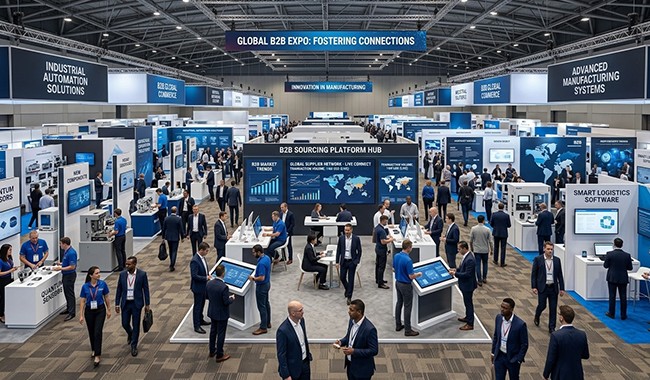
Why Choosing the Wrong B2B Platform Creates Procurement Problems
The first failure occurs when supplier access is mistaken for procurement capability. A B2B marketplace or B2B marketplace platform can reduce the time required to discover suppliers, compare products, and initiate commercial discussions, but supplier discovery does not guarantee that the subsequent purchasing process can be controlled. A buyer sourcing a standard product may only need supplier options, quotations, MOQ information, and basic transaction support. A buyer managing customized specifications, prototype development, OEM product development, or recurring international trade may need version control, documented specifications, quality checkpoints, production coordination, and delivery tracking. If these requirements are not identified before platform selection, the business can achieve a fast initial sourcing result while creating a slower and more expensive execution process.
A second problem appears when the platform’s visible price is treated as the procurement cost. Listed product prices are only one component of TCO. MOQ, payment terms, tooling, sampling, quality inspection, freight, duties, compliance requirements, returns, RMA handling, and internal coordination can materially change the economics of a purchase. This is particularly relevant when comparing suppliers across business to business marketplaces or using a B2B ecommerce solution for cross-border purchasing. For example, a supplier offering a lower unit price may require a larger MOQ, create higher inventory exposure, or provide less flexibility when specifications change. If the platform does not provide sufficient information to evaluate these variables, the apparent saving can disappear after the order enters production and logistics.
The third risk is operational fragmentation. When a B2B platform primarily handles supplier discovery but the buyer manages quotations, specifications, approvals, purchase orders, manufacturing follow-up, shipping, and compliance through separate tools and manual communication, the number of handoffs increases. Each handoff creates opportunities for inconsistent product specifications, outdated pricing, missed approval requirements, or unclear responsibility. This becomes more serious when product development and sourcing are connected to manufacturing. A buyer may initially use a marketplace to identify a product, but once customization, ODM business requirements, prototype development, or recurring production are introduced, the original sourcing workflow may no longer provide enough control.
A fourth failure condition is assuming that a platform suitable for one transaction will remain suitable as purchasing volume and complexity increase. A small number of suppliers and occasional purchases can often be managed with relatively lightweight processes. As order frequency, SKU count, supplier count, or geographic coverage increases, however, manual coordination can become a structural constraint. Procurement teams may need standardized supplier records, negotiated pricing, approval controls, order histories, quality records, and repeatable workflows. At that point, the relevant comparison is no longer simply between a B2B marketplace and a B2B procurement platform. It becomes a question of whether the chosen B2B business platform can support the full procurement cycle without creating disproportionate administrative cost.
The practical test is therefore to evaluate the platform against the business process that follows supplier selection, rather than judging it by the number of suppliers or products displayed. Before committing to a platform, buyers should map the path from requirement definition to supplier selection, quotation, specification confirmation, purchasing, production, logistics, compliance, delivery, and post-delivery resolution. If critical steps still depend on disconnected spreadsheets, email threads, messaging applications, or manually reconciled data, the platform may be functioning primarily as a sourcing channel rather than an integrated procurement environment. That distinction determines whether it can support predictable procurement costs, repeatable execution, and sustainable scaling.
How B2B Marketplace and B2B Procurement Platform Models Actually Differ
The fundamental difference is the point of control. A B2B marketplace is primarily designed to connect buyers with a broad supplier base and facilitate commercial discovery, comparison, and transaction initiation. Its value is strongest when supplier breadth, product availability, price discovery, and purchasing flexibility matter more than a tightly controlled internal procurement workflow. A procurement platform starts from a different requirement: controlling how purchasing decisions are made and executed. Supplier records, approved vendors, purchase requests, approval rules, negotiated terms, purchase orders, spend visibility, and transaction records become part of the operating system. The distinction is therefore not whether one model is more advanced, but whether the buyer’s main constraint is access to supply or control over purchasing.
| Decision factor | B2B Marketplace | B2B Procurement Platform |
|---|---|---|
| Primary function | Supplier and product discovery | Procurement process control |
| Supplier access | Broad and flexible | More structured and controlled |
| Price discovery | Strong | Often based on negotiated or approved pricing |
| Supplier onboarding | Usually marketplace-driven | Usually buyer-controlled or policy-driven |
| Purchase approvals | Limited or transaction-dependent | Core workflow capability |
| Spend visibility | Varies by platform | Typically a central requirement |
| Custom sourcing | Often possible but may require manual coordination | Can be integrated into procurement workflows |
| Repeat purchasing | Suitable for straightforward repeat orders | Stronger for standardized recurring procurement |
| Governance | Marketplace rules and transaction controls | Buyer-defined procurement policies |
| Best fit | Supplier discovery and flexible purchasing | Controlled, repeatable, multi-step procurement |
This difference becomes more important when sourcing is connected to product development or manufacturing. A buyer working on a standard SKU may need to compare suppliers and place an order efficiently. A buyer developing a private-label product may need to manage specifications, samples, revisions, tooling, packaging, production milestones, and quality acceptance. In that situation, the relevant capability is not simply whether the platform can identify a supplier. The buyer needs a process that preserves commercial and technical information as the project moves from product development and sourcing into manufacturing. The same principle applies to an ODM business or OEM product development project where changes made during prototype development can affect unit cost, MOQ, tooling, lead time, and final production terms.
The distinction also affects how buyers should interpret platform breadth. A large B2B online marketplace may provide access to more suppliers than a controlled procurement environment, but more options do not automatically produce better procurement outcomes. Supplier selection still requires qualification against specifications, capacity, certifications, quality requirements, lead times, commercial terms, and geographic constraints. Conversely, a procurement platform may provide stronger governance but become inefficient if the business requires frequent supplier discovery, new product sourcing, or rapid market testing. The correct model depends on where uncertainty exists in the purchasing cycle. If uncertainty is mainly about finding suitable supply, marketplace capabilities are valuable. If uncertainty is mainly about controlling approved purchasing and execution, procurement capabilities become more important.
For businesses operating across international trade or a global supply chain, the boundary can become even less clear. Sourcing, purchasing, manufacturing, freight, customs, compliance, and delivery may involve different parties and systems. A platform that only handles the transaction cannot automatically resolve the coordination problem between these stages. Buyers should therefore distinguish between transaction capability and process integration. The former helps complete an order; the latter helps preserve information, responsibilities, and decision controls across multiple stages. That distinction is often the deciding factor when a company moves from occasional sourcing to a repeatable procurement operation.
Where the Real Business Risks Appear During B2B Purchasing
The highest-cost failures usually occur at the interfaces between decisions rather than at the moment a supplier is selected. A product specification may be approved by one party, priced by another, manufactured against a later revision, and shipped according to an assumption that was never formally confirmed. The resulting problem may appear as a quality dispute or delivery delay, but the original failure occurred earlier when the process allowed different versions of the commercial and technical requirements to coexist. This is why platform evaluation should examine information continuity, not only the functions visible on the purchasing interface.
Supplier qualification creates another major risk boundary. A supplier profile can establish that a company exists and sells a particular category, but that does not necessarily verify production capacity, quality consistency, certification scope, export capability, or suitability for a specific order. The risk becomes larger when the buyer moves from standard products to customized manufacturing. For example, a supplier may successfully produce a prototype but fail to maintain the same tolerance, material specification, packaging requirement, or production yield at volume. The procurement decision is therefore incomplete if supplier evaluation stops at catalog information or initial quotation. Qualification criteria need to reflect the actual production and delivery requirements of the order.
Cost risk also changes as purchasing moves from quotation to execution. A buyer may compare unit prices while leaving other variables unresolved, including MOQ, tooling, packaging, inspection, freight, duties, payment terms, currency exposure, inventory carrying cost, and expected RMA. For products requiring customization, these variables can alter the economics more than a small difference in supplier price. A useful evaluation should therefore separate the quoted purchase price from the expected landed and operating cost.
A practical TCO review should test at least:
- Product and tooling cost
- MOQ and initial inventory exposure
- Sampling and prototype development cost
- Freight and logistics charges
- Duties, taxes, and customs-related costs
- Quality inspection and rework exposure
- Payment terms and working-capital requirements
- Expected RMA, replacement, or warranty costs
- Internal procurement and coordination time
The final risk is governance during execution. When responsibilities for specification approval, quality acceptance, shipping, customs documentation, and exception handling are unclear, a commercial dispute can become difficult to resolve even when every party acted according to its own understanding. This is particularly relevant for cross-border transactions because Incoterms, documentation, import requirements, and local compliance can shift responsibility between buyer, supplier, logistics provider, and other intermediaries. A procurement process should therefore establish who owns each critical decision before the purchase is released. The objective is not to eliminate every operational uncertainty, which is unrealistic, but to ensure that the remaining uncertainty is visible, assigned, and financially acceptable before the buyer commits capital.
How to Evaluate a B2B Platform Before Committing to It
Evaluation should begin with the purchasing process the business needs to control, not with the platform’s feature list. Map the actual workflow from demand definition through supplier selection, quotation, approval, ordering, production, logistics, delivery, and post-delivery resolution. Then identify where information currently becomes fragmented, where decisions require manual intervention, and where an error would create material financial or operational consequences. This prevents a common selection error: choosing a platform because it has many functions while failing to verify whether those functions solve the company’s highest-cost bottleneck.
A useful evaluation should test the platform against five operational dimensions: supplier access, procurement control, commercial transparency, execution capability, and scalability. Supplier access determines whether the platform can provide the right supply base rather than simply a large number of suppliers. Procurement control determines whether approvals, supplier qualification, purchasing rules, and records can be managed consistently. Commercial transparency determines whether the buyer can evaluate TCO rather than only quoted prices. Execution capability determines whether specifications, production, quality, logistics, and exceptions can be coordinated. Scalability determines whether the same process remains workable as order frequency, SKU count, supplier count, or geographic coverage increases.
The assessment should then move from demonstrations to controlled validation. A platform can claim support for sourcing, procurement, or B2B commerce without proving that a real purchasing workflow can be completed reliably. Use one representative transaction and test the complete path rather than evaluating isolated features. For a standard product, this may involve supplier comparison, quotation, MOQ, purchase order, payment, and delivery. For product development and sourcing, the test should include specification changes, sample approval, prototype development, production terms, quality checkpoints, and final shipment. The objective is to expose the handoffs that would otherwise become manual after adoption.
A practical platform validation sequence is:
- Define one representative purchasing scenario with measurable requirements.
- Record the information and approvals required at every stage.
- Test supplier discovery and qualification against actual sourcing criteria.
- Compare quoted price with expected TCO.
- Run the workflow through ordering, production, logistics, and exception handling.
- Measure manual work, unresolved dependencies, and data duplication.
- Calculate whether the platform reduces a material operating constraint.
- Repeat the test with a higher-volume or more complex scenario before committing to scale.
The final decision should account for both platform cost and the cost of not changing the current process. A low-cost marketplace can become expensive if procurement staff must manually reconcile supplier data, quotations, orders, shipping records, and quality issues. A more structured B2B procurement platform can also be economically wrong if the business has simple purchasing requirements and would incur unnecessary implementation, integration, or workflow overhead. The right choice is the model that produces a lower risk-adjusted operating cost while preserving the flexibility required by the business. This should be validated using actual transaction data where possible, rather than estimated productivity gains from a platform demonstration.
When a B2B Marketplace Is the Better Choice
A B2B marketplace is generally the stronger option when the primary commercial problem is finding and comparing supply, rather than enforcing a complex internal purchasing process. This applies when buyers need access to multiple suppliers, product alternatives, MOQ information, quotations, and market pricing, particularly when product requirements are sufficiently standardized to allow meaningful comparison. For wholesalers, retailers, importers, and e-commerce sellers testing new categories, the ability to evaluate a broad supplier base can be more valuable than implementing a highly controlled procurement workflow before demand has been validated.
Marketplace economics are particularly useful during early-stage product selection because the buyer may not yet know which supplier, specification, or price structure will become commercially viable. A business evaluating best selling products, testing new SKUs, or exploring global market insights may need to compare several supply options before making a larger commitment. In this situation, restricting sourcing too early to an approved supplier structure can reduce the information available for the decision. The marketplace acts as a discovery and validation layer, allowing the buyer to test supply availability, pricing, MOQ, lead times, and customization options before establishing a more permanent procurement arrangement.
The model is less suitable when the main source of risk shifts from supplier discovery to execution control. Once purchases involve multiple approval levels, recurring orders, negotiated contracts, detailed supplier performance requirements, or extensive spend management, the value of additional supplier discovery may become smaller than the cost of managing the purchasing process. The same applies when a business moves from standard products into OEM product development, complex customization, or production programs that require controlled revisions and quality milestones. In those cases, a marketplace can remain useful for sourcing, but it may no longer be sufficient as the primary operating environment.
A buyer should therefore consider a marketplace the better choice when most of the following conditions are true:
- Supplier discovery is a major current constraint.
- Products can be compared using relatively stable specifications.
- Purchases do not require extensive internal approval workflows.
- Supplier relationships remain flexible or are still being evaluated.
- Order volumes and SKU requirements are not yet highly complex.
- The buyer can independently manage downstream logistics and compliance.
- The cost of additional procurement governance would exceed its operational benefit.
The critical boundary is not company size or purchasing volume alone. A small importer with complex customized products may need more process control than a larger retailer purchasing standardized items. Likewise, a large organization running decentralized sourcing may deliberately retain marketplace access for new supplier discovery while using a separate procurement system for approved purchasing. The appropriate decision is therefore based on the structure of the transaction and the consequences of execution failure. When discovery remains the dominant uncertainty, marketplace capabilities have a clear economic role. When execution and governance become the dominant constraints, the business should reassess whether marketplace functionality alone can support the next stage of procurement.
When a B2B Procurement Platform Is the Better Choice
A B2B procurement platform becomes more appropriate when purchasing has moved from supplier discovery to controlled, repeatable execution. The trigger is usually not a particular order volume but the number of decisions that must remain consistent across purchases. Multiple buyers may need to follow the same supplier rules, approved pricing, budget limits, approval paths, purchase orders, and documentation requirements. Without a structured workflow, procurement performance becomes dependent on individual employees and manually maintained records. That creates operational variance that is difficult to audit and increasingly expensive to correct as purchasing activity expands.
The strongest use case appears when procurement requires centralized control over suppliers, spend, and purchasing decisions. A company may already know which suppliers it wants to use, but still lack visibility into how much is being purchased, under which commercial terms, by whom, and against which approval rules. In this environment, additional supplier discovery provides limited value. The priority is to make purchasing decisions traceable and repeatable. A procurement platform can provide greater control over supplier onboarding, purchase requisitions, approvals, purchase orders, negotiated terms, invoice matching, and procurement records. The benefit is not simply administrative efficiency. Better control can reduce unauthorized purchasing, duplicate orders, inconsistent pricing, and avoidable working-capital exposure.
The case becomes stronger when purchasing involves several stakeholders or business units. A retailer may have separate teams managing product categories, while a distributor may coordinate purchasing across multiple markets. An importer may need purchasing decisions to remain consistent with customs documentation, payment terms, and delivery requirements. In these cases, informal communication can allow a change in quantity, specification, supplier, or delivery condition to bypass the intended approval process. The resulting cost may not appear as a direct platform expense, but through excess inventory, missed delivery windows, payment disputes, or compliance exceptions. A structured procurement workflow is justified when preventing these failures is worth more than preserving maximum purchasing flexibility.
A procurement platform is also more suitable when the business has established enough purchasing data to define meaningful controls. Approved suppliers can be classified by category, region, certification, performance, or commercial terms. Historical purchases can establish realistic price ranges and order patterns. Supplier performance can be evaluated using delivery reliability, defect rates, response time, and dispute history rather than subjective preference. This allows procurement teams to move from individual transaction decisions toward repeatable sourcing policies. The platform becomes particularly valuable when the organization needs to demonstrate why a supplier was selected or why a purchase was approved, rather than simply proving that an order was completed.
However, procurement control has a cost. A highly structured workflow can slow supplier discovery, make low-value purchases unnecessarily complex, and restrict experimentation with new products or suppliers. It may also require integration with ERP, accounting, inventory, or other business systems. The correct boundary is therefore whether governance requirements have become more costly to ignore than to implement. If most purchases are standardized, recurring, and subject to internal controls, a procurement platform can improve predictability. If purchasing remains exploratory, highly variable, or driven mainly by new supplier discovery, imposing procurement controls too early can create process overhead without solving the primary business constraint.
When an Integrated B2B Platform Is More Appropriate Than Either Model Alone
An integrated model becomes relevant when sourcing, procurement, product development, manufacturing, and distribution are no longer separate decisions. This often occurs when a buyer is not simply purchasing an existing SKU but developing a commercial product, managing customized production, or coordinating suppliers across countries. In such cases, the same commercial decision can affect product specifications, manufacturing cost, MOQ, tooling, lead time, inventory, logistics, and selling economics. Separating these activities across unrelated systems can preserve functional specialization while losing the connection between decisions. The integration requirement arises because a change made in one stage can materially alter the economics or feasibility of another.
Consider a buyer developing a customized product. A sourcing team may identify a supplier based on an initial quotation, but prototype development can reveal a material change, additional tooling requirement, revised production process, or different packaging specification. Each change can affect unit economics and delivery timing. If product development and sourcing remain disconnected from procurement and manufacturing execution, the buyer may approve a commercial decision using outdated assumptions. An integrated workflow allows the relevant specifications, supplier information, cost changes, and production requirements to remain connected as the project develops. This does not eliminate uncertainty, but it reduces the probability that an outdated decision becomes the basis for a larger financial commitment.
Integration is also valuable when the business operates across a global supply chain. International trade introduces dependencies between supplier terms, production schedules, freight arrangements, customs documentation, import requirements, and final delivery. A transaction platform may complete the commercial purchase, while a procurement system may control approvals, but neither necessarily provides sufficient continuity from product sourcing through manufacturing and distribution. The practical requirement is to maintain a reliable chain of information and responsibility across these stages. If a delay, specification change, or compliance issue occurs, the buyer needs to identify which commercial assumption is affected and whether the downstream cost remains acceptable.
The economic test should be based on whether integration reduces a material source of decision failure. It is not automatically justified because more functions can be placed in one environment. An integrated B2B platform can become unnecessarily complex if a company only needs occasional supplier discovery or highly standardized procurement. Integration creates value when the business repeatedly moves between functions that depend on the same data. For example, product selection can influence sourcing, sourcing can influence manufacturing cost, manufacturing cost can influence pricing, and pricing can influence order volume. When these relationships occur repeatedly, separating the workflows can force teams to recreate information and recalculate assumptions at each stage.
The choice becomes more reliable when the platform model is evaluated against the business consequences of each operating condition rather than against feature count alone. The following framework separates where uncertainty occurs, what level of control is required, and what can go wrong if the selected model does not support that stage adequately. The following framework distinguishes the dominant uncertainty, the control requirement, and the likely consequence of choosing an insufficient model.
| Business condition | Dominant uncertainty | Critical control requirement | Marketplace fit | Procurement platform fit | Integrated platform fit | Decision consequence if under-supported |
|---|---|---|---|---|---|---|
| New supplier discovery | Supplier availability and qualification | Supplier comparison and sourcing flexibility | Very High | Low | High | Narrow supplier pool or slower market validation |
| Standard repeat purchasing | Price, availability, and reorder consistency | Approved suppliers, pricing, and order control | High | Very High | High | Duplicate purchases, price leakage, inconsistent execution |
| Multi-level purchasing | Approval and budget accountability | Workflow, authorization, and audit trail | Low | Very High | High | Unauthorized spend or delayed purchasing |
| Product customization | Specification and commercial changes | Version control and supplier coordination | Medium | Medium | Very High | Specification mismatch, rework, or margin erosion |
| OEM or ODM development | Product feasibility and production economics | Product, supplier, and manufacturing continuity | Medium | Medium | Very High | Tooling loss, production delays, or failed commercialization |
| Prototype-to-production transition | Whether approved samples can scale consistently | Sample approval, production controls, and change management | Low | Medium | Very High | Prototype success without reliable mass production |
| Manufacturing coordination | Capacity, quality, lead time, and production status | Supplier performance and production visibility | Low | High | Very High | Late delivery, quality failures, or inventory disruption |
| Cross-border procurement | Logistics, customs, documentation, and responsibility | Transaction and supply chain coordination | Medium | High | Very High | Unexpected landed cost or compliance delays |
| Supplier and spend governance | Commercial consistency across suppliers | Supplier records, spend controls, and performance data | Medium | Very High | High | Poor negotiation leverage and uncontrolled supplier risk |
| Product-to-market development | Demand, cost, supply feasibility, and launch timing | Connection between sourcing, manufacturing, and commercial decisions | High | Medium | Very High | Product selected without sustainable supply economics |
The most important distinction is the dominant uncertainty. If uncertainty is concentrated in supplier availability, a marketplace provides greater decision value because it expands the information available before commitment. If uncertainty is concentrated in purchasing control, a procurement platform has greater value because it reduces execution variance after supplier selection. If uncertainty moves across product specifications, manufacturing, procurement, and distribution, an integrated model becomes more defensible because the commercial impact of one decision can be evaluated against downstream consequences.
This framework also prevents a common scoring error: treating “High” capability as automatically beneficial. A capability only creates economic value when it addresses a material constraint. For example, advanced approval workflows have limited value for a business purchasing low-risk standardized products, while broad supplier access has limited value when the buyer already has qualified suppliers and the main problem is controlling recurring spend. Platform selection should therefore be based on the highest-cost uncertainty in the current operating model and the point at which that uncertainty is expected to become a constraint on scale.
The strongest case for integration exists when the business needs to connect commercial decisions rather than simply centralize software functions. A sourcing decision that changes manufacturing cost should be visible to the team responsible for procurement and pricing. A production change that affects delivery should be connected to inventory and logistics decisions. A supplier performance problem should influence future sourcing decisions rather than remain isolated in a post-delivery record. In this environment, the value of an integrated B2B platform lies in maintaining decision continuity from sourcing through execution. The model is therefore most appropriate when the business needs a repeatable path from product opportunity to procurement, manufacturing, and global distribution rather than a standalone channel for finding suppliers or controlling purchase approvals.
A Practical Decision Framework for Selecting the Right B2B Platform
The selection process should start by defining the failure the business is trying to prevent. If the main problem is limited supplier access, the evaluation should prioritize supplier breadth, product coverage, qualification information, quotation transparency, and sourcing speed. If the problem is uncontrolled purchasing, the assessment should shift toward approvals, supplier governance, spend visibility, purchase orders, and auditability. If the business is developing products or coordinating manufacturing, the evaluation must additionally consider specification control, prototype development, production milestones, quality management, and supply chain coordination. A platform should not receive a high score simply because it offers more features. It should receive a high score when its capabilities directly address the risks that matter to the business.
A practical evaluation can use a weighted decision model rather than an unstructured feature comparison. The weights should reflect the consequences of failure, not the number of functions advertised by each platform.
| Evaluation dimension | Key question | Higher priority when |
|---|---|---|
| Supplier access | Can the platform provide qualified supply options? | Supplier discovery is uncertain |
| Procurement control | Can purchasing rules and approvals be enforced? | Spend and governance are material concerns |
| Commercial transparency | Can TCO and negotiated terms be evaluated? | Price volatility or complex costs exist |
| Product and specification control | Can requirements remain consistent through execution? | Customization or manufacturing is involved |
| Supplier performance | Can delivery, quality, and commercial performance be tracked? | Purchases are recurring |
| Execution coordination | Can downstream procurement and supply activities remain connected? | Multiple parties or countries are involved |
| Integration | Can required business data move between systems? | ERP, inventory, finance, or logistics systems are already established |
| Scalability | Does the workflow remain workable as complexity increases? | SKU, supplier, or order volume is growing |
The next step is to evaluate the model against actual transaction scenarios rather than generic demonstrations. At minimum, test one standard purchase, one repeat purchase, and one exception case. If the business is involved in product development and sourcing, add a customized product scenario involving a specification revision or prototype approval. If international trade is material, include documentation, shipping, customs, and delivery dependencies. The purpose is to identify where the platform stops and manual work begins. A platform that performs well during supplier discovery but requires extensive external coordination after the purchase may still be useful, but its role should be defined accurately before investment decisions are made.
Cost should then be assessed as a risk-adjusted operating cost rather than as a subscription or transaction fee. The calculation should include implementation, integration, internal administration, supplier onboarding, training, transaction charges, and the expected cost of remaining process failures. For example, a platform that costs more but materially reduces purchasing errors, duplicate orders, delayed approvals, or supplier disputes may have a lower effective cost. Conversely, paying for advanced procurement controls that are rarely used can increase the cost of purchasing without producing measurable operational value. The decision should therefore be based on the expected effect on TCO, execution reliability, and working capital rather than on software price alone.
The final decision should also include an exit condition. Before committing, define what would prove that the selected model is not working: unresolved manual handoffs, inadequate supplier quality, unacceptable processing time, poor data continuity, insufficient scalability, or a TCO that exceeds the expected benefit. This creates a controlled evaluation period instead of turning platform adoption into an irreversible commitment. The strongest selection process is therefore not the one that predicts the future perfectly. It is the one that makes the initial decision measurable, exposes failure conditions early, and preserves the ability to change the operating model before switching costs become substantial.

What to Do After Choosing the B2B Platform Model
Once the model has been selected, the first priority should be to define the operating boundary. Do not attempt to move every purchasing activity onto the new platform immediately. Identify which transactions are appropriate for the selected model and which should remain outside it. A marketplace may be used for supplier discovery and market validation while approved recurring purchases follow a controlled procurement process. An integrated platform may handle product sourcing, manufacturing coordination, and procurement while specialized logistics or accounting systems remain responsible for their existing functions. Clear boundaries prevent the platform from becoming another layer of overlapping processes.
The initial implementation should use a controlled transaction set with measurable baseline metrics. Record the time required to identify suppliers, obtain comparable quotations, approve purchases, issue orders, resolve exceptions, and complete delivery. Track commercial indicators such as quoted price variance, MOQ, lead time, defect rate, freight cost, and actual landed cost where relevant. For recurring procurement, supplier performance should also be measured over multiple transactions rather than judged from a single successful order. These measurements establish whether the new model improves the process or simply moves existing administrative work into a different interface.
The operating workflow should then be standardized around the decisions that have the highest financial impact. Supplier qualification criteria should be documented before sourcing begins. Product specifications should have a clear approval owner. Changes to quantities, materials, packaging, pricing, or delivery terms should create a traceable decision record. Quality acceptance criteria should be agreed before production rather than negotiated after delivery. For customized manufacturing, the workflow should distinguish prototype approval from production approval because acceptance of a prototype does not necessarily establish production consistency. These controls make procurement outcomes more repeatable without requiring every transaction to follow an unnecessarily complex process.
After the first implementation cycle, compare actual results against the original decision criteria. If supplier discovery improved but execution remains fragmented, the business may need stronger procurement integration. If purchasing became more controlled but sourcing flexibility declined, marketplace access may need to remain part of the process. If product development, manufacturing, procurement, and distribution continue to generate disconnected data, an integrated operating model may provide greater value than adding isolated tools. The objective is not to force the business into a fixed platform structure but to identify which capability is currently limiting performance.
A scalable operating model should ultimately create a feedback loop between purchasing results and future decisions. Supplier delivery performance should influence future qualification. Actual production costs should update pricing assumptions. Quality and RMA data should affect supplier selection. Changes in demand should influence purchasing quantities and inventory commitments. Market information can also be connected to sourcing decisions when businesses evaluate new products or expand into new markets. This is the operating logic behind WIDQ, a B2B sourcing and product development platform designed to connect product discovery, supplier sourcing, manufacturing, procurement, and supply chain decisions within a broader commercial workflow. Rather than treating supplier discovery as an isolated purchasing activity, WIDQ supports a decision path that can extend from identifying product opportunities and evaluating sourcing options to product development, OEM/ODM manufacturing, and global procurement. When these feedback loops become part of routine operations, the platform stops being merely a place to find suppliers or process orders and becomes part of a repeatable commercial decision system. That is the point at which platform selection begins to contribute to long-term procurement control and supply chain scalability.
FAQ
Is a B2B marketplace still suitable for recurring procurement?
Yes, when the recurring purchases are relatively standardized and supplier management remains manageable. A marketplace can work well for repeat orders when product specifications, pricing conditions, MOQ, quality requirements, and delivery expectations are already stable. The mistake is assuming that repeat purchasing automatically requires a dedicated procurement system. The more relevant question is whether repeated transactions are creating control problems. If buyers are frequently reconciling supplier prices, managing approvals manually, resolving duplicate orders, or losing visibility into supplier performance, the marketplace may no longer be sufficient as the primary procurement workflow. A business can also retain marketplace access for new supplier discovery while moving approved recurring purchases into a controlled procurement process. The two models do not have to be mutually exclusive.
When should a company move from a B2B marketplace to a B2B procurement platform?
The transition usually makes sense when procurement control becomes more important than supplier discovery. Warning signs include increasing approval complexity, multiple purchasing teams, inconsistent supplier terms, limited spend visibility, frequent duplicate orders, or growing difficulty tracking supplier performance. Order volume alone is not a reliable trigger. A business purchasing a high number of standardized items may still operate efficiently through a marketplace, while a smaller company managing customized products may require stronger controls much earlier. Before switching, measure the actual cost of the current process, including administrative time, purchasing errors, delayed approvals, supplier disputes, and avoidable inventory exposure. If these costs are recurring and material, the business has a stronger case for introducing structured procurement capabilities.
Can a B2B procurement platform replace supplier discovery?
Not necessarily. Procurement platforms are generally stronger at controlling approved purchasing than at maximizing access to new suppliers. If the business operates in a rapidly changing category, tests new products, or regularly needs alternative sources, removing marketplace or sourcing capabilities can reduce supply-side flexibility. A more practical structure is to separate discovery from controlled purchasing. New suppliers can be evaluated through a sourcing process, qualified against defined criteria, and then transferred into an approved supplier workflow. This preserves competition while maintaining procurement governance. The common mistake is treating supplier discovery and procurement control as the same problem. They are connected, but their optimization criteria are different.
How should buyers compare platform costs when subscription prices are not directly comparable?
Compare the expected total operating cost rather than the platform fee. Include implementation, integration, transaction charges, supplier onboarding, internal administration, training, data maintenance, and the cost of existing process failures. The comparison should also consider financial effects such as procurement errors, excess inventory, delayed purchasing, quality disputes, and working-capital exposure. A useful approach is to establish a baseline using several real transactions and compare the cost before and after implementation. A lower-priced platform is not necessarily cheaper if it leaves critical work outside the system. Likewise, a more expensive procurement environment is not justified if its additional controls do not address a material business risk.
What platform capabilities matter most for customized or OEM purchasing?
For customized purchasing, the critical issue is whether commercial and technical information remain consistent as the product changes. Buyers should evaluate specification control, supplier qualification, quotation revisions, sample and prototype approval, tooling information, production milestones, quality requirements, and change management. An OEM product development project can become commercially unviable if a small specification change increases tooling cost or production lead time without being reflected in the approved purchasing terms. The platform does not need to perform every manufacturing function itself. It does need to preserve the information and decision history required to prevent outdated specifications or pricing assumptions from reaching production.
Does an integrated platform always provide better procurement performance?
No. Integration creates value only when the business has processes that genuinely depend on shared information. If a company mainly purchases standardized products from established suppliers, additional integration may create implementation and administrative costs without a proportional benefit. The case becomes stronger when product development, sourcing, manufacturing, procurement, logistics, and distribution repeatedly affect one another. In those situations, disconnected systems can cause the same information to be recreated or reconciled at multiple stages. The correct test is whether integration reduces a measurable source of delay, error, cost, or decision uncertainty. More connected functions are not automatically better if the underlying workflow does not require them.
How should a buyer test a platform before making a long-term commitment?
Use real purchasing scenarios instead of relying on a product demonstration. Test at least one standard transaction, one recurring purchase, and one exception involving a specification, supplier, quantity, or delivery change. For businesses involved in international trade, include documentation and logistics dependencies. Measure the number of manual handoffs, unresolved data gaps, approval delays, and external tools required to complete each scenario. The test should also compare actual TCO rather than only quoted product prices. Most importantly, define failure criteria before the trial begins. If the platform cannot reliably support the process that creates the greatest operational risk, additional features elsewhere in the system should not compensate for that weakness.
Conclusion
The choice between a B2B marketplace and a B2B procurement platform should be treated as a decision about operating control, not as a comparison of software features. A marketplace is valuable when access to suppliers, product alternatives, and commercial discovery remains the main constraint. A procurement platform becomes more relevant when purchasing needs stronger governance, repeatability, spend control, and accountability. An integrated model becomes justified when sourcing, product development, manufacturing, procurement, and distribution repeatedly depend on the same decisions and information. The correct boundary is determined by where business risk currently accumulates.
Before committing to a platform model, test it against actual transactions and measure the effect on TCO, execution reliability, supplier performance, and scalability. The objective is not to select the platform with the broadest feature set, but to establish a purchasing process that remains controllable as complexity increases. For businesses expanding across suppliers, products, or markets, global market insights can also support early-stage evaluation of product opportunities and market conditions. The next step should be a structured assessment of the current procurement workflow, the costs of its failure points, and the capabilities required to support the next stage of growth.