Not Sure About Your Unit Cost or Manufacturing Overhead?
OEM manufacturing in China continues to attract retailers, distributors, importers, and private label operators because it offers direct access to lower production costs, flexible manufacturing services, and faster product expansion opportunities. However, many businesses enter OEM manufacturing China projects with assumptions built around unit pricing rather than supply chain structure. The result is often predictable – unstable lead times, inconsistent quality control, hidden compliance exposure, and operational dependency on OEM suppliers that cannot support long term scaling. In many cases, the failure does not originate from manufacturing itself, but from incorrect supplier selection logic during the earliest procurement stages.
The problem becomes more severe when businesses attempt to scale from small purchase orders into multi-market distribution or long term contract manufacturing China operations. Standard sourcing paths promoted through global B2B marketplace platforms frequently optimize for speed of supplier discovery rather than operational resilience. A low quotation from an OEM factory China partner may appear commercially efficient during initial negotiation, but hidden variables such as tooling ownership, RMA handling, production scheduling priority, and compliance accountability often emerge later as structural risks. For decision-makers, the core issue is no longer how to find a manufacturer. The real challenge is how to build an OEM manufacturing system that remains commercially stable under growth pressure, margin compression, and supply chain disruption.

Why OEM Manufacturing in China Fails More Often Than Expected
A significant percentage of OEM manufacturing failures begin with an incorrect understanding of what Chinese manufacturing ecosystems are optimized to deliver. Many buyers assume that an original equipment manufacturer operates as a long term operational partner by default. In reality, many OEM suppliers prioritize production utilization efficiency rather than downstream commercial stability for overseas buyers. This distinction becomes critical when businesses depend on predictable lead times, low defect rates, and scalable replenishment cycles. A supplier that performs adequately during sampling may fail completely under larger procurement volumes because its operational structure was never designed for stable expansion.
Another recurring failure point is the overreliance on quotation-driven sourcing decisions. Businesses entering private label manufacturing or contract manufacturing China projects often compare suppliers primarily through unit pricing, ignoring total operational exposure. Lower quotations may reflect weaker incoming material control, overloaded production schedules, subcontracted assembly, or insufficient QC staffing. These weaknesses are rarely visible during early negotiations. They typically emerge after tooling investment, packaging localization, or inventory commitments have already been made.
| Procurement Decision Factor | Short Term Perception | Long Term Operational Impact |
|---|---|---|
| Lowest unit cost | Faster margin improvement | Higher defect and RMA exposure |
| Fast sampling turnaround | Faster product launch | Weak production consistency |
| Low MOQ acceptance | Lower entry barrier | Reduced production priority |
| Broad product catalog | Supplier flexibility | Possible trading company dependency |
| Aggressive delivery promises | Faster sales planning | Lead time instability |
The problem is amplified when businesses source through fragmented channels without structured supplier verification. Many OEM factory China listings on global B2B marketplace platforms are not direct manufacturers. Some are trading intermediaries coordinating multiple subcontracted workshops with varying production standards. This creates accountability fragmentation. When defects, compliance disputes, or shipment delays occur, responsibility becomes difficult to isolate. Procurement teams may discover too late that the supplier managing communication has limited control over actual production operations.
Supply chain failure also becomes more likely when businesses scale faster than their supplier management systems. Small batch success does not guarantee manufacturing scalability. An OEM factory capable of producing 2,000 units monthly may struggle under 50,000-unit replenishment cycles requiring stable raw material sourcing, synchronized component procurement, and repeatable QC processes. Many importers misinterpret early production success as proof of long term operational capability. The real test begins when forecasting volatility, seasonal demand spikes, or multi-SKU expansion increases pressure across the supply chain.
In some cases, the business model itself creates structural incompatibility with OEM manufacturing China operations. Companies with unstable demand forecasting, inconsistent product specifications, or unclear compliance ownership often experience repeated production failures regardless of supplier quality. OEM manufacturing works best when procurement, logistics, forecasting, compliance, and quality management operate as coordinated systems rather than isolated purchasing activities. Without this operational alignment, even technically capable OEM suppliers may become unreliable partners under real commercial conditions.
What Businesses Usually Expect From OEM Manufacturing China
Most businesses entering OEM manufacturing China operations expect the transition from sourcing to branded product control to be relatively linear. The underlying assumption is straightforward: identify a supplier, finalize specifications, place an order, and scale distribution as margins improve. For importers and distributors operating under margin pressure, this expectation is commercially rational. Direct manufacturing access appears to remove intermediary costs while improving pricing flexibility. In practice, however, manufacturing control and supply chain control are not equivalent. A company may technically own product branding while remaining operationally dependent on unstable suppliers, fragmented logistics networks, or weak quality governance structures.
For many private label manufacturing projects, the initial objective is not innovation but margin stabilization. Businesses often enter OEM arrangements after experiencing price competition in saturated wholesale channels or declining profitability on large marketplace platforms. Under these conditions, OEM sourcing is viewed as a method for protecting pricing autonomy rather than building proprietary technology. This distinction matters because it changes supplier evaluation priorities. Companies focused on rapid catalog expansion frequently prioritize low MOQ flexibility and broad production capability, while businesses targeting long term product defensibility usually prioritize process stability, engineering consistency, and tooling ownership protection.
Another common expectation is that contract manufacturing China operations will create scalable operational leverage without significantly increasing internal management complexity. This assumption is partially true during early production stages, especially when SKU counts remain limited and forecasting volatility is manageable. However, operational overhead typically increases once businesses expand into multi-market distribution, region-specific compliance requirements, or synchronized replenishment scheduling. A supplier relationship that appears efficient at low order frequency may become unstable under continuous procurement cycles requiring strict delivery coordination and inventory planning accuracy.
The following table illustrates how business expectations often diverge from operational reality during OEM scaling phases:
OEM Manufacturing Scaling Risk Decision Matrix (Data-Informed Industry Benchmark Model)
| Dimension | Business Expectation | Operational Reality (Observed Range) | Industry Benchmark Insight | Risk Impact Level |
|---|---|---|---|---|
| Unit Cost Efficiency | Lower OEM pricing improves long-term margin | 5%–18% hidden cost increase due to logistics, defects, and rework (World Bank logistics inefficiency patterns) | Total landed cost often deviates significantly from FOB baseline in fragmented supply chains | High |
| Supplier Scalability | Single OEM factory can support full growth cycle | 40%–60% of suppliers show capacity bottlenecks beyond first scaling phase (manufacturing case studies, McKinsey supply chain reports) | Capacity saturation is structural, not exceptional | High |
| Speed of Market Entry | Faster sourcing reduces time-to-market | 15%–30% of projects experience delays due to onboarding misalignment and spec iteration cycles | Speed gain often offsets later correction cost | Medium–High |
| Product Differentiation | OEM ensures product uniqueness | Up to 70% product similarity risk in shared OEM ecosystems (multi-buyer factory networks) | Differentiation depends on design ownership, not manufacturing model | High |
| Supply Chain Transparency | Communication ensures visibility | 30%–50% of OEM production is partially subcontracted in multi-tier systems | Visibility loss increases with scale complexity | High |
| Quality Consistency | Initial sample reflects mass production quality | Defect rate variance increases 2x–4x after scaling from sample to mass production | Sampling does not represent production variance | High |
| Cost Predictability | Quoted price reflects final cost structure | Total cost deviation range: +12% to +35% after logistics, QC, compliance adjustments | Pricing models underweight systemic volatility | High |
Many businesses also underestimate how heavily OEM outcomes depend on internal procurement maturity. Research from global procurement benchmarking reports shows that total landed cost (TCO) in manufacturing is often significantly higher than initial FOB pricing assumptions once logistics volatility, defect rates, and compliance costs are included.
World Bank trade logistics data: https://www.worldbank.org
WTO trade cost reports: https://www.wto.org
Multiple industry-level studies on global manufacturing and procurement performance suggest that these gaps are structural rather than occasional. For example, global trade and logistics datasets published by the World Bank consistently show that landed cost volatility is strongly correlated with logistics friction, customs delays, and supply chain fragmentation rather than base manufacturing price alone. Similarly, WTO trade cost research highlights that cross-border procurement costs remain significantly higher in fragmented supplier environments, particularly in multi-tier manufacturing ecosystems.
In OEM manufacturing systems, especially in OEM factory China environments, these hidden cost layers often determine whether a product remains financially viable beyond the first production cycle.
An OEM factory is not responsible for correcting incomplete technical documentation, unstable demand forecasting, or unrealistic lead time assumptions. Procurement teams frequently assume manufacturing partners will proactively identify specification risks or compliance gaps before production begins. Some experienced suppliers do provide this level of support, but many operate strictly according to buyer instructions to reduce liability exposure. As a result, weak internal procurement processes often create failure conditions that are incorrectly attributed to manufacturing quality alone.
The expectation gap becomes most visible when businesses attempt to scale beyond transactional purchasing into structured supply chain management. At that stage, supplier relationships are no longer evaluated only through price or responsiveness. Decision-makers begin assessing resilience factors such as production redundancy, QC traceability, engineering support capability, component sourcing transparency, and long term replenishment reliability. Businesses that fail to make this transition early often remain trapped in reactive sourcing cycles where operational firefighting replaces strategic procurement planning.
The Most Common Supply Chain Failure Risks in OEM Manufacturing
One of the most underestimated risks in OEM sourcing is production inconsistency caused by unstable upstream material procurement. Many buyers focus heavily on finished product samples while overlooking supplier dependency on secondary component vendors. During stable market conditions, these dependencies may remain invisible. However, fluctuations in raw material pricing, energy costs, or regional manufacturing capacity can rapidly alter supplier behavior. Some factories substitute lower-grade materials, delay production sequencing, or prioritize larger accounts with stronger payment terms. These operational adjustments often occur without immediate disclosure, especially when suppliers attempt to maintain aggressive delivery commitments.
Forecasting instability creates another major failure mechanism. Many distributors and e-commerce operators scale procurement volumes based on optimistic sales projections without validating replenishment elasticity across the supply chain. A common pattern emerges: initial orders succeed, sales accelerate, and larger purchase orders are submitted before supplier infrastructure matures accordingly. Under pressure, production schedules become compressed, QC checkpoints are shortened, and defect escape rates increase. The operational problem is not simply higher demand. The problem is that the supply chain architecture was never designed for synchronized scaling across procurement, production, inspection, and logistics.
A simplified risk escalation model illustrates how operational pressure compounds across OEM environments:
| Supply Chain Variable | Low Stress Environment | High Stress Environment |
|---|---|---|
| Lead time accuracy | Stable | Frequent delays |
| Incoming material QC | Controlled | Variable consistency |
| Production scheduling | Predictable | Compressed sequencing |
| Defect detection | Early-stage containment | Late-stage discovery |
| Shipment coordination | Flexible | Bottleneck-sensitive |
Communication structure is another frequent source of failure, particularly when businesses rely on fragmented sourcing solutions or intermediary-managed supplier networks. Many OEM suppliers assign sales representatives whose incentives are tied primarily to order acquisition rather than operational continuity. Once production begins, communication often fragments across departments handling procurement, engineering, packaging, compliance, and logistics separately. Without centralized project ownership, critical specification changes may not propagate consistently through the manufacturing workflow. This becomes especially dangerous in regulated product categories where minor documentation discrepancies can create customs delays, certification disputes, or large-scale returns.
Another recurring risk involves the mismatch between supplier specialization and buyer expectations. An OEM factory that performs effectively for standardized commodity production may struggle with highly customized SKUs requiring engineering iteration, compliance documentation, or flexible packaging workflows. Buyers frequently interpret broad product catalogs as evidence of manufacturing capability when the catalog may actually reflect outsourced or brokered production relationships. In these scenarios, the visible supplier becomes a coordination layer rather than the actual production authority. Operational visibility decreases substantially, particularly during urgent corrective action processes involving RMA disputes or defect containment.
The final risk is structural overconcentration. Many businesses depend on a single supplier, region, or logistics route because it appears operationally efficient during early growth stages. This concentration lowers administrative complexity but increases systemic vulnerability. Factory shutdowns, geopolitical disruptions, component shortages, or export policy changes can rapidly interrupt replenishment cycles. Businesses with weak supplier diversification strategies often discover too late that recovery timelines in manufacturing environments are measured in months rather than days. The cost impact extends beyond delayed inventory. Lost shelf positioning, canceled distributor contracts, declining platform rankings, and customer churn frequently become secondary consequences of procurement fragility.
How to Evaluate OEM Suppliers Before Committing to Production
Most supplier evaluation failures occur because businesses assess suppliers primarily through negotiation responsiveness instead of operational capability. Fast quotations, professional communication, and polished presentations create an impression of reliability, but these indicators reveal little about actual manufacturing stability. A supplier’s ability to manage repetitive production under commercial pressure depends on factors that are rarely visible during early sourcing conversations – internal QC discipline, upstream component control, engineering change management, production scheduling governance, and financial resilience during demand volatility.
A more reliable evaluation process begins by separating supplier visibility from supplier capability. Many companies discovered through a global B2B marketplace function effectively as sourcing coordinators rather than direct production operators. This does not automatically make them unsuitable partners. In some industries, intermediary-managed supply chains can improve sourcing flexibility. The risk emerges when buyers incorrectly assume the intermediary controls factory execution standards directly. Before committing to tooling investment or large procurement cycles, businesses should determine who actually controls production planning, incoming material inspection, corrective action authority, and shipment release approval.
The following evaluation framework is often more predictive than price comparison alone:
| Evaluation Area | Key Question | Strategic Relevance |
|---|---|---|
| Production ownership | Does the supplier control manufacturing directly? | Determines operational accountability |
| QC process maturity | Are inspection checkpoints documented and repeatable? | Impacts defect containment |
| Engineering capability | Can the supplier manage specification changes reliably? | Reduces revision risk |
| Capacity utilization | Is the factory already operating near saturation? | Affects lead time stability |
| Supply chain transparency | Are upstream component vendors traceable? | Improves disruption visibility |
| Compliance management | Who owns certification and documentation control? | Reduces customs and legal exposure |
Another critical factor is evaluating supplier behavior under operational stress rather than under normal conditions. Almost every supplier appears stable during low-volume onboarding phases. The more useful question is how the organization behaves when timelines compress, material shortages occur, or production errors require immediate corrective action. Experienced procurement teams often simulate these conditions indirectly during qualification stages. They may introduce controlled specification revisions, request revised lead time commitments, or analyze response quality during technical clarification cycles. The objective is not to create friction artificially. The objective is to identify whether the supplier operates through structured processes or reactive improvisation.
Financial structure also matters more than many buyers realize. A supplier operating under unstable cash flow conditions may prioritize deposits over production quality or allocate resources unpredictably across customer accounts. This becomes especially relevant in industries with volatile commodity pricing or thin manufacturing margins. Buyers focusing only on negotiated pricing often miss early warning signals such as aggressive prepayment demands, inconsistent raw material sourcing, or unusually flexible MOQ promises unsupported by operational economics. In many cases, these signals indicate the supplier is optimizing for short term order acquisition rather than sustainable manufacturing execution.
Supplier evaluation should therefore be treated less as a procurement task and more as a risk filtration process. The goal is not to identify a perfect supplier. The goal is to identify whether the supplier’s operational limitations are compatible with the buyer’s business model, inventory structure, compliance exposure, and growth objectives. A supplier suitable for low-frequency replenishment may be completely unsuitable for synchronized multi-region distribution. Businesses that fail to define these boundaries early often confuse supplier underperformance with broader manufacturing instability, when the actual problem originated from mismatched operational expectations during qualification.
How China Prototype Manufacturing Reduces Large Scale Production Failure
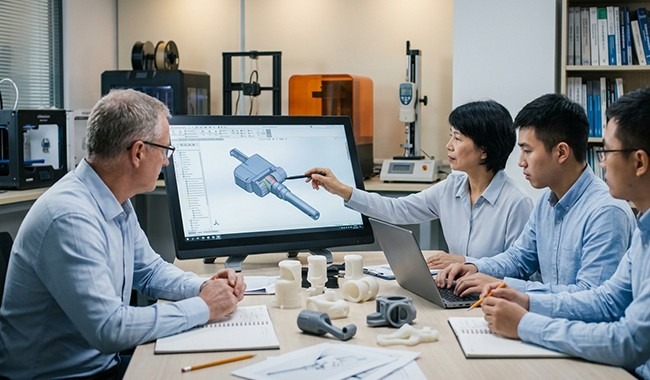
Many production failures originate long before mass manufacturing begins. They emerge during the transition between product concept validation and scalable production engineering. This is where China prototype manufacturing becomes strategically important. Prototype development is not simply a pre-production formality. It functions as a controlled environment for testing manufacturing assumptions before operational exposure increases. Businesses that skip structured prototype validation often discover critical specification weaknesses only after tooling costs, packaging commitments, and inventory allocations have already become difficult to reverse.
A prototype stage reveals more than product appearance or functionality. It exposes the interaction between engineering tolerances, component sourcing consistency, assembly feasibility, packaging integration, and production repeatability. A product that performs correctly in isolated testing may still fail during scaled manufacturing if assembly variance exceeds acceptable tolerances or if upstream materials fluctuate across batches. These risks are difficult to identify through digital renderings, catalog samples, or simplified mockups alone. Prototype manufacturing creates measurable production feedback before the cost of correction escalates significantly.
The financial impact difference between prototype-stage correction and post-production correction is often substantial:
| Failure Stage | Typical Operational Impact |
|---|---|
| Prototype phase | Limited engineering revision cost |
| Pilot production | Moderate tooling and scheduling adjustment |
| Full production | Inventory exposure and shipment delays |
| Post-distribution | RMA escalation and brand damage |
| Regulatory failure | Market withdrawal and compliance liability |
Prototype manufacturing also helps businesses evaluate supplier execution quality under realistic production conditions. Some suppliers perform well when creating isolated demonstration samples but struggle when translating designs into repeatable manufacturing workflows. During prototype cycles, procurement teams can assess documentation discipline, engineering responsiveness, process control maturity, and communication clarity before larger commitments are made. This evaluation becomes particularly important for products involving compliance requirements, customized components, or multi-supplier assembly dependencies.
Another advantage of prototype-stage validation is improved forecasting accuracy for total operational cost. Many businesses calculate profitability using simplified landed cost assumptions while underestimating revision frequency, packaging adjustment requirements, or production yield variability. Prototype data creates more realistic inputs for TCO analysis and break even modeling. In some cases, prototype findings completely alter sourcing decisions by revealing that a product concept is commercially fragile under real manufacturing constraints. Early discovery of these limitations is financially valuable because it prevents businesses from scaling structurally unstable products into broader distribution channels.
China prototype manufacturing becomes especially critical when businesses transition from opportunistic sourcing toward long term product ownership strategies. At that stage, the objective is no longer simply launching products quickly. The objective becomes building repeatable manufacturing systems capable of maintaining quality consistency across multiple replenishment cycles and market expansions. Prototype validation supports this transition by reducing uncertainty before operational scale amplifies small engineering or supply chain weaknesses into commercially significant failures.

OEM Manufacturing vs Private Label Manufacturing vs Contract Manufacturing
Businesses often treat OEM manufacturing, private label manufacturing, and contract manufacturing as interchangeable sourcing models because all three involve third-party production. Operationally, however, they create very different forms of control, dependency, and long term risk exposure. Selecting the wrong structure does not usually cause immediate failure during initial sourcing stages. The consequences appear later through pricing pressure, supplier lock-in, weak product defensibility, or operational inflexibility during scaling.
Private label manufacturing is typically optimized for speed and low entry complexity. Buyers select existing product frameworks, apply branding customization, and accelerate market entry with limited engineering involvement. This model works efficiently for businesses prioritizing catalog expansion, fast testing cycles, or low operational overhead. The limitation is that differentiation remains structurally weak. Competing distributors may source nearly identical products from overlapping supplier networks, creating margin compression over time. In saturated markets, businesses relying exclusively on private label structures often become dependent on marketing efficiency rather than product defensibility.
OEM manufacturing creates a different operational relationship. Here, buyers usually control more of the product definition process, including specifications, materials, packaging standards, and functional requirements. This increases development complexity but also improves long term control over pricing structure, feature differentiation, and supply chain positioning. The trade-off is that OEM models require stronger internal procurement discipline, better forecasting accuracy, and more active supplier governance. Businesses entering OEM arrangements without these capabilities frequently underestimate how much coordination responsibility shifts internally once product customization increases. This is why structured frameworks such as the Global B2B Sourcing and Supply Chain Platform Guide are critical for understanding how OEM manufacturing fits into a broader operational system rather than a standalone sourcing decision.
Contract manufacturing introduces another layer of operational complexity because the manufacturer may become deeply integrated into production execution rather than simply supplying finished goods. In some cases, the manufacturing partner manages component procurement, assembly sequencing, testing workflows, and logistics coordination simultaneously. This structure can improve scalability for businesses lacking internal operational infrastructure, but it also increases dependency concentration. If contractual boundaries, tooling ownership rights, or quality governance responsibilities are not clearly defined, buyers may lose practical control over production continuity despite technically owning the product brand.
The differences become clearer when viewed through operational control rather than sourcing terminology:
| Manufacturing Model | Primary Advantage | Primary Risk |
|---|---|---|
| Private label manufacturing | Fast market entry | Weak differentiation |
| OEM manufacturing | Higher product control | Greater management complexity |
| Contract manufacturing | Operational scalability | Supplier dependency concentration |
Another important distinction involves how each model behaves under scaling pressure. Private label systems generally scale fastest during early growth because development requirements remain limited. However, they become vulnerable when competition intensifies or marketplaces compress margins. OEM structures scale more slowly initially but may create stronger long term commercial resilience if procurement systems remain stable. Contract manufacturing models can support large volume growth effectively, but only when supplier governance frameworks are mature enough to prevent operational overreliance on a single production ecosystem.
The correct structure therefore depends less on industry category and more on the business’s operational maturity, capital flexibility, product strategy, and risk tolerance. Businesses optimizing for rapid SKU expansion may accept lower defensibility in exchange for speed. Organizations targeting long term brand control or specialized distribution positioning may prioritize deeper manufacturing integration despite higher coordination costs. The mistake is not choosing one model over another. The mistake is entering a manufacturing structure whose operational requirements exceed the organization’s actual procurement and supply chain management capability.
How to Calculate Real Manufacturing Costs Before Starting OEM Production
Many sourcing decisions fail because businesses calculate manufacturing cost using supplier quotations instead of total operational exposure. Unit pricing creates the illusion of financial clarity, but actual manufacturing economics are determined by accumulated variables across procurement, logistics, quality control, inventory turnover, compliance, and post-sale support. A product with an attractive quoted production cost may become commercially unstable once defect rates, delayed replenishment, excess inventory, or warranty claims begin affecting cash flow cycles.
One of the most common calculation errors involves excluding non-production costs from sourcing evaluations. Procurement teams often focus on FOB or EXW pricing while underestimating secondary operational expenses that emerge after manufacturing begins. These include tooling amortization, inspection costs, packaging revisions, customs clearance variability, regulatory testing, RMA handling, and emergency freight exposure caused by delayed production. Individually, these costs may appear manageable. Combined, they frequently determine whether a product line remains profitable at scale.
A simplified TCO framework demonstrates how manufacturing economics extend beyond factory quotations:
| Cost Category | Frequently Underestimated Impact |
|---|---|
| Tooling and molds | Long payback period |
| Quality inspection | Ongoing operational overhead |
| Defect replacement | Margin erosion through RMA |
| Inventory carrying cost | Cash flow restriction |
| Compliance testing | Delayed market entry |
| Expedited freight | Profit volatility during shortages |
| Packaging revisions | Repeated setup costs |
Forecasting assumptions also distort cost analysis significantly. Many businesses model profitability using stable sales velocity assumptions while ignoring replenishment uncertainty. This creates unrealistic break-even calculations. For example, a product with favorable manufacturing cost may still produce weak operational returns if inventory turnover slows or replenishment lead times become inconsistent. In these situations, capital remains trapped in inventory longer than expected, reducing purchasing flexibility across other product categories. Businesses evaluating only gross margin percentages often miss this broader working capital impact.
The relationship between MOQ structure and inventory risk is particularly important. Lower MOQ offers appear attractive because they reduce entry barriers, but they may increase unit cost, reduce production priority, or create unstable replenishment scheduling. Higher MOQ structures improve production efficiency but increase inventory exposure if demand forecasting accuracy remains weak. Effective procurement analysis therefore requires balancing manufacturing efficiency against inventory liquidity rather than optimizing for unit price alone.
Some experienced procurement teams use scenario-based modeling rather than static cost estimation. Instead of calculating profitability under ideal conditions, they evaluate how the product performs under multiple operational stress conditions such as delayed shipments, increased defect rates, customs interruptions, or weaker-than-expected sell-through velocity. This approach produces more realistic break-even projections and reduces overcommitment risk during early scaling phases. A break even sales calculator becomes useful only when operational assumptions are grounded in realistic supply chain behavior rather than optimistic procurement forecasts.
Real manufacturing cost analysis should therefore function as a risk visibility process rather than a pricing exercise. The objective is not simply determining whether production is affordable. The objective is determining whether the entire operational system can remain financially stable when variability, disruption, and scaling pressure affect the supply chain simultaneously.
How Global B2B Marketplace Platforms Influence OEM Supplier Selection
Global B2B marketplace platforms have fundamentally reshaped how businesses approach OEM manufacturing sourcing, but not necessarily by improving supplier quality. Their primary impact is increasing access speed to OEM suppliers while simultaneously compressing the time available for proper operational validation. For procurement teams under pressure to reduce sourcing cycles, this creates a structural trade-off between discovery efficiency and decision accuracy. In practice, faster access to OEM factory China listings often leads to earlier commitment decisions without proportional increases in due diligence depth.
These platforms optimize visibility rather than capability verification. Supplier rankings, response speed, product catalogs, and transaction activity signals are often treated as proxy indicators of reliability. However, these metrics rarely reflect core manufacturing competencies such as production stability, engineering control, or upstream material sourcing integrity. As a result, businesses may overweight presentation quality and underweight operational structure. This mismatch becomes particularly critical in OEM manufacturing environments where execution risk is concentrated in production processes that are not visible on listing interfaces.
A more systematic issue emerges in how sourcing decisions are fragmented across digital tools. Procurement teams increasingly combine marketplace discovery with product research tools, pricing benchmarks, and sourcing solutions to accelerate supplier filtering. While this improves efficiency, it can also reduce contextual evaluation. Suppliers are often assessed as isolated data points rather than integrated operational systems. The absence of cross-supplier comparison across real production scenarios leads to selection bias toward suppliers that are easier to evaluate rather than those best suited for long term scalability.
Another structural influence is the compression of procurement validation cycles. Traditional sourcing processes relied on iterative engagement, factory visits, and production sampling cycles. Marketplace-driven sourcing reduces these cycles in favor of rapid quotation comparison. This shift is particularly problematic for complex manufacturing services where production behavior cannot be fully inferred from static listings. The risk is not that marketplaces provide incorrect information, but that they provide incomplete operational context that encourages premature decision closure.
The impact becomes most visible when businesses attempt to scale beyond initial orders. Suppliers selected primarily through marketplace efficiency often struggle under sustained production demand because initial selection criteria did not evaluate capacity resilience, quality system maturity, or engineering responsiveness. At that point, procurement teams may realize that the supplier selection process optimized for speed rather than structural compatibility with long term OEM manufacturing requirements.
When OEM Manufacturing China Is the Wrong Strategy
OEM manufacturing in China is not universally suitable for all business models, despite its widespread adoption in global sourcing strategies. The assumption that manufacturing relocation or outsourcing automatically improves margin structure can fail under specific operational conditions where demand predictability, product complexity, or internal governance maturity is insufficient. In these cases, engaging OEM suppliers introduces more structural risk than operational advantage.
One clear mismatch occurs when businesses operate with unstable or highly volatile demand patterns. OEM manufacturing systems rely on predictable production scheduling to maintain efficiency across material procurement, assembly planning, and quality control. When demand fluctuates unpredictably, suppliers are forced to either overcommit capacity or deprioritize smaller buyers in favor of stable accounts. This leads to inconsistent lead times and unpredictable replenishment cycles, which directly impact downstream distribution performance.
Another structural misalignment appears when product strategy lacks long term differentiation logic. Private label manufacturing and OEM production both depend on scale efficiency, but they perform differently depending on product defensibility. If a product is easily replicable and does not rely on engineering complexity or proprietary design, engaging in OEM manufacturing may not create meaningful competitive advantage. Instead, it may accelerate market saturation as similar OEM suppliers serve multiple competing buyers within the same category.
There are also operational contexts where internal procurement capability is insufficient to manage OEM complexity. OEM manufacturing requires active coordination across specification control, supplier governance, quality assurance, and logistics synchronization. Without these internal capabilities, businesses effectively delegate not only production but also decision-critical oversight to external manufacturers. This increases dependency risk and reduces visibility into real production conditions, particularly when dealing with multiple OEM factory China partners across different regions.
A simplified decision boundary framework illustrates when OEM manufacturing becomes structurally misaligned:
| Condition | Risk Outcome |
|---|---|
| Unstable demand forecasting | Inventory inefficiency and cash flow pressure |
| Weak product differentiation | Margin erosion through competitor replication |
| Limited procurement capability | Loss of operational control |
| High SKU fragmentation | Supply chain coordination breakdown |
| Short lifecycle products | Tooling cost inefficiency |
In addition, OEM manufacturing becomes strategically inefficient when businesses prioritize speed of iteration over production stability. In early-stage markets or rapidly evolving product categories, the cost of tooling, supplier onboarding, and production alignment may outweigh the benefits of outsourced manufacturing. In these environments, flexibility and rapid redesign capability are more valuable than scale efficiency, which is the core strength of OEM systems. Attempting to force OEM structures into highly experimental product cycles often results in repeated rework, supplier fatigue, and capital inefficiency.
Ultimately, the decision to avoid OEM manufacturing China is not a rejection of manufacturing outsourcing itself, but a recognition that supply chain architecture must align with business maturity. When operational conditions do not support stable forecasting, structured procurement governance, or scalable demand planning, alternative sourcing strategies may deliver more controlled risk exposure, even if unit costs appear higher in isolation.
How to Build a Scalable OEM Supply Chain Without Operational Breakdown
Scaling OEM manufacturing operations requires a shift from supplier-centric thinking to system-centric design. The primary failure point in most expanding supply chains is not production capacity itself, but coordination overload. As order volumes increase, unmanaged dependencies between procurement, production scheduling, quality control, and logistics begin to create cascading delays. A scalable structure must therefore be designed around control points rather than supplier count or cost optimization.
The first structural requirement is separation of responsibilities across the supply chain lifecycle. Many businesses unintentionally concentrate procurement authority, engineering decisions, and quality approval within a single supplier relationship. This creates operational fragility because any disruption at the supplier level directly translates into system-wide failure. A more stable OEM manufacturing architecture distributes control across defined checkpoints: pre-production validation, in-process inspection, final QC approval, and logistics release governance. Each checkpoint should operate independently, even if executed within the same OEM factory China ecosystem.
A scalable model also requires standardized communication protocols. As product lines expand, informal communication between buyers and OEM suppliers becomes insufficient for maintaining consistency. Specification drift often occurs not due to negligence, but due to inconsistent interpretation across production cycles. Businesses that implement structured documentation frameworks—covering engineering revisions, tolerance definitions, packaging standards, and compliance requirements—reduce variability significantly. This becomes especially important in contract manufacturing China environments where multiple production teams may handle different stages of the same product lifecycle.
A simplified operational scaling model can be represented as follows:
| Supply Chain Stage | Risk Without Structure | Scalable Control Mechanism |
|---|---|---|
| Product definition | Specification ambiguity | Standardized technical documentation |
| Supplier onboarding | Inconsistent capability assessment | Multi-criteria qualification framework |
| Production execution | Batch variability | Process-controlled manufacturing SOP |
| Quality assurance | Reactive defect handling | Layered QC checkpoints |
| Logistics coordination | Shipment fragmentation | Centralized dispatch governance |
Another critical requirement is redundancy planning. Scalable OEM systems avoid single-point dependency by diversifying production capacity across qualified suppliers. This does not necessarily mean increasing supplier count indiscriminately, but rather ensuring functional overlap in production capability where disruption tolerance is required. In practice, this may involve maintaining secondary OEM suppliers for high-volume SKUs or establishing parallel tooling strategies for critical product lines. Without redundancy, scaling amplifies vulnerability rather than operational strength.
Finally, scalability depends on feedback loop integration. A system that does not continuously incorporate production data, defect trends, and lead time performance into procurement decisions will gradually degrade in reliability as complexity increases. Mature supply chains treat manufacturing services as dynamic systems rather than static supplier relationships, allowing continuous optimization based on operational intelligence rather than reactive problem-solving.
Key Decision Signals Before Starting OEM Manufacturing in China
Before initiating OEM manufacturing China operations, decision-makers must evaluate whether their organization has reached a minimum threshold of operational readiness. The most common failure pattern is premature scaling—where businesses enter manufacturing relationships before internal governance structures can support external production complexity. In such cases, OEM suppliers become compensatory systems for internal operational gaps rather than extensions of a stable procurement strategy.
One key signal is the stability of demand forecasting. If sales cycles remain highly volatile or heavily dependent on short-term promotional spikes, OEM manufacturing introduces unnecessary inventory and production risk. Stable OEM systems require predictable replenishment logic, not purely opportunistic purchasing behavior. Without forecast reliability, even well-structured private label manufacturing programs will generate inefficient capital allocation and inconsistent supplier performance.
Another critical indicator is internal procurement maturity. Businesses that lack standardized procurement procedures—such as supplier qualification frameworks, specification control systems, or cost modeling discipline—are unlikely to manage OEM complexity effectively. In these environments, supplier selection becomes reactive rather than analytical, often relying on price or communication speed instead of structural capability alignment.
A practical readiness signal framework can be summarized as follows:
| Decision Signal | Readiness Indicator | Risk If Ignored |
|---|---|---|
| Demand consistency | Repeatable order cycles | Inventory imbalance |
| Procurement structure | Documented sourcing SOP | Supplier misalignment |
| Product definition clarity | Stable specifications | Production rework |
| Financial modeling | TCO visibility established | Margin miscalculation |
| Supplier governance | Multi-step evaluation process | Operational dependency risk |
A further signal involves product lifecycle maturity. OEM manufacturing is structurally inefficient for highly experimental or rapidly evolving product concepts where design iteration frequency is high. In such cases, China prototype manufacturing or small batch iterative sourcing models are more appropriate until product-market fit stabilizes. Committing to large-scale OEM production too early locks businesses into tooling and supply commitments that reduce flexibility during critical learning phases.
Additionally, businesses should evaluate whether their operational team is prepared for distributed coordination complexity. OEM systems require continuous alignment across procurement, engineering, logistics, and compliance functions. If these responsibilities are not clearly defined internally, suppliers are forced to interpret requirements independently, increasing variance risk. This is often misinterpreted as supplier inconsistency when the root cause is internal process underdefinition.
Ultimately, these decision signals are not designed to prevent businesses from engaging in OEM manufacturing. Instead, they function as structural readiness filters. Organizations that meet these conditions are more likely to transition successfully into scalable supply chain systems, while those that bypass them often encounter compounding inefficiencies that escalate with production volume rather than stabilize over time.
FAQ
1. How do I know if an OEM supplier is truly capable of scaling with my business growth?
Supplier scalability is rarely determined by initial production success. A supplier that performs well at 1,000 units may fail at 20,000 units due to hidden constraints in material sourcing, labor allocation, or production scheduling systems. The key evaluation factor is not current output, but structural elasticity—whether the supplier can absorb demand fluctuations without degrading quality or lead time consistency. A practical indicator is whether they can demonstrate historical scaling cases with stable defect rates and unchanged lead time variance. Many OEM suppliers overstate capacity, so procurement teams should verify throughput stability under peak demand conditions rather than rely on nominal factory size.
2. Why do quotation-based decisions often fail in OEM manufacturing projects?
Quotation-based sourcing fails because it isolates price from operational reality. A low unit price often excludes hidden variables such as QC depth, rework probability, or material substitution risk. The real issue is not cost comparison itself, but the absence of cost context. For example, two suppliers with a 12% price difference may produce drastically different total landed cost outcomes once defect rates and logistics delays are included. Experienced procurement teams treat pricing as a secondary filter after validating process reliability, not as the primary selection criterion.
3. What is the most common mistake during OEM supplier onboarding?
The most frequent failure occurs when onboarding is treated as a transactional step rather than a capability alignment process. Businesses often finalize specifications and proceed directly to production without validating communication discipline, engineering responsiveness, and documentation accuracy. This creates hidden misalignment that only becomes visible during mass production. A stronger onboarding approach includes structured checkpoints such as:
- Engineering validation cycle before tooling approval
- Controlled pilot production run
- Documentation consistency audit across revisions
Skipping these stages increases downstream rework and reduces supplier accountability clarity.
4. How should businesses decide between multiple OEM suppliers?
Selecting multiple suppliers should not be based solely on price or geography. The correct decision logic is functional redundancy versus operational fragmentation. If suppliers produce identical output but lack coordination consistency, managing them can increase complexity rather than reduce risk. A better approach is to assign suppliers based on role segmentation—for example, one for high-volume stable SKUs and another for flexible or experimental production lines. The objective is not diversification itself, but controlled distribution of production risk across functionally aligned suppliers.
5. Why do OEM projects fail even when prototype testing is successful?
Prototype success often creates a false sense of production readiness. The key issue is that prototype conditions are controlled, while mass production introduces variability across materials, labor shifts, and production timing. A prototype validates design feasibility, not system stability. Failure typically occurs when scaling exposes tolerance gaps that were not stress-tested during initial sampling. For example, minor assembly deviations may become statistically significant defects at scale. The transition from prototype to production requires process validation, not just product validation.
6. When should a business avoid OEM manufacturing entirely?
OEM manufacturing becomes structurally inefficient when demand is unpredictable, product iterations are frequent, or internal procurement systems are underdeveloped. In such conditions, the operational overhead outweighs manufacturing benefits. Businesses without stable forecasting or quality governance often experience escalating coordination costs rather than efficiency gains. In these cases, alternative sourcing models or smaller batch manufacturing cycles provide better risk control. The key indicator is not business size, but operational discipline readiness.
7. How does contract manufacturing differ in risk exposure from OEM manufacturing?
Contract manufacturing transfers more operational responsibility to the supplier, including production execution and sometimes supply chain coordination. While this improves scalability, it also increases dependency concentration. If governance structures are weak, businesses may lose visibility into material sourcing and production decisions. OEM models typically retain more specification control, whereas contract manufacturing emphasizes execution outsourcing. The risk increases when contract boundaries are unclear, especially regarding tooling ownership, QC authority, and escalation responsibility.
Conclusion
OEM manufacturing success is not determined by supplier selection alone, but by whether the internal system can support external production complexity without losing control of cost, quality, and delivery stability. Most failures emerge when procurement decisions are made faster than operational structures can mature, creating hidden dependencies that only surface under scale pressure. The real challenge is not initiating production, but maintaining system stability as variability increases across supply chain stages.
Businesses that treat OEM manufacturing, OEM suppliers, and broader manufacturing services as part of a structured supply chain architecture—rather than isolated sourcing events—are more likely to build resilient growth models. Before committing to expansion, decision-makers should validate whether their forecasting discipline, procurement governance, and cost visibility are strong enough to support scalable execution, as outlined in a structured procurement guide framework. In many cases, a phased approach including China prototype manufacturing and controlled scaling provides a more stable path toward long term manufacturing efficiency and supply chain control.