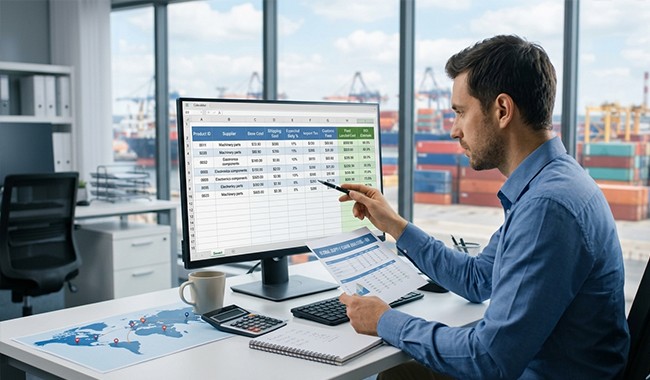
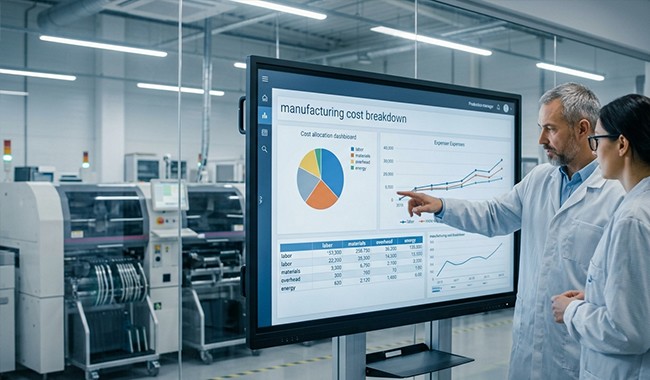
Not Sure About Your Unit Cost or Manufacturing Overhead?
As global trade continues to expand, an increasing number of businesses are turning to online procurement channels. For companies seeking a one-stop wholesale sourcing solution, the right B2B wholesale marketplace not only provides access to a broader supplier network but also significantly enhances procurement efficiency and reduces costs.
As an online procurement platform offering professional insights from an objective third-party perspective, we’ve compiled an in-depth analysis of “B2B wholesale marketplaces” and specifically curated 10 frequently asked questions (FAQs) to help buyers navigate pitfalls and maximize benefits when selecting, joining, or utilizing B2B trade platforms or marketplace online shops.

Why Are More Buyers Choosing Online Wholesale Procurement Platforms?
1. Massive Supplier Pool, One-Stop Shopping
On a single online platform, buyers can access manufacturers, wholesalers, and traders worldwide. Compared to time-consuming traditional sourcing, online B2B wholesale marketplaces offer greater selection density and price comparison capabilities.
2. Reduced procurement costs
Online decision-making, price comparison, and negotiation are faster and more transparent. Logistics, payment methods, and delivery times are also easier to compare. Centralized purchasing through platforms may yield better minimum order quantities or discounts.
3. Optimized procurement processes and supply chains
Many B2B trade platforms offer one-stop services covering inquiries, quotations, contracts, payments, logistics, and after-sales support. This shortens procurement cycles and improves response times.
4. Risk Control and Compliance Support
Reputable online wholesale marketplaces typically conduct supplier qualification reviews, provide transaction safeguards, ensure data security, and offer after-sales support—delivering greater assurance to buyers.
5. Sustained Collaboration and Resource Accumulation
Engaging with online marketplaces extends beyond one-time purchases, often evolving into long-term supply chain partnerships. Platforms may also provide supplier recommendations, buyer communities, and industry reports to empower better procurement decisions.
What Should Buyers Consider When Selecting a B2B Wholesale Marketplace?
Choosing the right B2B wholesale marketplace among numerous online platforms directly impacts your procurement efficiency, costs, and risks. Key considerations include:
1. Supplier Quality and Verification Mechanisms
Premium platforms conduct real-name verification, qualification reviews, production capacity audits, and credit evaluations for listed suppliers. Buyers should prioritize platforms offering mechanisms like “supplier ratings,” “factory photos,” and “verification reports.”
2. Product Categories and Coverage
Ensure the platform covers your procurement categories with abundant, high-quality supplier resources. Verify support for custom production, small-batch orders, sample testing, and rapid production/delivery services.
3. Transaction Functionality and Process Efficiency
Evaluate whether the transaction flow – from inquiry, quotation, contract signing, online payment, logistics tracking, to after-sales service – is seamless and managed through the platform. Greater convenience directly reduces procurement cycles.
4. Fee Structure and Transparency
Platforms may charge membership fees, service fees, or transaction commissions. Buyers should verify that fee structures are publicly disclosed and transparent to avoid hidden costs later.
5. Logistics and Delivery Services
For cross-border or interregional procurement, logistics costs, customs clearance, transit times, and delivery models vary significantly. Platforms offering integrated logistics, customs assistance, and warehousing services represent a key advantage.
6. After-Sales Support and Dispute Resolution
Issues like returns, quality discrepancies, and delayed shipments are inevitable. Prioritize platforms with robust dispute arbitration mechanisms, quality guarantees, clear arbitration procedures, and refund/return policies.
7. User Reviews and Success Stories
Review other buyers’ feedback on the platform, successful collaboration cases, client testimonials, and industry recognition. Authentic feedback is a key indicator of the platform’s value.
8. Platform Stability and Technical Support
Assess system stability, security, and support for multiple languages, currencies, and payment methods. Check if procurement customer service, technical support, and data analysis tools are provided.
9. Localized Services and Cultural Adaptation
For international procurement, verify if the platform supports your native language, complies with local regulations, and offers localized customer service or warehousing centers.
10. Data Security and Privacy Protection
Ensure buyer and supplier information, transaction data, and quotation records are securely protected. Understand the platform’s data encryption protocols, security policies, and privacy terms.
Top 10 FAQs
Common Questions Buyers Have on B2B wholesale marketplaces (With Detailed Answers) Below, we address the questions buyers care about most, providing step-by-step answers to help you navigate selecting and using online wholesale procurement marketplaces with greater confidence.
1. Why should I use an online B2B wholesale marketplace instead of continuing with traditional sourcing methods?
Answer: While traditional sourcing methods (such as site visits, trade shows, phone calls, and emails) still hold value, online wholesale procurement marketplaces offer distinct advantages:
Greater Efficiency: For instance, when sourcing 3C electronics, you don’t need to travel internationally to reach manufacturers. With just a few clicks, you can browse hundreds or even thousands of suppliers, products, and quotes anytime.
Wider selection: Geography is no longer a constraint—access global resources.
Lower costs: Reduce expenses on travel, trade shows, factory visits, and simplify price comparisons.
Standardized processes: Streamline inquiries, price comparisons, contracts, payments, and logistics through traceable online workflows.
Data visualization: Platforms often provide analytics on transaction trends, supplier performance, and product popularity.
Of course, traditional procurement retains its advantages of face-to-face interaction, on-site verification, and direct communication. Utilizing online platforms doesn’t mean abandoning traditional methods entirely; rather, it complements and optimizes your procurement system.
2. What key features should a good B2B wholesale marketplace possess?
Answer: Based on our years of observation, an efficient and reliable online wholesale procurement marketplace should include the following features:
Supplier verification and rating system: Ensures reliable supplier credentials.
Detailed product categorization and robust search/filtering: Enables buyers to quickly locate required items.
Multi-quote/price comparison system: Allows buyers to receive quotes from multiple suppliers for easy comparison.
Online communication system: Facilitates direct negotiations with suppliers regarding specifications, customization, pricing, and logistics.
Payment and settlement safeguards: Supports deposits, final payments, credit payments, and third-party guarantees.
Logistics collaboration/tracking: Provides shipment status tracking, customs clearance assistance, and warehousing services.
After-sales service and dispute resolution: Clear procedures for quality issues or delayed shipments.
Data analytics and reporting: Purchase frequency, supplier performance, and best-selling product rankings to aid decision-making.
Multi-language/multi-currency support (for international procurement): Adapted for buyers from different countries.
Security and privacy protection: Encrypted transaction data, secure user information, and fraud prevention.
3. What are the risks of online B2B wholesale marketplaces? How can I mitigate them?
A: While online wholesale platforms offer convenience, certain risks exist. Below are common risks and corresponding recommendations:
Supplier Authenticity Issues: Some suppliers may have unverified credentials or insufficient capabilities. Utilize platform features like “verification” or “factory photos,” and request on-site certification or authentic video footage.
Product Quality Risks: Images may not match actual products, or shipments may deviate from specifications. Place sample orders first or use a split payment structure (advance + balance).
Payment/Fraud Risks: Small-scale scams, fake platforms, fraudulent links, or counterfeit suppliers may exist. Opt for platform-guaranteed payments, use credit accounts, and select commercial insurance or platform escrow services.
Logistics & Customs Delays: Cross-border procurement may exceed budgets due to shipping costs, customs clearance, taxes, and extended lead times. Choose platforms with proven logistics partnerships, estimate shipping fees, and clarify delivery schedules.
Hidden Fees + Unstated Terms: Examples include platform membership fees, service charges, minimum order quantities, and customization fees. We recommend thoroughly reviewing platform terms before placing orders.
Challenging After-Sales Support: Returns, quality inspections, and dispute resolution can be complex. We advise checking if the platform has clear after-sales policies and offers dispute mediation.
4. How can I quickly get started using the B2B wholesale marketplace for the first time?
A: Follow these steps to quickly familiarize yourself with the platform and minimize trial-and-error costs:
Define procurement requirements: Identify product categories, specifications, quantities, budget, and target origins.
Register and complete company profile: Create a buyer account on the platform, providing company verification and procurement credentials.
Browse and screen suppliers: Use platform search and filtering tools to select suppliers with proven production capacity and strong credentials.
Initiate inquiries/quotes: Send your specifications, quantities, budget, and delivery timeline to multiple suppliers.
Compare quotes and samples: After receiving quotes, evaluate pricing, MOQ (minimum order quantity), delivery times, and quality inspection details. Request samples if needed.
Negotiate details and contracts: Confirm product specifications, packaging, payment terms, after-sales conditions, logistics methods, and delivery schedules. Sign contracts (or platform agreements).
Pay and Place Order: Use platform-recommended payment methods or escrow services to pay deposits/final balances.
Track Production and Logistics: Maintain communication with suppliers and the platform, regularly checking production progress, shipment status, and logistics updates.
Acceptance and After-Sales: Complete inspection upon receipt. Report issues promptly to the platform to initiate after-sales procedures.
Supplier Evaluation and Relationship Management: Integrate high-quality suppliers into your long-term procurement system to establish stable partnerships.

5. How significant is the Minimum Order Quantity (MOQ) for buyers? Do online platforms offer flexible options?
Answer: MOQ is a core metric in wholesale procurement. Excessively high MOQs impose substantial inventory pressure or capital risks on SMEs or first-time online buyers. Compared to traditional channels, premium B2B wholesale marketplaces typically offer these flexibilities:
Multi-supplier price comparison: Identify suppliers with lower MOQs. For example, platforms like WIDQ offer exceptionally low MOQs and OEM customization services.
Support for “group orders” or “joint procurement”: Combine orders with other buyers to share MOQ requirements.
Sample procurement: Purchase small quantities first to test product quality and supplier service.
Platform “membership models” or “buyer-exclusive pricing”: Some platforms provide low-MOQ options specifically for small and medium-sized buyers.
Customized Negotiation: Discuss with suppliers to lower MOQs or arrange split shipments.
Therefore, when using online wholesale procurement platforms, buyers should clearly define their financial and inventory capacity, choose reasonable MOQs, and prioritize platforms or suppliers offering flexible MOQ options.
6. How to determine if a supplier is reliable on a B2B wholesale marketplace?
Answer: Assessing online supplier reliability is key to reducing transaction risks. Evaluate based on these dimensions:
Certifications: Verify completeness of business licenses, export permits, and product certifications (e.g., CE, RoHS, ISO).
Factory Audits (In-Person or Video): Premium platforms typically feature “factory footage” or certified videos.
Product Samples & Test Reports: Request pre-shipment samples or confirm third-party testing reports.
Transaction History & Reviews: Review historical orders, buyer feedback, and collaboration frequency on the platform.
Response Speed and Communication Quality: Reliable suppliers demonstrate professionalism, timeliness, and clear organization in communications.
Transparent Quotations: Credible suppliers include pricing, minimum order quantities, packaging, logistics, delivery schedules, and after-sales terms in quotes. Vague quotations often signal potential hidden costs later.
After-Sales Support Capabilities: Verify existence of repair, return/exchange, and rejection procedures, with clear responsibility outlined in contract terms.
Evaluating these dimensions helps distinguish reliable suppliers from potentially risky ones. Utilizing a reputable B2B wholesale marketplace for screening and transactions further leverages the platform’s verification mechanisms and rating systems.
7. When purchasing on a B2B wholesale marketplace, how should I choose payment methods?
Answer: Payment methods directly impact transaction security and financial risk. Common options and their pros/cons:
Telegraphic Transfer (TT)/Bank Transfer: Widely used but carries a higher risk, requiring trust in the supplier.
Letter of Credit (L/C): Suitable for large-value transactions, offering relative security but involving cumbersome procedures and high costs.
Third-Party Escrow/Platform Payment: The platform temporarily holds the buyer’s funds, releasing them to the supplier only after the buyer confirms receipt and inspection approval. This is a common security method on online wholesale procurement platforms.
Installment Payments/Final Payment Protection Mechanism: Pay a deposit upfront, with the balance due upon delivery or acceptance. This reduces risk.
Buyers are advised to prioritize methods with platform guarantees or contracts explicitly stating “payment upon successful acceptance.” Avoid paying the full amount upfront or transferring funds directly to unfamiliar suppliers. Such cautious practices effectively minimize the risk of payment loss.
8. What logistics, customs clearance, and tax issues should be considered when sourcing through online wholesale markets?
Answer: When engaging in cross-border procurement via B2B wholesale marketplaces to connect with overseas suppliers, logistics, customs clearance, and taxation are critical. Consider the following:
Shipping Methods: Air, sea, courier, or rail each has advantages and disadvantages. Air freight is fast but expensive; sea freight is economical but slower. Select the appropriate method based on shipment volume and delivery timeline.
Customs Clearance Procedures and Destination Regulations: Importing countries may impose quotas, inspections, licensing requirements, sanitary inspections, or product certifications. Research these requirements before procurement.
Tax and Fee Costs: Include tariffs, value-added tax (VAT), import duties, consumption taxes, plus port handling fees, warehousing charges, and distribution costs. Do not focus solely on the ex-factory price; estimate the total post-clearance cost.
Insurance and Transportation Risks: Loss or damage occurs more frequently during ocean freight or long-distance transport. Consider purchasing insurance or clearly defining transportation liability in contracts.
Logistics Timing Risks: Cross-border shipping delays are common. Establish clear delivery deadlines, backup supply plans, and pre-stock inventory.
Warehousing and Distribution: Some B2B wholesale marketplaces offer overseas warehousing or third-party logistics (3PL) services, which can accelerate delivery and reduce logistics costs. Verify whether the platform supports these services.
Ensure all these costs and risks are incorporated into your budget and plan before proceeding. This prevents hidden costs or delays disguised as “low-price temptations.”
9. After using the platform, how can I transform a one-time purchase into a long-term, stable supply chain partnership?
Answer: Online wholesale procurement platforms not only facilitate one-time purchases but, when managed effectively, can foster long-term, reliable supply chain partnerships. Here are recommendations:
Evaluate and Summarize: After procurement, assess the supplier’s delivery timelines, quality, after-sales service, and communication. Provide honest feedback.
Define Long-Term Goals: Discuss future collaboration frequency, product iterations, customization needs, and pricing incentives with suppliers.
Build a Diversified Procurement List: Include multiple product specifications and different suppliers as candidates to form an alternative supply chain.
Participate in Platform Events and Procurement Communities: Many B2B wholesale marketplaces offer buyer communities, premium supplier recommendations, and industry reports. Active participation unlocks additional resources.
Prioritize Partnerships and Negotiate Preferential Terms: After establishing stable cooperation, you can negotiate lower minimum order quantities, better pricing, and more flexible delivery schedules.
Contract and Agreement Optimization: Sign long-term framework agreements with key suppliers, clearly defining price adjustment mechanisms, delivery frequencies, and after-sales guarantees.
Co-Branding or Joint Promotions: In certain cases, buyers can collaborate with suppliers to develop customized products or participate in joint marketing campaigns, enhancing mutual loyalty.
This approach not only boosts procurement efficiency but also elevates online platforms from “one-time transactions” to “strategic partnerships,” fully unlocking the supply chain value of B2B wholesale marketplaces.
10. How can one maximize SEO utilization of keywords like “B2B wholesale marketplace,” “B2B trade platform,” and “marketplace online shop” for procurement promotion?
Answer: As a buyer or platform user seeking to boost your procurement brand or platform’s online visibility, leverage SEO principles by creating and publishing third-party perspectives. Apply these recommendations:
Keyword Structure: Naturally incorporate core keywords (e.g., B2B wholesale marketplace) and long-tail variations (e.g., B2B trade platform, marketplace online shop) in titles, opening paragraphs, and body text—avoid keyword stuffing.
Content Depth & User Value: Search engines prioritize articles offering in-depth solutions, FAQs, and practical advice. The FAQs themselves constitute high-quality content.
Internal and External Links: Link to relevant platform pages (e.g., platform overview, industry reports, success stories) and authoritative external resources (e.g., trade associations, customs policies, logistics services) to enhance credibility.
Structured Markup and Section Headings: Utilize H1/H2/H3 tags (or structured headings in Chinese contexts) to help search engines understand article structure. Clearly state the core theme at the beginning and include a call-to-action at the end (e.g., “Log in to the platform now to explore”).
Image and Multimedia Optimization: Ensure images have ALT tags incorporating keywords or their variations in descriptions. Strategically incorporate charts, flowcharts, and case study visuals throughout the article.
Mobile-Friendly & Speed Optimization: Ensure publishing platforms (blogs, official websites) support mobile access with fast loading speeds to enhance user experience and SEO rankings.
Ongoing Updates & Expanded Content: Regularly update FAQs, user case studies, and industry news, expanding them into series to increase content authority.
By implementing these practices, you will not only strengthen your brand image in the procurement sector but also boost visibility for keywords like “B2B wholesale marketplace” in search engines.
In-Depth Analysis: Operational Logic and Future Trends of B2B Wholesale Marketplaces
1. Operational Logic
From the perspectives of platform operators, suppliers, and buyers, the success of B2B wholesale marketplaces primarily relies on the following logic:
Supply-Demand Matching: Platforms aggregate numerous suppliers and optimize product categorization and search mechanisms, enabling buyers to quickly locate suitable suppliers.
Matching and Efficiency Enhancement: Platforms boost matching efficiency through algorithms, curated recommendations, premium content display, and user behavior analysis.
Value-Added Services: Beyond product listings, these include sample services, custom manufacturing, logistics integration, payment guarantees, and after-sales support.
Network Effects and Scalability: As both buyer and supplier bases grow, increased traffic and transaction volumes attract more high-quality suppliers.
Data-Driven Optimization: The platform analyzes purchasing behavior, transaction trends, product popularity, and supply chain bottlenecks to refine recommendations, operations, and fee structures.
2. Future Trends
As technology, markets, and regulations evolve, B2B wholesale marketplaces exhibit emerging trends:
Digital and Intelligent Upgrades: AI search recommendations, smart matching, automated quoting, and blockchain traceability will become mainstream. Buyers will find specification-compliant products faster.
Balancing Globalization and Localization: Cross-border procurement demand continues to grow, while localized services gain popularity. Platforms will simultaneously offer global suppliers and local warehousing/distribution services.
Small Batches and Rapid Response Become Mainstream: Lean manufacturing supply chains drive trends like “fast order, fast ship,” shorter response cycles, and small minimum order quantities. More flexible marketplace online shop models will emerge.
Sustainable procurement and green supply chains: With increasingly stringent environmental regulations, buyers will focus more on suppliers’ ESG (Environmental, Social, Governance) performance. Platforms may introduce green certifications, carbon emission reporting, and circular economy product classifications.
Collaborative ecosystem development: Beyond supplier-buyer relationships, platforms will build ecosystems encompassing financial credit support, insurance, logistics/warehousing, brand incubation, and industry communities. Buyers will engage in more value chain segments.
Conclusion
Why You Should Prioritize Premium B2B wholesale marketplaces Now
In today’s fiercely competitive and rapidly evolving trade landscape, traditional procurement models face efficiency bottlenecks, rising costs, and fragmented resources. Leveraging online B2B wholesale marketplaces enables you to rapidly expand sourcing channels, optimize supply chains, and better navigate opportunities driven by globalization and digitalization.
Whether you’re a seasoned buyer already active on the procurement frontlines or a newcomer preparing to enter the online wholesale procurement arena, we recommend evaluating the following three points now:
* Do your current procurement channels sufficiently cover global manufacturers and wholesalers?
* Does your chosen platform offer the key functionalities mentioned earlier—such as “supplier verification,” “process assurance,” “logistics support,” and “data services”?
* Are you prepared for future trends like small-batch orders, rapid response, and green procurement?
If your answers include “unsure” or “insufficient,” now is the perfect time to evaluate or migrate to an efficient B2B trade platform. Through a premium marketplace online shop, you can drive down procurement costs, boost efficiency, and minimize supply chain risks.
In this rapidly evolving era, we encourage you to make informed choices: select the right platform, identify quality suppliers, and build a robust procurement ecosystem. Feel free to explore, request quotes, and embark on your efficient procurement journey anytime at our platform WIDQ.
For deeper inquiries or to compare and receive recommendations on specific B2B wholesale marketplaces, please reach out anytime. We’re ready to assist with platform selection, analysis, and implementation.